
Students collaborating on a math problem

CPM Mathematics

Student-Centered, Problem-Based Curriculum

Research-backed math curriculum for grades 6–12, built by teachers and designed to develop deep mathematical understanding through collaboration and problem solving.

Questions? Contact our team

Why CPM

What Makes CPM Different

Every design decision in CPM curriculum comes back to one question: how do students best learn and retain mathematics? Here's what 35 years of classroom practice and a growing body of research taught us.

Student-Centered Learning

Students work in collaborative study teams of 2–4, providing structured opportunities for mathematical discourse, risk-taking, and idea refinement. Teaching strategies are designed to make collaborative study teams genuinely effective, not just a seating arrangement.

Problem-Based Instruction

Every lesson is built around engaging, non-routine problems. Students construct knowledge through embedded questioning and productive struggle, arriving at mathematical understanding rather than having it handed to them.

Research-Supported Design

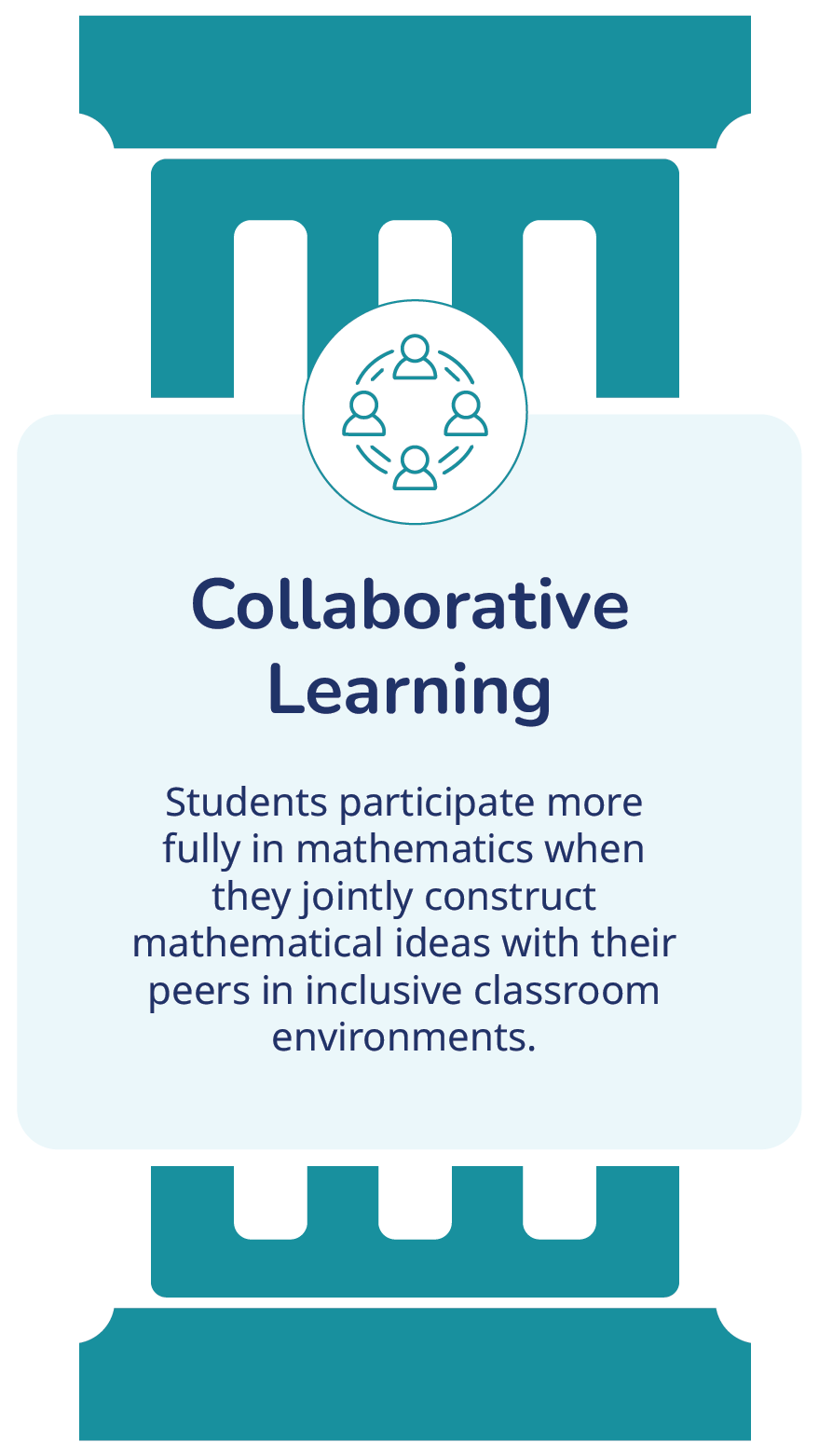
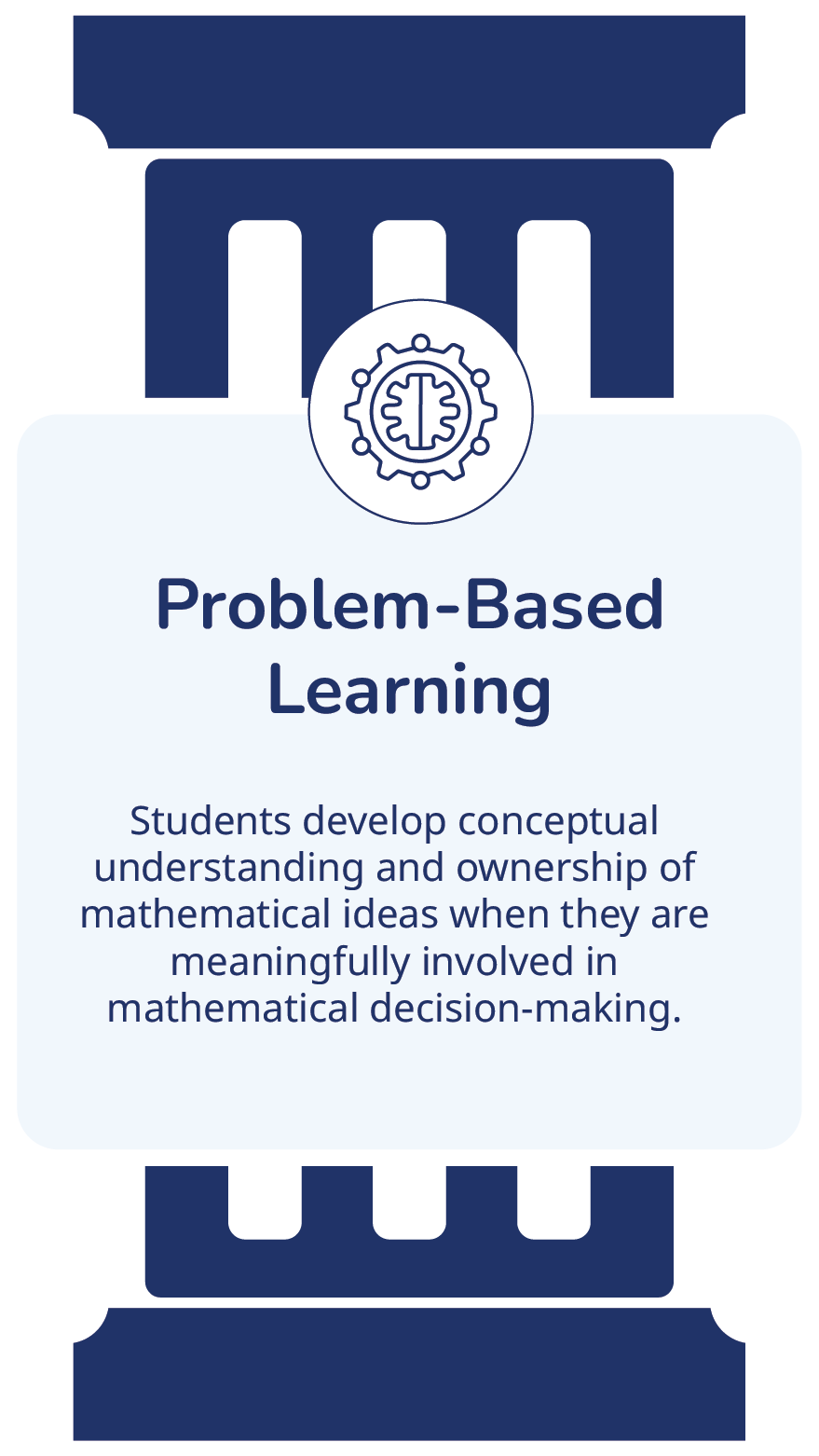
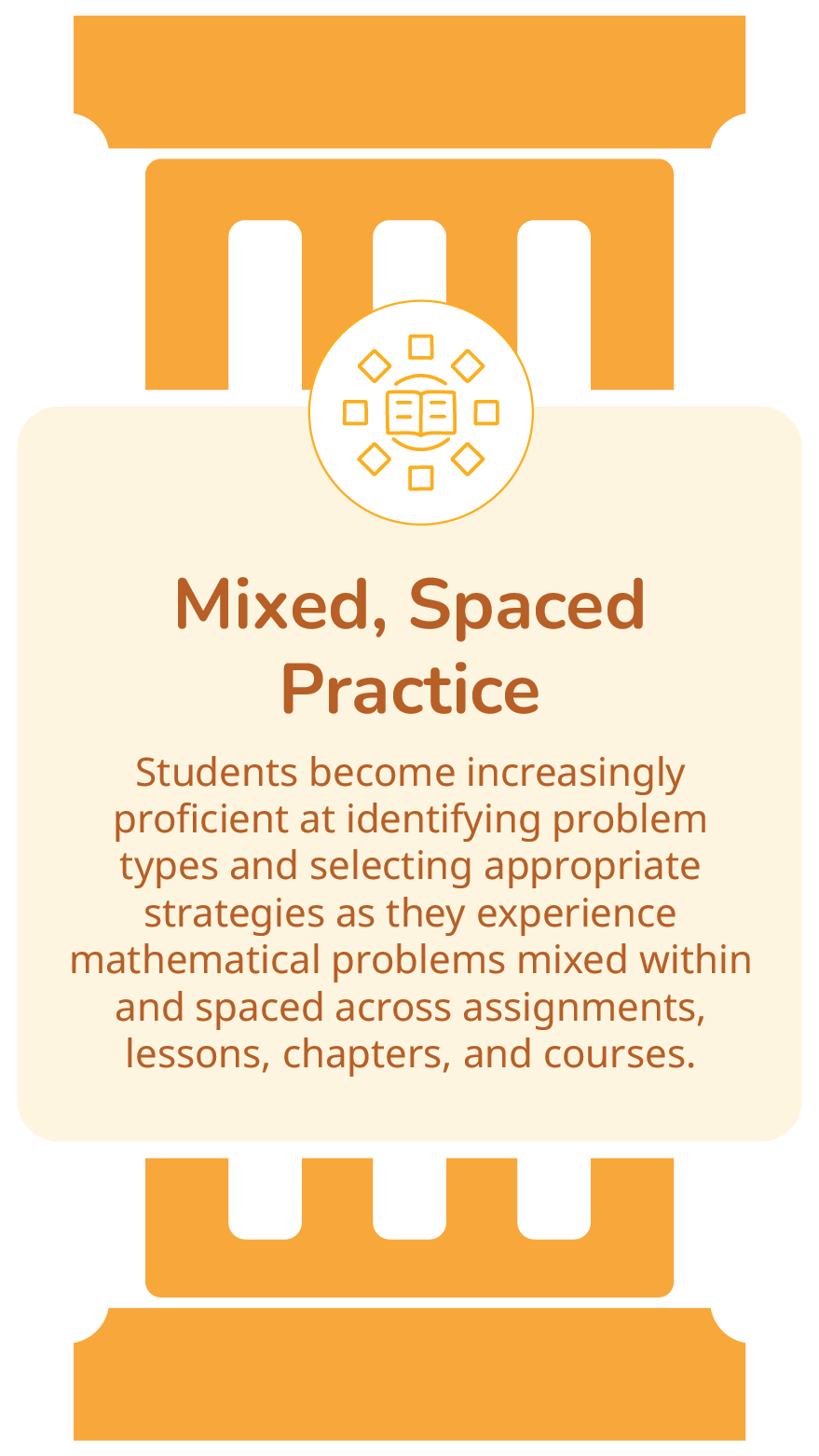
CPM's Three Pillars (Collaborative Learning, Problem-Based Learning, and Mixed Spaced Practice) are grounded in decades of mathematics education research and validated by the 2024 Research Base update. Built from the research up, not retrofitted to it.

Connected Knowledge

Topics don't exist in isolation in CPM. Concepts are interleaved across the course so students revisit and reinforce ideas over time. Mixed, spaced practice builds genuine long-term retention, not cramming before a test.

High-Quality Resources

CPM curriculum comes with a full ecosystem of support: embedded digital tools, access to homework answers, resources to keep families in the loop, and a variety of resources for teachers including access to CPM's extensive professional learning offerings.

Built on Evidence

CPM's Three Pillars of Research

Synthesized from NCTM standards and decades of constructivist research, CPM's Three Pillars (Collaborative Learning, Problem-Based Learning, and Mixed Spaced Practice) continue to be validated by current mathematics education scholarship. Read the full research base to understand the evidence behind every CPM lesson.

CPM Three Pillars: Collaborative Learning, Problem-Based Learning, Mixed Spaced Practice

Everything You Need

High-Quality Resources Included

CPM curriculum comes with a full ecosystem of support tools for students, teachers, and families, built in, not bolted on.

eTools

Interactive digital tools for mathematical exploration (graphing, geometry, algebra tiles, and more), accessible on any device.

Improved Independent Practice

Practice problems designed to support mixed, spaced practice and balance content over time. For CC3e and IC, teachers can turn answers on or off. Available digitally or in print through the student consumable.

Family Support Resources

Collections of exercises and communication around key skills to help families support learning at home, including Guided Skill Supports (CC3e), Skill Builders and Tools & Topics letters (IC), and Infinite Practice.

Preview Videos

Video walkthroughs of each CPM course and chapter, ideal for understanding the storyline of the course and lesson planning. Currently available for Inspiring Connections.

Professional Learning

Comprehensive, ongoing PL from CPM's team of experienced teacher-educators, from Foundations for Implementation to leadership development.

Ready to Learn More?

See CPM in Action at Your School

Interested in bringing CPM to your district? Connect with our team, explore the curriculum, or read the research behind every design decision.

35+ Years of Classroom Research

Every design decision is backed by decades of mathematics education research and validated by the 2024 CPM Research Base.

Built by Teachers, for Teachers

CPM was founded by 30 classroom teachers and continues to be developed and refined by educators who know what works.

Statistics

JAVA

Calculus
Third Edition

Precalculus
Third Edition

Precalculus
Supplement

2.3.4

Defining Concavity

4.4.1

Characteristics of Polynomial Functions

5.2.6

Semi-Log Plots

5 Closure

Closure How Can I Apply It? Activity 3

9.3.1

Transition States

9.3.2

Future and Past States

10.3.1

The Parametrization of Functions, Conics, and Their Inverses

10.3.2

Vector-Valued Functions

11.1.5

Rate of Change of Polar Functions

Matemática
Integrada I

Matemática
Integrada II

Matemática
Integrada III

Integrated I

Integrated II

Integrated III

Core Connections en español, Álgebra

Core Connections en español, Geometría

Core Connections en español, Álgebra 2

Core Connections
Algebra

Core Connections Geometry

Core Connections
Algebra 2

Core Connections 1

Core Connections 2

Core Connections 3

Core Connections en español,
Curso 1
Core Connections en español,
Curso 2
Core Connections en español,
Curso 3

Inspiring Connections
Course 1

Inspiring Connections
Course 2

Inspiring Connections
Course 3

Sample Checkpoint

Newsletter Archives

You are now leaving cpm.org.

Did you want to leave cpm.org?

I want to leave cpmstg.wpengine.com.

No, I want to stay on cpmstg.wpengine.com

Algebra Tiles Blue Icon

Algebra Tiles Session

  • Used throughout CPM middle and high school courses
  • Concrete, geometric representation of algebraic concepts.
  • Two-hour virtual session,
  •  Learn how students build their conceptual understanding of simplifying algebraic expressions
  • Solving equations using these tools.  
  • Determining perimeter,
  • Combining like terms,
  • Comparing expressions,
  • Solving equations
  • Use an area model to multiply polynomials,
  • Factor quadratics and other polynomials, and
  • Complete the square.
  • Support the transition from a concrete (manipulative) representation to an abstract model of mathematics.

Foundations for Implementation

This professional learning is designed for teachers as they begin their implementation of CPM. This series contains multiple components and is grounded in multiple active experiences delivered over the first year. This learning experience will encourage teachers to adjust their instructional practices, expand their content knowledge, and challenge their beliefs about teaching and learning. Teachers and leaders will gain first-hand experience with CPM with emphasis on what they will be teaching. Throughout this series educators will experience the mathematics, consider instructional practices, and learn about the classroom environment necessary for a successful implementation of CPM curriculum resources.

Page 2 of the Professional Learning Progression (PDF) describes all of the components of this learning event and the additional support available. Teachers new to a course but who have previously attended Foundations for Implementation can choose to engage in the course Content Modules in the Professional Learning Portal rather than attending the entire series of learning events again.