RESEARCH

Rapid Response Grant

The Rapid Response Grant has now replaced the Extensive Grant
CPM Rapid Response Funding for Mathematics Education Research

Request for Proposals for Funding by CPM Educational Program

Details and Submission Guidelines

Submission Deadline: December 1 (11:59 PM PT)

Submission Materials:

Applications should be submitted in pdf form by the deadline using the “Submit a Proposal” button at the top of this page. Email should be to research@cpm.org with the subject line Rapid ResponseLate proposals will not be accepted. Please send questions to research@cpm.org.

  • The original funded proposal 
  • Your NSF termination letter  
  • A narrative memo (no more than 1,200 words) describing the activities to be completed over a 6-month period
  • A budget for a maximum of $25,000 (no indirect costs). Please request only what is needed within the $25,000 limit. CPM aims to fund as many studies as possible with its available resources. If applicable, note any additional bridging funds available through your institution. CPM intends to fund PIs who do not have access to other Bridge funds.

Requirements:

CPM requests a copy of the project vita (a document citing all presentations, published manuscripts, tools, and other resources developed from the project) at the closure of the study.

Decision Announced: February 1

Eligibility:

  • Principal Investigators must be faculty members of an institution of higher education. CPM does not make grants to individuals. 
  • Only Principal Investigators of recently terminated NSF grants may apply.
  • Research must be about secondary (6–12th grade) mathematics education. CPM is especially but not exclusively interested in supporting scholarship that aims to reduce inequities.
  • Only one application may be submitted per terminated NSF grant, regardless of the number of PIs or Co-PIs involved. This applies to both individual and collaborative NSF awards.
  • Where possible, CPM will prioritize early-career scholars.
  • Grants do NOT need to be situated in a CPM context.
Disclaimer: CPM reserves the right not to select an awardee if the proposals received are of insufficient quality or are not of interest to CPM, or if circumstances affecting CPM make it against CPM’s best interests to fund research.

OVERVIEW

CPM Educational Program (“CPM”, https://cpm.org/who-are-we) is a California nonprofit 501(c)(3) corporation dedicated to improving grades 6-12 mathematics curriculum and instruction. Therefore, one of the goals of CPM is to support research on problem-based mathematics learning, as well as on the strengths and limitations of particular designs for professional learning around instruction aimed towards such learning. To this end, CPM offers award opportunities to fund educational research that will contribute to the understanding of how to improve mathematics teaching and learning in grades 6-12 in the United States. These awards support research that build theory, develop methodological tools and tools for practice, and establish knowledge around four key features of secondary mathematics education: curricular materials, teaching, learning, and/or professional learning.

CPM Rapid Response Funding for Mathematics Education Research

Alongside The Spencer Foundation, The Kapor Foundation, The William T. Grant Foundation, and the Alfred P. Sloan Foundation, CPM Educational Program has temporarily restructured its Exploratory and Extensive research grants program to provide a rapid response opportunity for studies impacted by recent large-scale terminations of National Science Foundation (NSF) research grants. These funding cuts threaten to waste millions of taxpayer dollars by terminating grants that are near completion—preventing data analyses and the dissemination of important findings.  While CPM cannot fully fill the gap left by federal funding cuts, it can, like the foundations listed above, provide modest, targeted supportto mitigate the impact of grant terminations. CPM, like the private philanthropy foundations listed above, can provide modest grants to mitigate some of the impacts of the cancelled NSF grants. Specifically, CPM intends to provide a stop-gap for several cancelled grants to:
  • complete a wave of data collection, 
  • analyze already collected data or writing, 
  • or engage in thoughtful project closure with community partners.

Statistics

JAVA

Calculus
Third Edition

Precalculus
Third Edition

Precalculus
Supplement

2.3.4

Defining Concavity

4.4.1

Characteristics of Polynomial Functions

5.2.6

Semi-Log Plots

5 Closure

Closure How Can I Apply It? Activity 3

9.3.1

Transition States

9.3.2

Future and Past States

10.3.1

The Parametrization of Functions, Conics, and Their Inverses

10.3.2

Vector-Valued Functions

11.1.5

Rate of Change of Polar Functions
Matemática
Integrada I

Matemática
Integrada II

Matemática
Integrada III

Integrated I

Integrated II

Integrated III

Core Connections en español, Álgebra

Core Connections en español, Geometría

Core Connections en español, Álgebra 2

Core Connections
Algebra

Core Connections Geometry

Core Connections
Algebra 2

Core Connections 1

Core Connections 2

Core Connections 3

Core Connections en español,
Curso 1
Core Connections en español,
Curso 2
Core Connections en español,
Curso 3

Inspiring Connections
Course 1

Inspiring Connections
Course 2

Inspiring Connections
Course 3

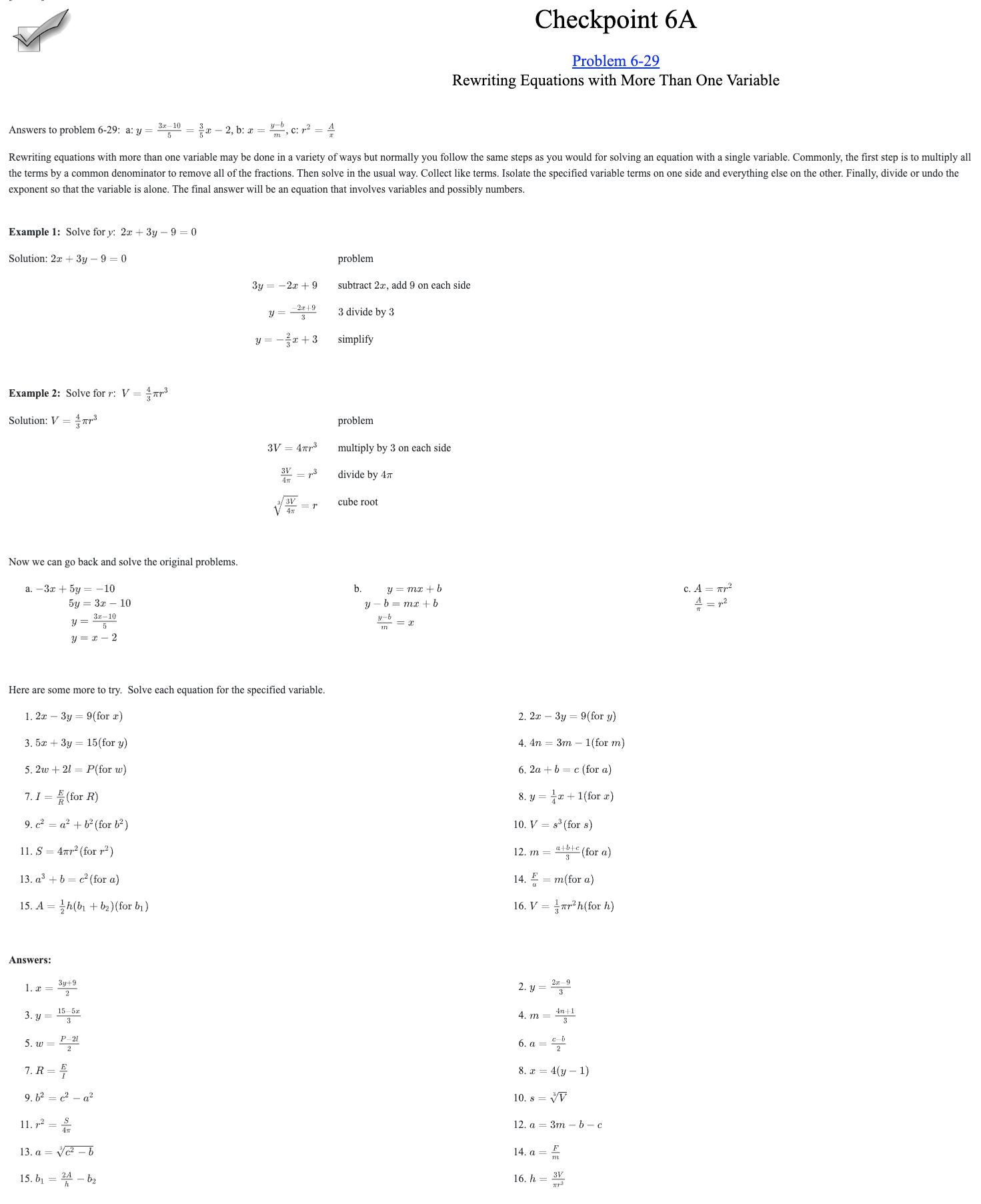
Sample Checkpoint

You are now leaving cpm.org.

Did you want to leave cpm.org?

I want to leave cpm.org.

No, I want to stay on cpm.org

Algebra Tiles Blue Icon
  • Used throughout CPM middle and high school courses
  • Concrete, geometric representation of algebraic concepts.
  • Two-hour virtual session,
  •  Learn how students build their conceptual understanding of simplifying algebraic expressions
  • Solving equations using these tools.  
  • Determining perimeter,
  • Combining like terms,
  • Comparing expressions,
  • Solving equations
  • Use an area model to multiply polynomials,
  • Factor quadratics and other polynomials, and
  • Complete the square.
  • Support the transition from a concrete (manipulative) representation to an abstract model of mathematics..

Foundations for Implementation

This professional learning is designed for teachers as they begin their implementation of CPM. This series contains multiple components and is grounded in multiple active experiences delivered over the first year. This learning experience will encourage teachers to adjust their instructional practices, expand their content knowledge, and challenge their beliefs about teaching and learning. Teachers and leaders will gain first-hand experience with CPM with emphasis on what they will be teaching. Throughout this series educators will experience the mathematics, consider instructional practices, and learn about the classroom environment necessary for a successful implementation of CPM curriculum resources.

Page 2 of the Professional Learning Progression (PDF) describes all of the components of this learning event and the additional support available. Teachers new to a course, but have previously attended Foundations for Implementation, can choose to engage in the course Content Modules in the Professional Learning Portal rather than attending the entire series of learning events again.

Building on Instructional Practice Series

The Building on Instructional Practice Series consists of three different events – Building on Discourse, Building on Assessment, Building on Equity – that are designed for teachers with a minimum of one year of experience teaching with CPM instructional materials and who have completed the Foundations for Implementation Series.

Building on Equity

In Building on Equity, participants will learn how to include equitable practices in their classroom and support traditionally underserved students in becoming leaders of their own learning. Essential questions include: How do I shift dependent learners into independent learners? How does my own math identity and cultural background impact my classroom? The focus of day one is equitable classroom culture. Participants will reflect on how their math identity and mindsets impact student learning. They will begin working on a plan for Chapter 1 that creates an equitable classroom culture. The focus of day two and three is implementing equitable tasks. Participants will develop their use of the 5 Practices for Orchestrating Meaningful Mathematical Discussions and curate strategies for supporting all students in becoming leaders of their own learning. Participants will use an equity lens to reflect on and revise their Chapter 1 lesson plans.

Building on Assessment

In Building on Assessment, participants will apply assessment research and develop methods to provide feedback to students and inform equitable assessment decisions. On day one, participants will align assessment practices with learning progressions and the principle of mastery over time as well as write assessment items. During day two, participants will develop rubrics, explore alternate types of assessment, and plan for implementation that supports student ownership. On the third day, participants will develop strategies to monitor progress and provide evidence of proficiency with identified mathematics content and practices. Participants will develop assessment action plans that will encourage continued collaboration within their learning community.

Building on Discourse

In Building on Discourse, participants will improve their ability to facilitate meaningful mathematical discourse. This learning experience will encourage participants to adjust their instructional practices in the areas of sharing math authority, developing independent learners, and the creation of equitable classroom environments. Participants will plan for student learning by using teaching practices such as posing purposeful questioning, supporting productive struggle, and facilitating meaningful mathematical discourse. In doing so, participants learn to support students collaboratively engaged with rich tasks with all elements of the Effective Mathematics Teaching Practices incorporated through intentional and reflective planning.