
Building Teacher Confidence in the Struggles of Your First Year in the Math Classroom

March 2025

Being a new teacher is hard.  Being a new teacher and supporting a student-centered classroom is… overwhelming.

As a veteran teacher reflecting back on my first year of teaching CPM, I actually feel a bit of discomfort when I look at old quizzes, tests, and other resources I created. When I think about how I utilized and facilitated CPM in my classroom, I am thankful for the patience my students showed me as I was learning right along with them. I know for a fact that they would have had a more refined mathematical experience had they been assigned a more seasoned teacher. To sum up how I feel about my first year of teaching, as the cool kids say, it was pretty cringe.

Get to Know Yourself as a Teacher

But while I was far from perfect, the challenges that came during my first year with CPM provided me opportunities to grow as an educator in ways I may not have if I were using a teacher-centered curriculum. Using CPM with fidelity meant putting my students’ learning needs at the forefront and trialing different classroom practices, such as Study Team and Teaching Strategies, home procedures, and assessment types. Eventually, my students and I got into a groove and the class became comfortable with the fact that Mr. Varnes was constantly trying new things.

For the remainder of this school year, I want to encourage you to get to know yourself as a teacher. Find what works best for you and your students. Take ideas from veteran CPM teachers and make them your own. Above all, though, keep student learning as the top priority.

Becoming the Teacher You Want to Be

As one who has been immersed in CPM both in the classroom and as an instructional coach, I can tell you that the first year of teaching CPM is by far the most difficult. I promise, it will get better. Notice, I did not say it will get easier. As any CPM teacher will tell you, facilitating lessons in this curriculum as it was designed is never easy. But as the years pass and you become more comfortable with the curriculum, you will slowly inch closer to the teacher you always thought you would be as you better understand your role supporting students in learning and understanding the mathematics.

Sure, some teacher moves may fall flat for you, but you will also try strategies that work better than you could have imagined. Every year that passes, you will gain a renewed confidence in your teaching ability and develop a bravery to continue to step outside of your comfort zone, where you will really refine your teaching. Not only will this make you a better teacher, but it will also help create an environment for students in your classroom to thrive.  

Teachers, Be Patient in the Progress

As the school year comes to a close, I want to encourage you to cherish these last few months. Embrace all challenges. Try as many new moves and strategies as you can. Practice regular reflection and look for opportunities to fine-tune anything that may not have gone as you originally planned.

Growth doesn’t happen overnight. Every mistake, challenge, and moment of uncertainty is an opportunity to learn and improve. Be patient with yourself and celebrate the progress, no matter how small it may seem. You’re not just teaching math—you’re shaping the minds of the future. And though this year might have felt tough at times, remember that you are laying the foundation for something truly incredible.
Picture of Adam Varnes

Adam Varnes

CPM Professional Learning Specialist

Statistics

JAVA

Calculus
Third Edition

Precalculus
Third Edition

Precalculus
Supplement

2.3.4

Defining Concavity

4.4.1

Characteristics of Polynomial Functions

5.2.6

Semi-Log Plots

5 Closure

Closure How Can I Apply It? Activity 3

9.3.1

Transition States

9.3.2

Future and Past States

10.3.1

The Parametrization of Functions, Conics, and Their Inverses

10.3.2

Vector-Valued Functions

11.1.5

Rate of Change of Polar Functions

Matemática
Integrada I

Matemática
Integrada II

Matemática
Integrada III

Integrated I

Integrated II

Integrated III

Core Connections en español, Álgebra

Core Connections en español, Geometría

Core Connections en español, Álgebra 2

Core Connections
Algebra

Core Connections Geometry

Core Connections
Algebra 2

Core Connections 1

Core Connections 2

Core Connections 3

Core Connections en español,
Curso 1
Core Connections en español,
Curso 2
Core Connections en español,
Curso 3

Inspiring Connections
Course 1

Inspiring Connections
Course 2

Inspiring Connections
Course 3

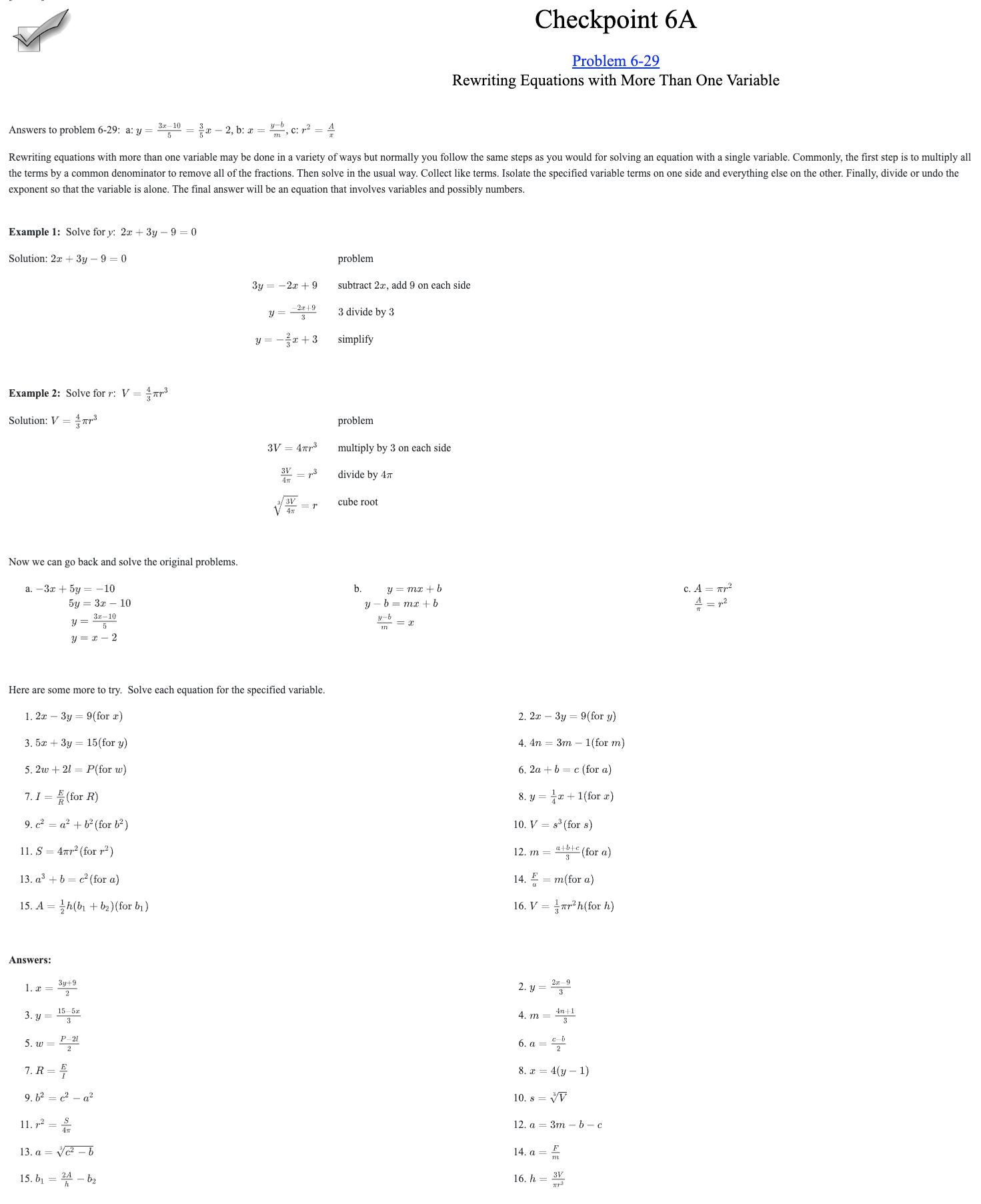
Sample Checkpoint

You are now leaving cpm.org.

Did you want to leave cpm.org?

I want to leave cpm.org.

No, I want to stay on cpm.org

Algebra Tiles Blue Icon
  • Used throughout CPM middle and high school courses
  • Concrete, geometric representation of algebraic concepts.
  • Two-hour virtual session,
  •  Learn how students build their conceptual understanding of simplifying algebraic expressions
  • Solving equations using these tools.  
  • Determining perimeter,
  • Combining like terms,
  • Comparing expressions,
  • Solving equations
  • Use an area model to multiply polynomials,
  • Factor quadratics and other polynomials, and
  • Complete the square.
  • Support the transition from a concrete (manipulative) representation to an abstract model of mathematics..

Foundations for Implementation

This professional learning is designed for teachers as they begin their implementation of CPM. This series contains multiple components and is grounded in multiple active experiences delivered over the first year. This learning experience will encourage teachers to adjust their instructional practices, expand their content knowledge, and challenge their beliefs about teaching and learning. Teachers and leaders will gain first-hand experience with CPM with emphasis on what they will be teaching. Throughout this series educators will experience the mathematics, consider instructional practices, and learn about the classroom environment necessary for a successful implementation of CPM curriculum resources.

Page 2 of the Professional Learning Progression (PDF) describes all of the components of this learning event and the additional support available. Teachers new to a course, but have previously attended Foundations for Implementation, can choose to engage in the course Content Modules in the Professional Learning Portal rather than attending the entire series of learning events again.

Edit Content

Building on Instructional Practice Series

The Building on Instructional Practice Series consists of three different events – Building on Discourse, Building on Assessment, Building on Equity – that are designed for teachers with a minimum of one year of experience teaching with CPM instructional materials and who have completed the Foundations for Implementation Series.

Building on Equity

In Building on Equity, participants will learn how to include equitable practices in their classroom and support traditionally underserved students in becoming leaders of their own learning. Essential questions include: How do I shift dependent learners into independent learners? How does my own math identity and cultural background impact my classroom? The focus of day one is equitable classroom culture. Participants will reflect on how their math identity and mindsets impact student learning. They will begin working on a plan for Chapter 1 that creates an equitable classroom culture. The focus of day two and three is implementing equitable tasks. Participants will develop their use of the 5 Practices for Orchestrating Meaningful Mathematical Discussions and curate strategies for supporting all students in becoming leaders of their own learning. Participants will use an equity lens to reflect on and revise their Chapter 1 lesson plans.

Building on Assessment

In Building on Assessment, participants will apply assessment research and develop methods to provide feedback to students and inform equitable assessment decisions. On day one, participants will align assessment practices with learning progressions and the principle of mastery over time as well as write assessment items. During day two, participants will develop rubrics, explore alternate types of assessment, and plan for implementation that supports student ownership. On the third day, participants will develop strategies to monitor progress and provide evidence of proficiency with identified mathematics content and practices. Participants will develop assessment action plans that will encourage continued collaboration within their learning community.

Building on Discourse

In Building on Discourse, participants will improve their ability to facilitate meaningful mathematical discourse. This learning experience will encourage participants to adjust their instructional practices in the areas of sharing math authority, developing independent learners, and the creation of equitable classroom environments. Participants will plan for student learning by using teaching practices such as posing purposeful questioning, supporting productive struggle, and facilitating meaningful mathematical discourse. In doing so, participants learn to support students collaboratively engaged with rich tasks with all elements of the Effective Mathematics Teaching Practices incorporated through intentional and reflective planning.