CPM Digital Tools

eWorkspace

Empowering mathematics in the digital classroom

Students submit work electronically. Teachers give timely, formative feedback, all inside CPM eBooks, exactly where learning happens.
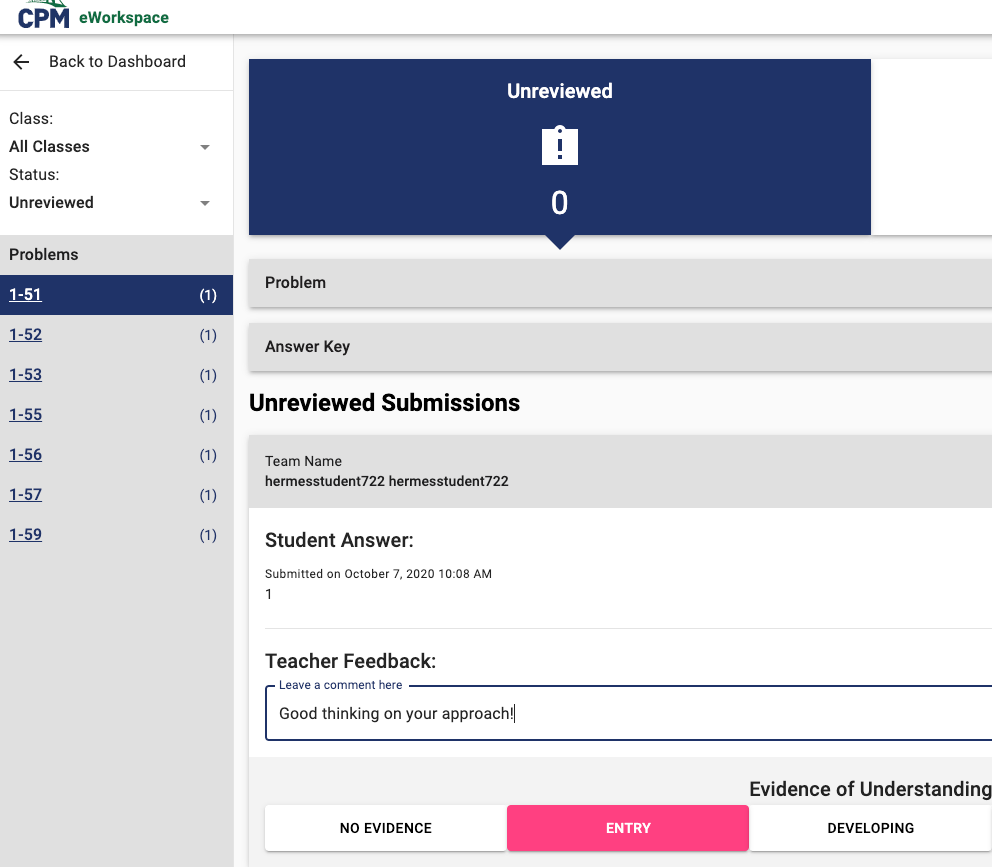
eWorkspace interface showing student submissions and teacher feedback
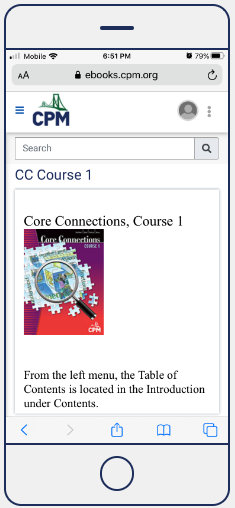
eWorkspace on mobile showing CPM eBooks
How it works

Built into CPM eBooks, no new system to learn

1
Right inside the eBook

eWorkspace is embedded in CPM eBooks. No new system, no separate login.

2
Students submit their work

Right below each problem, in whatever form fits the task.

3
Teachers respond in context

See every submission in one view and give timely, formative feedback, right where students submitted.

Available at no additional cost
Fully Integrated

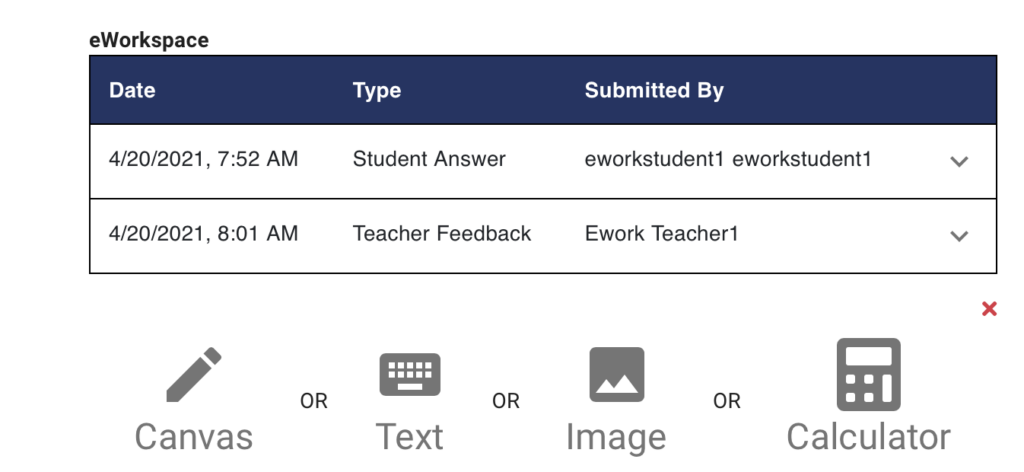
Four ways to show work, right inside the eBook

Students never leave the lesson. No new login, no separate app.

Canvas

Draw or write by hand.

Text

Type a written response.

Image

Upload or photograph work.

Calculator

Built in, no app switching.

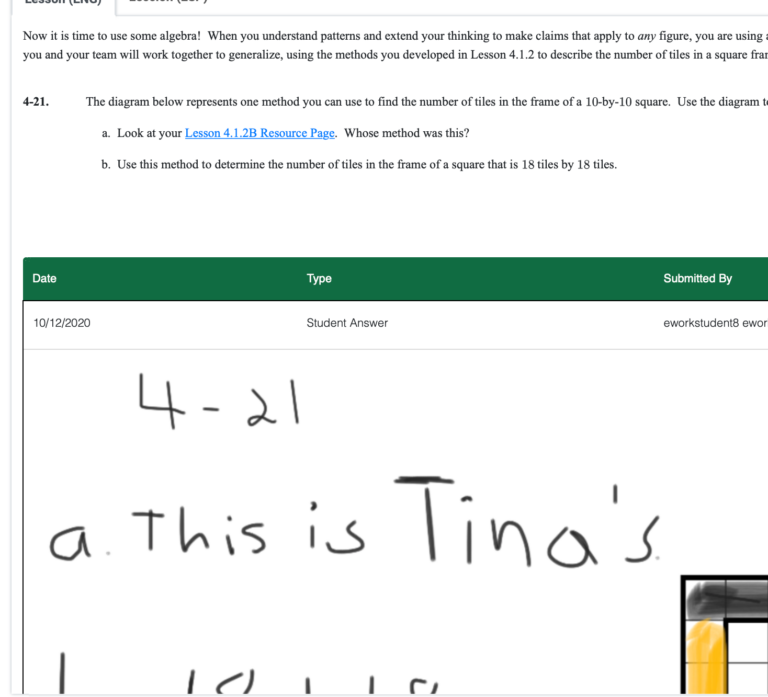
Student handwritten work submitted through eWorkspace
Teacher feedback view in eWorkspace
For Teachers

See every student's work before the lesson ends

A full class view of every submission in one place, without leaving the eBook.

Full class view

Every student's submission together in one place.

Spot who needs help

See who's struggling, who's ready to move on, and who needs a nudge.

Feedback in context

Leave notes right on student work, where they submitted it.
Get Started

Bring eWorkspace to your school at no extra cost

Have your district administration complete the interest form and you'll be on your way to timely, formative feedback for every student.

Request access Takes less than 5 minutes
$0 additional cost
4 submission types
0 extra logins

Statistics

JAVA

Calculus
Third Edition

Precalculus
Third Edition

Precalculus
Supplement

2.3.4

Defining Concavity

4.4.1

Characteristics of Polynomial Functions

5.2.6

Semi-Log Plots

5 Closure

Closure How Can I Apply It? Activity 3

9.3.1

Transition States

9.3.2

Future and Past States

10.3.1

The Parametrization of Functions, Conics, and Their Inverses

10.3.2

Vector-Valued Functions

11.1.5

Rate of Change of Polar Functions

Matemática
Integrada I

Matemática
Integrada II

Matemática
Integrada III

Integrated I

Integrated II

Integrated III

Core Connections en español, Álgebra

Core Connections en español, Geometría

Core Connections en español, Álgebra 2

Core Connections
Algebra

Core Connections Geometry

Core Connections
Algebra 2

Core Connections 1

Core Connections 2

Core Connections 3

Core Connections en español,
Curso 1
Core Connections en español,
Curso 2
Core Connections en español,
Curso 3

Inspiring Connections
Course 1

Inspiring Connections
Course 2

Inspiring Connections
Course 3

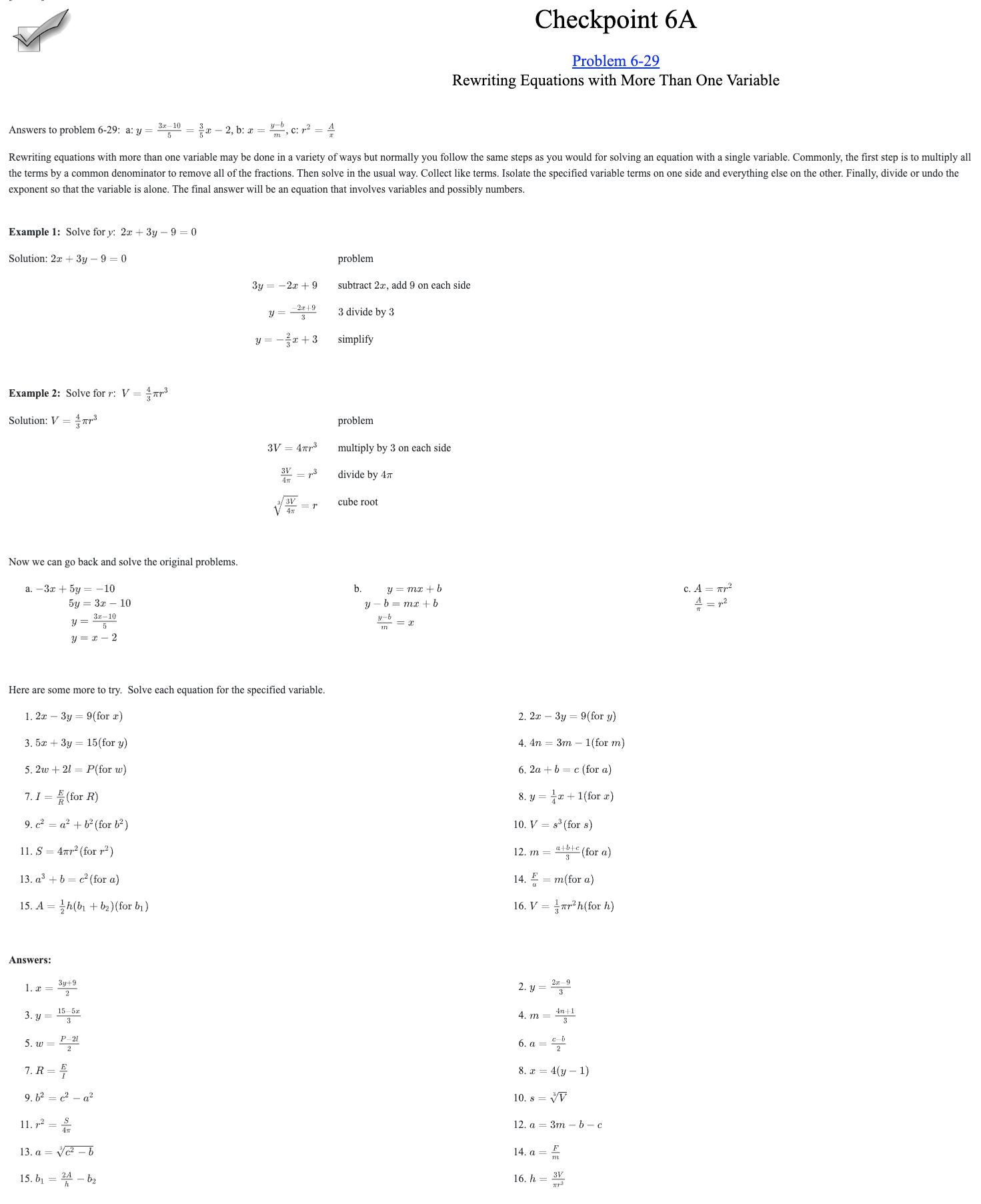
Sample Checkpoint

Newsletter Archives

You are now leaving cpm.org.

Did you want to leave cpm.org?

I want to leave cpmstg.wpengine.com.

No, I want to stay on cpmstg.wpengine.com

Algebra Tiles Blue Icon

Algebra Tiles Session

  • Used throughout CPM middle and high school courses
  • Concrete, geometric representation of algebraic concepts.
  • Two-hour virtual session,
  •  Learn how students build their conceptual understanding of simplifying algebraic expressions
  • Solving equations using these tools.  
  • Determining perimeter,
  • Combining like terms,
  • Comparing expressions,
  • Solving equations
  • Use an area model to multiply polynomials,
  • Factor quadratics and other polynomials, and
  • Complete the square.
  • Support the transition from a concrete (manipulative) representation to an abstract model of mathematics.

Foundations for Implementation

This professional learning is designed for teachers as they begin their implementation of CPM. This series contains multiple components and is grounded in multiple active experiences delivered over the first year. This learning experience will encourage teachers to adjust their instructional practices, expand their content knowledge, and challenge their beliefs about teaching and learning. Teachers and leaders will gain first-hand experience with CPM with emphasis on what they will be teaching. Throughout this series educators will experience the mathematics, consider instructional practices, and learn about the classroom environment necessary for a successful implementation of CPM curriculum resources.

Page 2 of the Professional Learning Progression (PDF) describes all of the components of this learning event and the additional support available. Teachers new to a course but who have previously attended Foundations for Implementation can choose to engage in the course Content Modules in the Professional Learning Portal rather than attending the entire series of learning events again.