
Explore CPM Math Curriculum for Middle & High School
Rich, Meaningful Mathematics. Interactive, Multimodal Learning.
Inspiring Connections brings math to life through real-world contexts that reflect students’ own experiences. Lessons tackle relevant, complex issues while keeping the mathematical rigor high, so students see math as connected, meaningful, and worth engaging with.

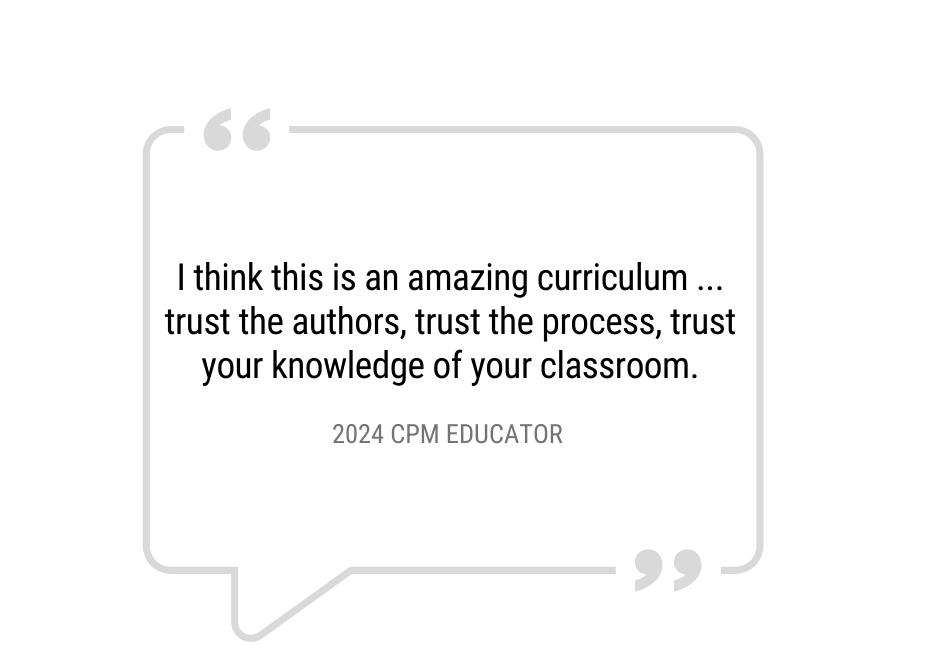
Core Connections is CPM’s time-tested curriculum, built on a research-based progression that develops deep mathematical understanding over time. Lessons are designed to spark discussion, encourage multiple ways of thinking, and give teachers the consistent routines they need to build a strong classroom community.
See what a CPM lesson looks and feels like, from the teacher’s perspective and the student’s.
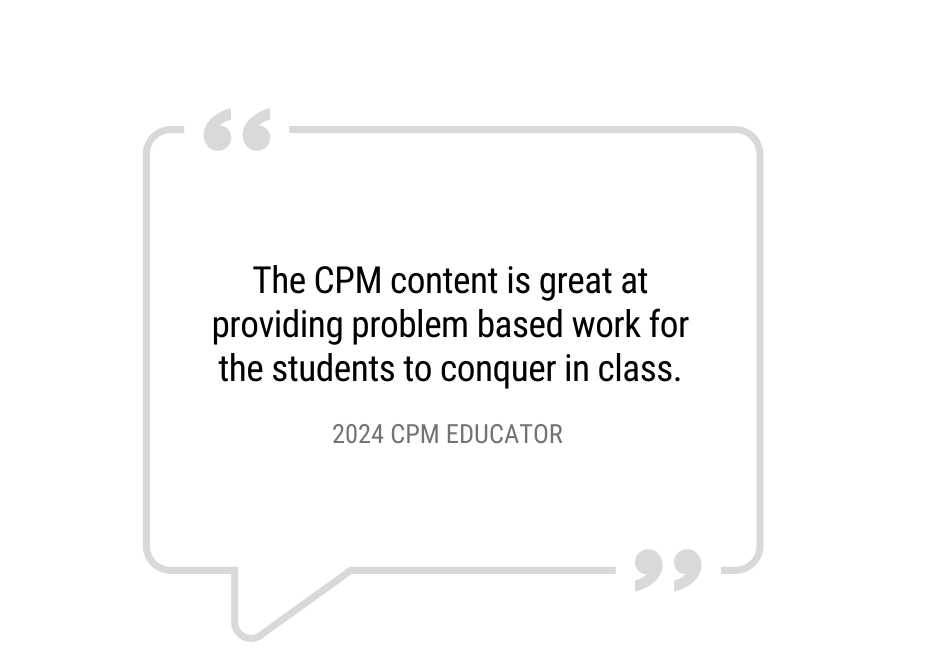
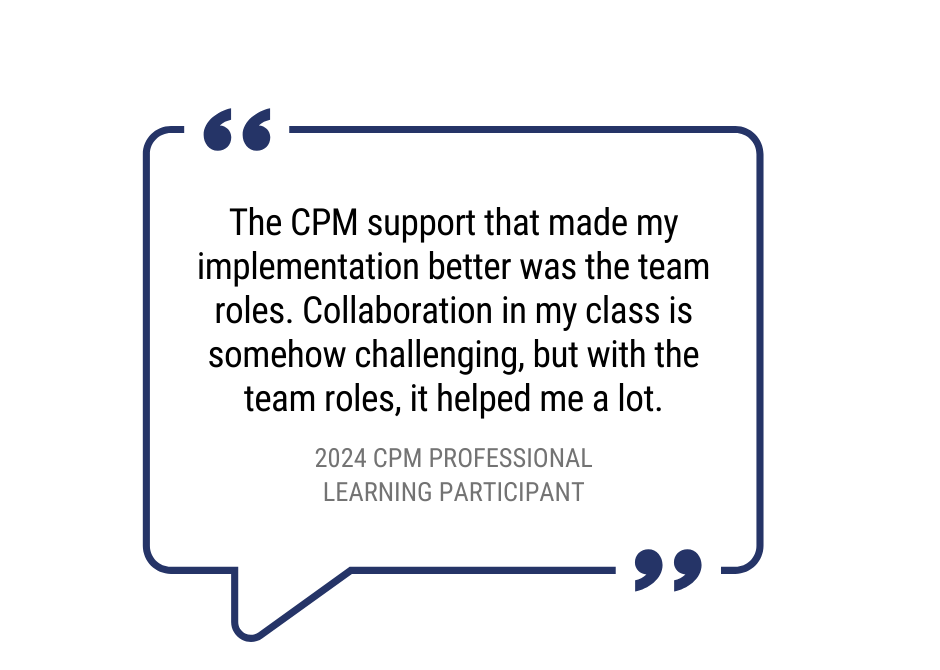
Teachers
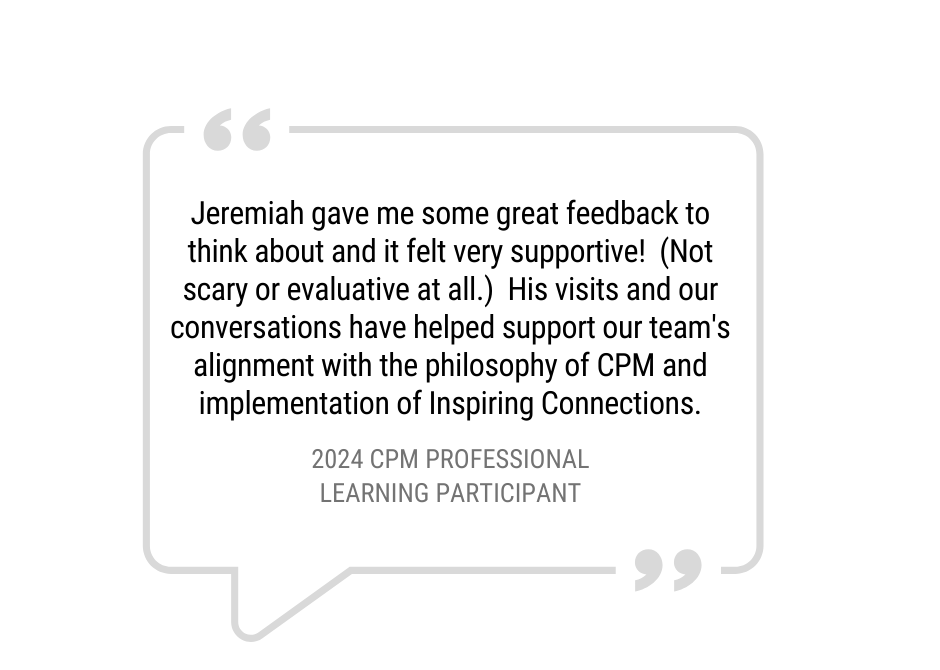
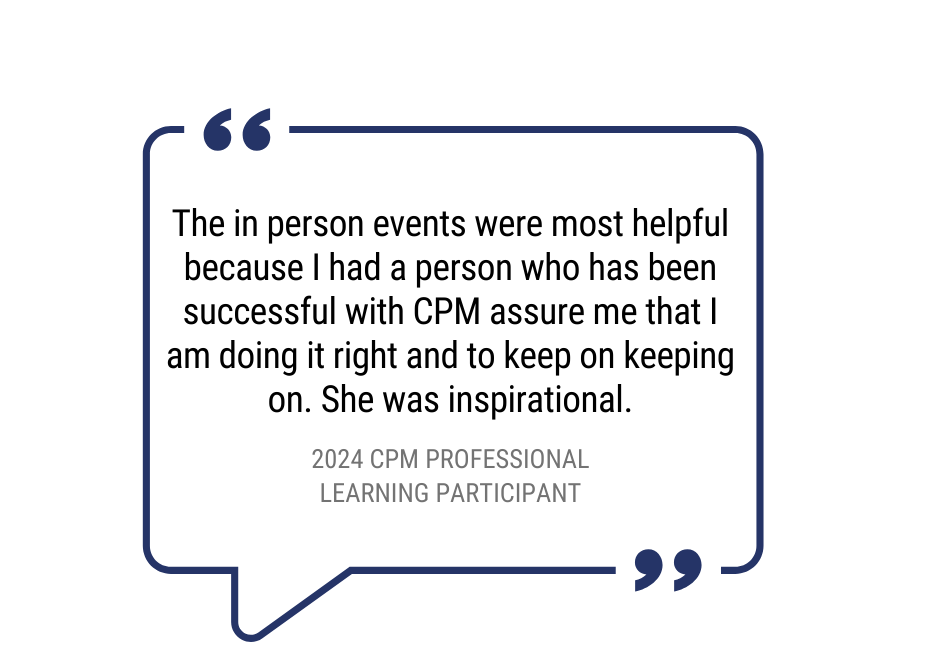
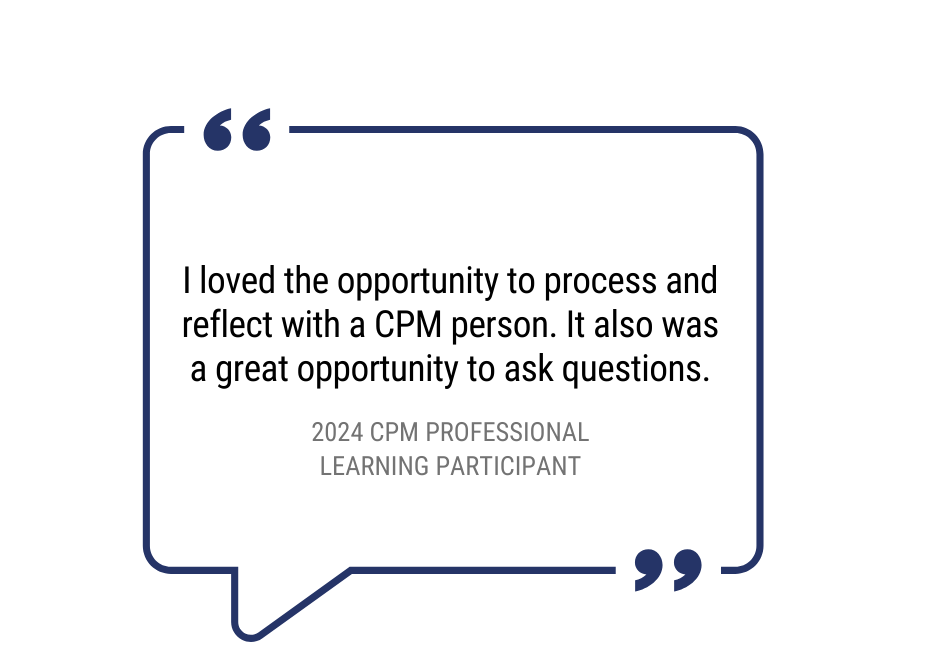
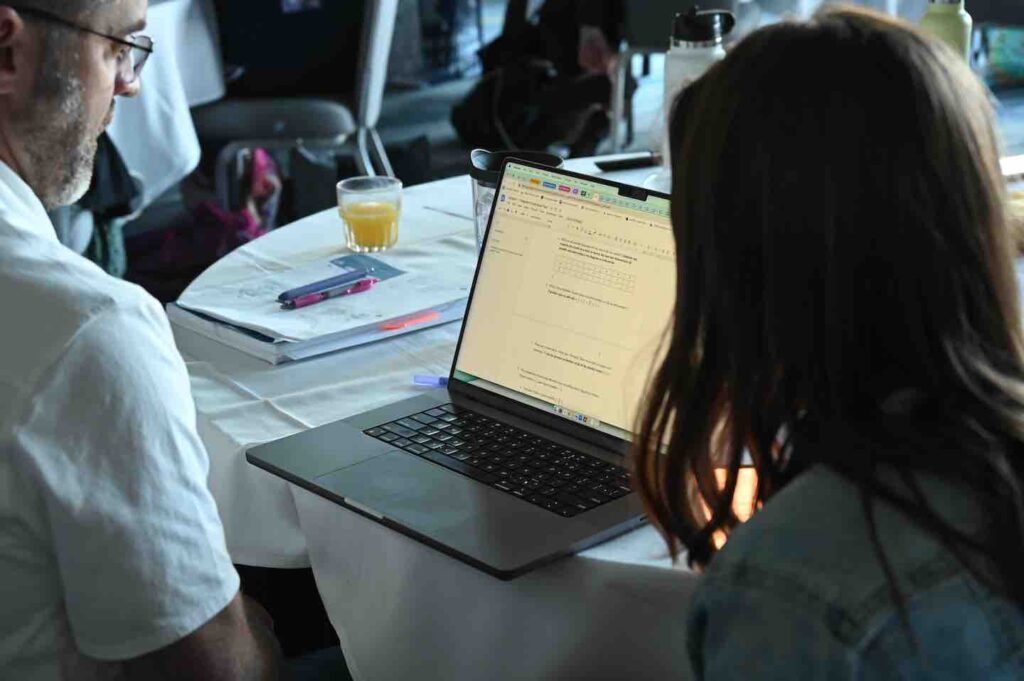
CPM Professional Learning doesn’t just train you. It changes how you teach. Work alongside experienced facilitators to tackle real classroom challenges and walk away with concrete strategies that stick.
Students
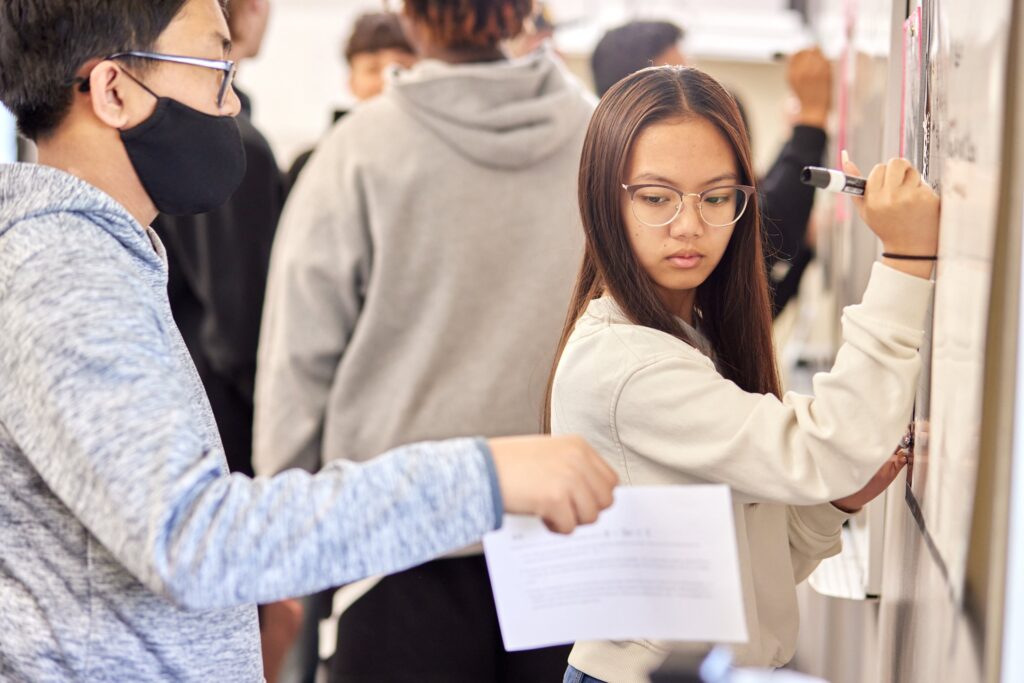
In a CPM classroom, students don’t just follow steps. They think, discuss, and build on each other’s ideas. Over time they develop real confidence in their ability to tackle hard problems and trust their own mathematical thinking.
CPM’s curriculum designers, who are all classroom teachers, regularly follow emerging insights from math education researchers. The release of Inspiring Connections Middle School was a great opportunity to share what we learned over the last few years into our time-tested program, Core Connections Courses 1–3, making a great curriculum even better!
Inspiring Connections is a meaningful, multimodal program utilizing both digital & print materials. Core Connections is CPM’s time-tested program that includes both print and digital options.
Student-centered practice is at the center of CPM!
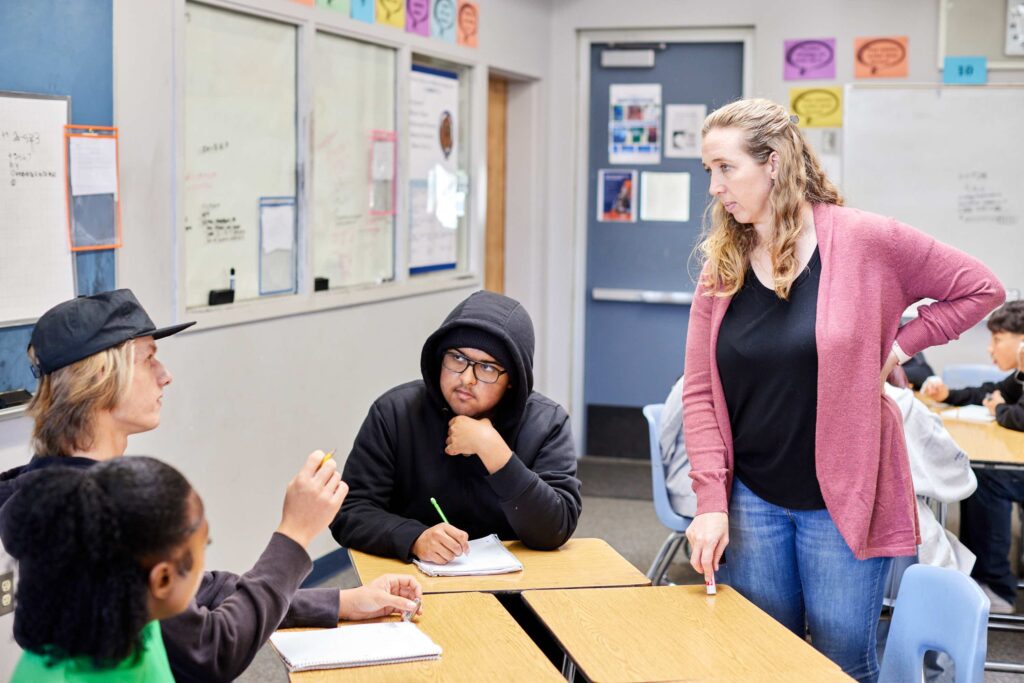
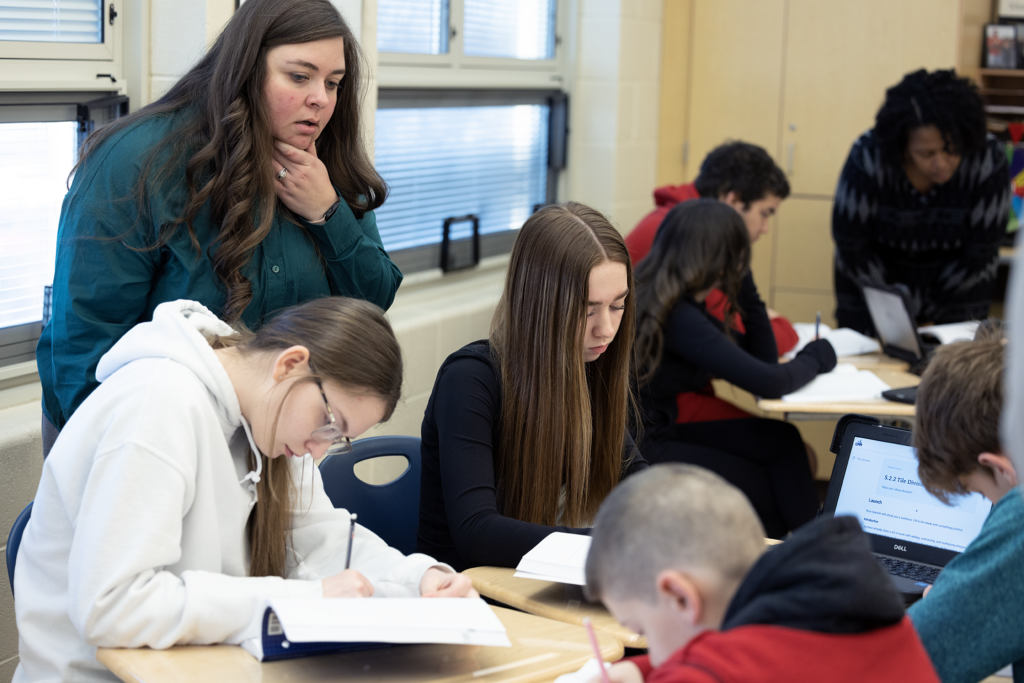
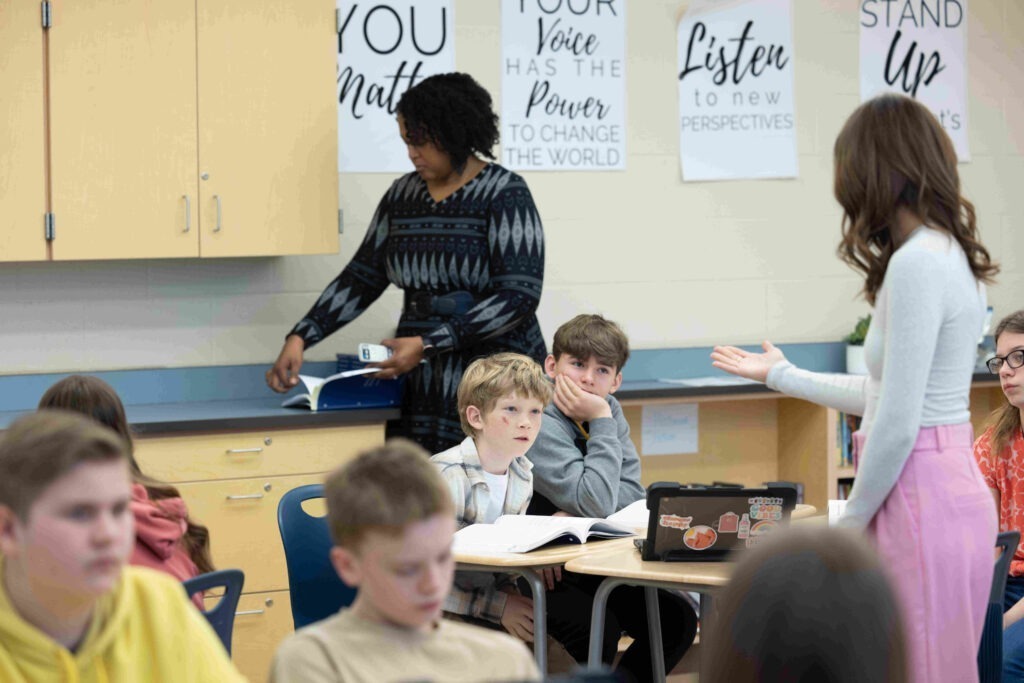
Teachers step off the stage to support students with guidance, questions, and suggestions as students grapple with engaging tasks.
No matter the venue of a lesson, students’ learning and understanding came first in the intent and design. CPM programs place students’ thinking, their language, and their personhood at the center of everything!
With CPM, professional learning and instructional support are embedded directly within the curriculum.
Each lesson follows a consistent Launch–Explore–Closure structure and includes a Lesson at a Glance with materials, preparation notes, additional resources (when applicable), and relevant mathematical background. Teacher Notes and Authors’ Vision provide insight into anticipated student responses, along with suggested questions and facilitation strategies to address student thinking, challenges, and curiosities.
Through a complimentary multi-year professional learning progression and these built-in supports, teachers are equipped to thoughtfully implement and sustain student-centered instructional practices.
CPM programs are low-floor, high-ceiling, and wide-threshold.
Every lesson was designed with incredible attention to Universal Design for Learning, culturally responsive pedagogy, and success for English learners, starting at a point in which all students can engage.
Teachers will find intentional supports embedded right in the curriculum that provide just-in-time support for the diverse needs of learners, including:
CPM lessons include clear language objectives, structured routines, sentence frames, and visual supports to ensure access for all learners.
Instruction is designed with movement and varied engagement in mind. Students work at vertical surfaces, participate in routines such as Exhibit Visits, and take intentional brain breaks to support focus and stamina.
Students learn in collaborative teams, developing understanding through shared reasoning. Strategies like Stop and Scan broaden access to the collective thinking of the classroom.
Throughout the year, students reflect on their learning, share their perspectives and experiences, establish class agreements, and help shape a respectful and inclusive mathematical community.
Mathematical sensemaking requires meaningful context.
For that reason, CPM programs incorporate math language routines that support diverse learners, including Three Reads and Stronger and Clearer.
Intentional Launches, visual cues, and the pacing features included in Inspiring Connections help structure lessons and make effective use of students’ reading time.
The Spanish translation of Inspiring Connections is being released in phases through the 2025–26 school year, including Spanish resource pages and enhancements to the overall user experience.
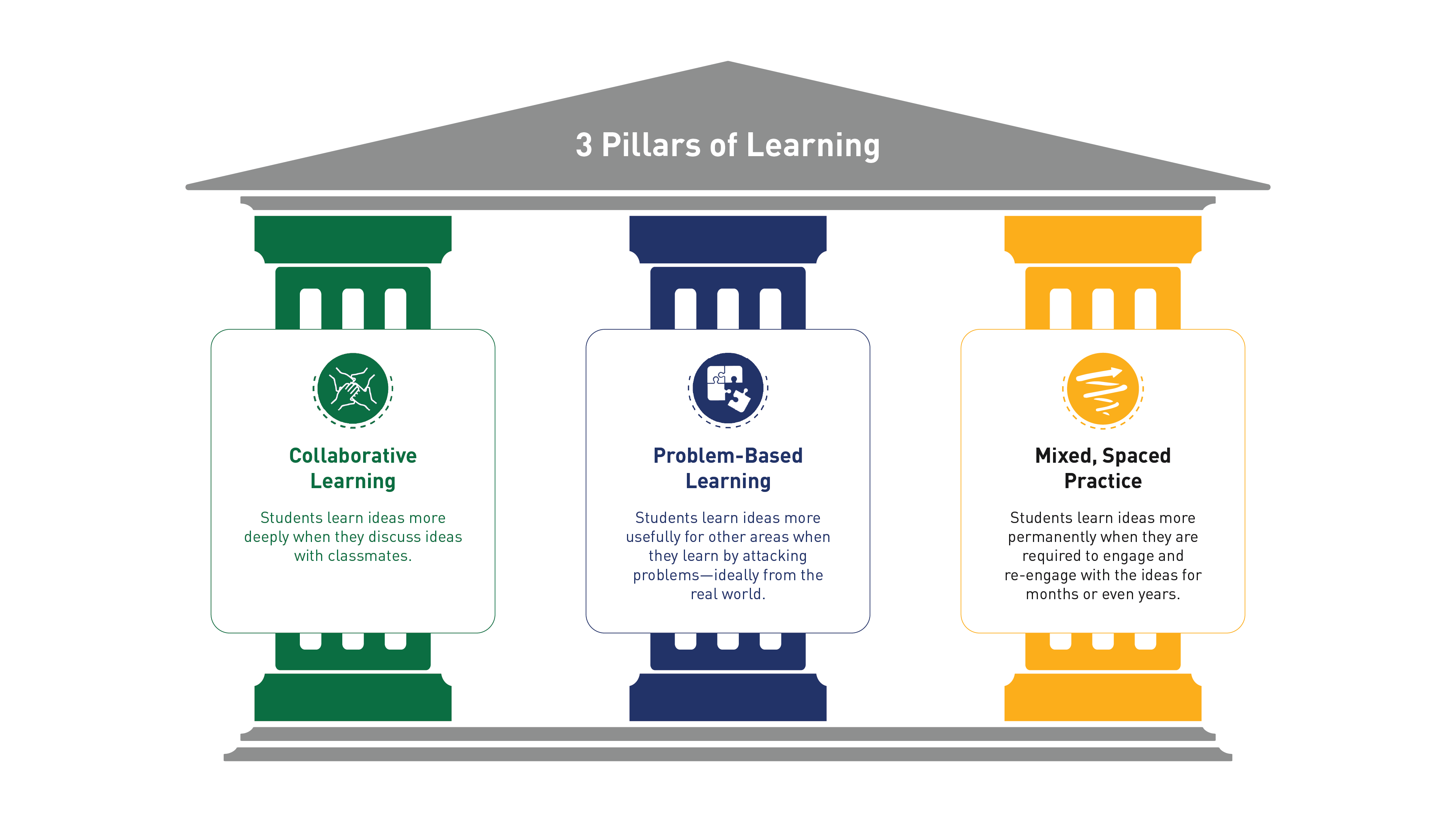
Research consistently shows that learning improves when practice is spaced over time. In CPM programs, topics and skills are intentionally revisited across lessons and practice to strengthen retention and understanding.
Methods & Meanings math notes offer additional clarification, and problems reference the original lesson in which concepts were introduced to reinforce connections and support student recall.
Formative Assessment:
In a problem-based classroom, teachers regularly interact with students as they work, allowing them to monitor the progress of individuals, teams, and the class as a whole. Circulating during lessons provides ongoing insight into student thinking and understanding.
Summative Assessment:
Sample assessments are provided for each chapter, and teachers may adapt or create additional assessments to meet local needs.
Research shows that the mathematics standards for grades 6–8 are rigorous and comprehensive. Students benefit from engaging deeply with these standards rather than moving through them at an accelerated pace.
All learners deserve access to a challenging, coherent curriculum that preserves the integrity of the learning progression.
Please contact the CPM team to discuss any specific questions related to acceleration.
CPM programs are designed with a 45-minute class period in mind, but lessons can be extended to provide additional time for deeper thinking and sustained problem solving.
In shorter class periods, teachers may need to prioritize efficient transitions and maximize collaborative work time. Please contact the CPM team to discuss scheduling options and implementation strategies.
The CPM Pilot Program allows schools and districts to implement CPM curriculum with embedded professional learning and support during the adoption process. A semester- or year-long pilot provides sufficient time for teachers and students to experience the full instructional model.
Participation requires a commitment to attend scheduled CPM Professional Learning sessions (travel may be required). The pilot is designed for schools prepared to invest in thoughtful implementation and instructional growth.
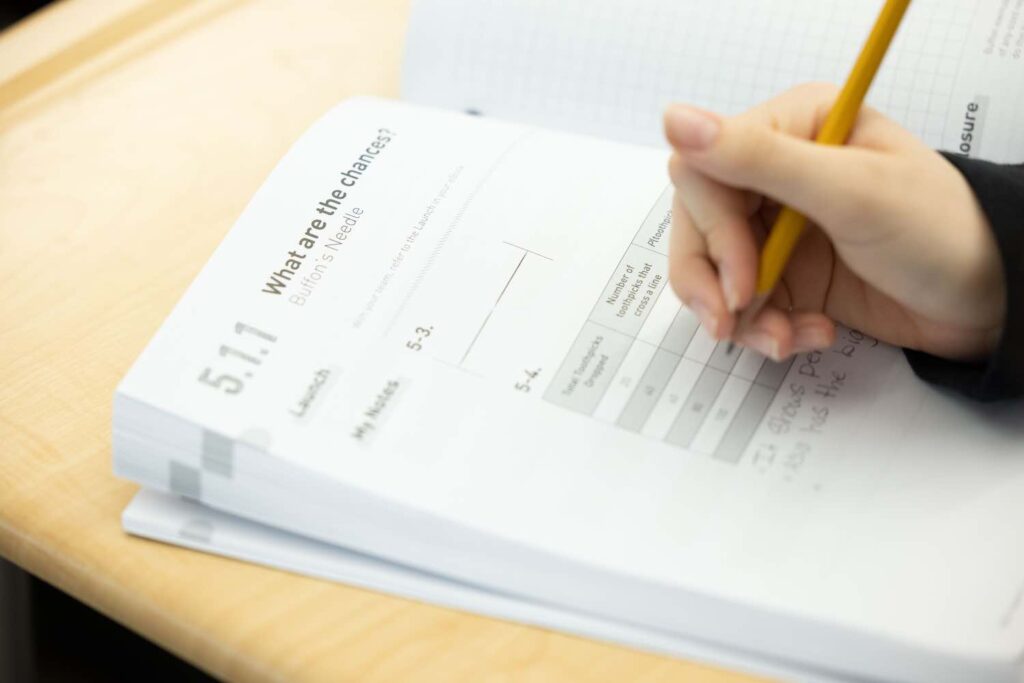
The best way to understand CPM is to experience it. Request a free eBook preview and get full access to the student experience, including lesson structure, instructional routines, embedded assessments, and digital tools.
Once you submit, a CPM team member will reach out within 1 business day to help you explore the right fit for your school or district.
Tell us about yourself and we’ll match you with the right CPM team member.
2.3.4
Defining Concavity
4.4.1
Characteristics of Polynomial Functions
5.2.6
Semi-Log Plots
5 Closure
Closure How Can I Apply It? Activity 3
9.3.1
Transition States
9.3.2
Future and Past States
10.3.1
The Parametrization of Functions, Conics, and Their Inverses
10.3.2
Vector-Valued Functions
11.1.5
Rate of Change of Polar Functions

This professional learning is designed for teachers as they begin their implementation of CPM. This series contains multiple components and is grounded in multiple active experiences delivered over the first year. This learning experience will encourage teachers to adjust their instructional practices, expand their content knowledge, and challenge their beliefs about teaching and learning. Teachers and leaders will gain first-hand experience with CPM with emphasis on what they will be teaching. Throughout this series educators will experience the mathematics, consider instructional practices, and learn about the classroom environment necessary for a successful implementation of CPM curriculum resources.
Page 2 of the Professional Learning Progression (PDF) describes all of the components of this learning event and the additional support available. Teachers new to a course, but have previously attended Foundations for Implementation, can choose to engage in the course Content Modules in the Professional Learning Portal rather than attending the entire series of learning events again.
The Building on Instructional Practice Series consists of three different events – Building on Discourse, Building on Assessment, Building on Equity – that are designed for teachers with a minimum of one year of experience teaching with CPM instructional materials and who have completed the Foundations for Implementation Series.
In Building on Equity, participants will learn how to include equitable practices in their classroom and support traditionally underserved students in becoming leaders of their own learning. Essential questions include: How do I shift dependent learners into independent learners? How does my own math identity and cultural background impact my classroom? The focus of day one is equitable classroom culture. Participants will reflect on how their math identity and mindsets impact student learning. They will begin working on a plan for Chapter 1 that creates an equitable classroom culture. The focus of day two and three is implementing equitable tasks. Participants will develop their use of the 5 Practices for Orchestrating Meaningful Mathematical Discussions and curate strategies for supporting all students in becoming leaders of their own learning. Participants will use an equity lens to reflect on and revise their Chapter 1 lesson plans.
In Building on Assessment, participants will apply assessment research and develop methods to provide feedback to students and inform equitable assessment decisions. On day one, participants will align assessment practices with learning progressions and the principle of mastery over time as well as write assessment items. During day two, participants will develop rubrics, explore alternate types of assessment, and plan for implementation that supports student ownership. On the third day, participants will develop strategies to monitor progress and provide evidence of proficiency with identified mathematics content and practices. Participants will develop assessment action plans that will encourage continued collaboration within their learning community.
In Building on Discourse, participants will improve their ability to facilitate meaningful mathematical discourse. This learning experience will encourage participants to adjust their instructional practices in the areas of sharing math authority, developing independent learners, and the creation of equitable classroom environments. Participants will plan for student learning by using teaching practices such as posing purposeful questioning, supporting productive struggle, and facilitating meaningful mathematical discourse. In doing so, participants learn to support students collaboratively engaged with rich tasks with all elements of the Effective Mathematics Teaching Practices incorporated through intentional and reflective planning.