
For Families

Team Support Guidebook

Using study teams for effective learning

Study team interaction is an integral part of the learning process in the CPM curriculum. The daily activities in a CPM course depend on students working and having discussions in teams to make sense of concepts. The teacher has an active and important role in supporting these interactions and encouraging students’ thinking.

This guidebook explains what your child’s study team is designed to do, what their teacher is doing while teams work, and what to expect as collaboration takes hold across the year.

8 sections, formatted for printing

Support at Home

Get math tips in your inbox

A short email for anyone helping a student at home, whether you are a parent, caregiver, grandparent, or tutor. Practical ways to support their math, plus new resources as we add them. No classroom jargon.

We only use this to send resources for supporting a student.
Unsubscribe any time.

01

Purpose of the Study Team Structure

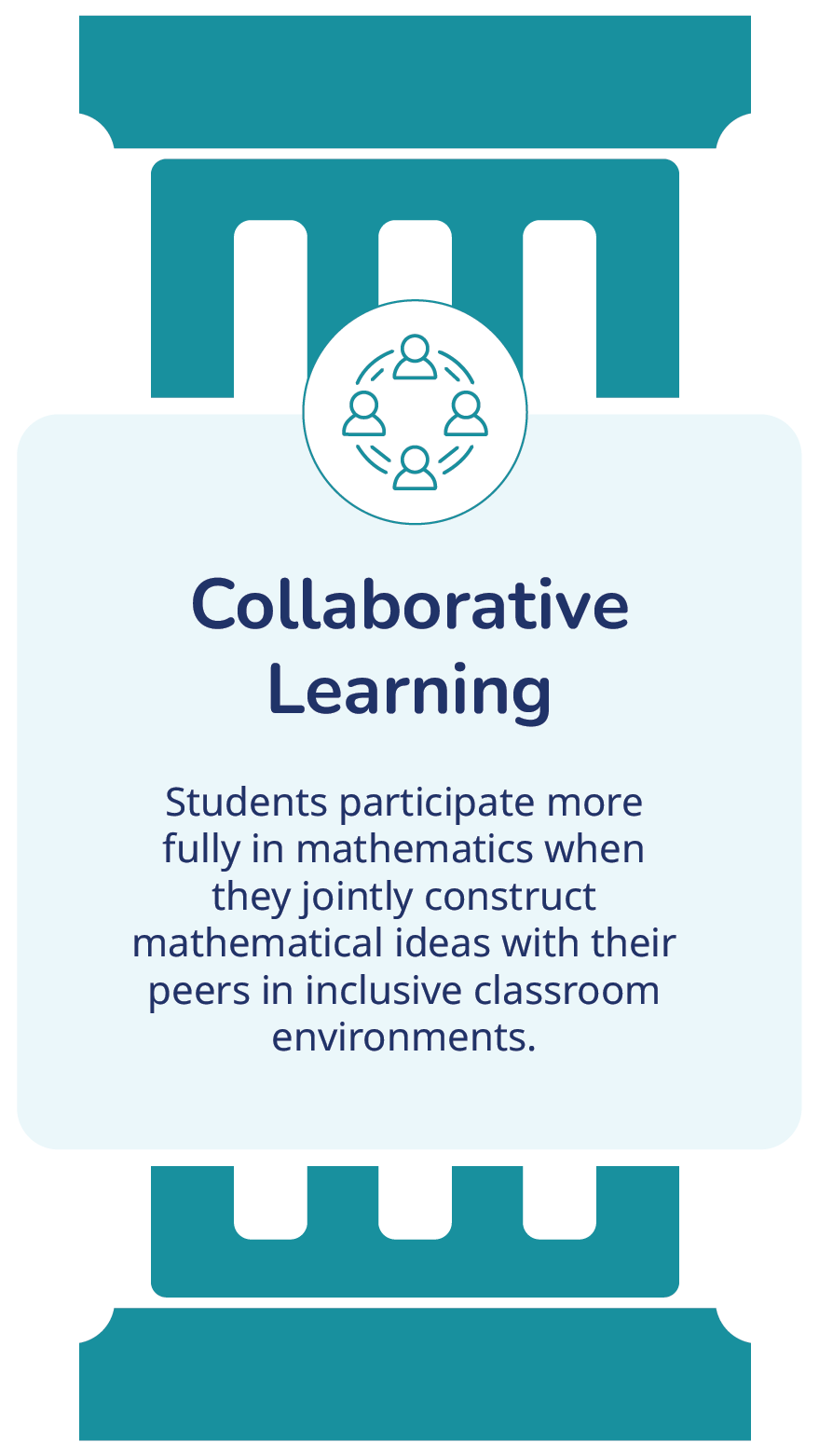
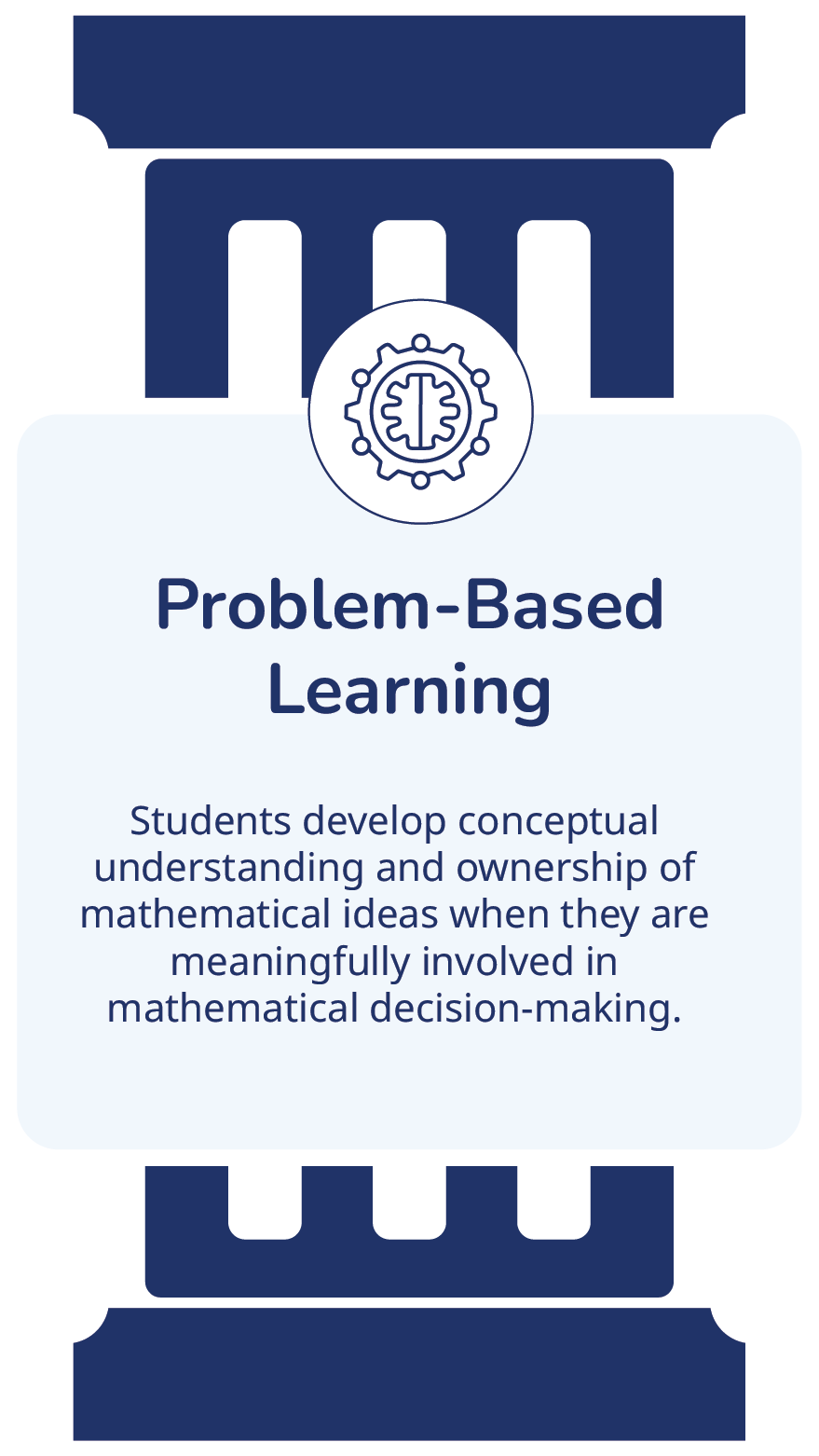
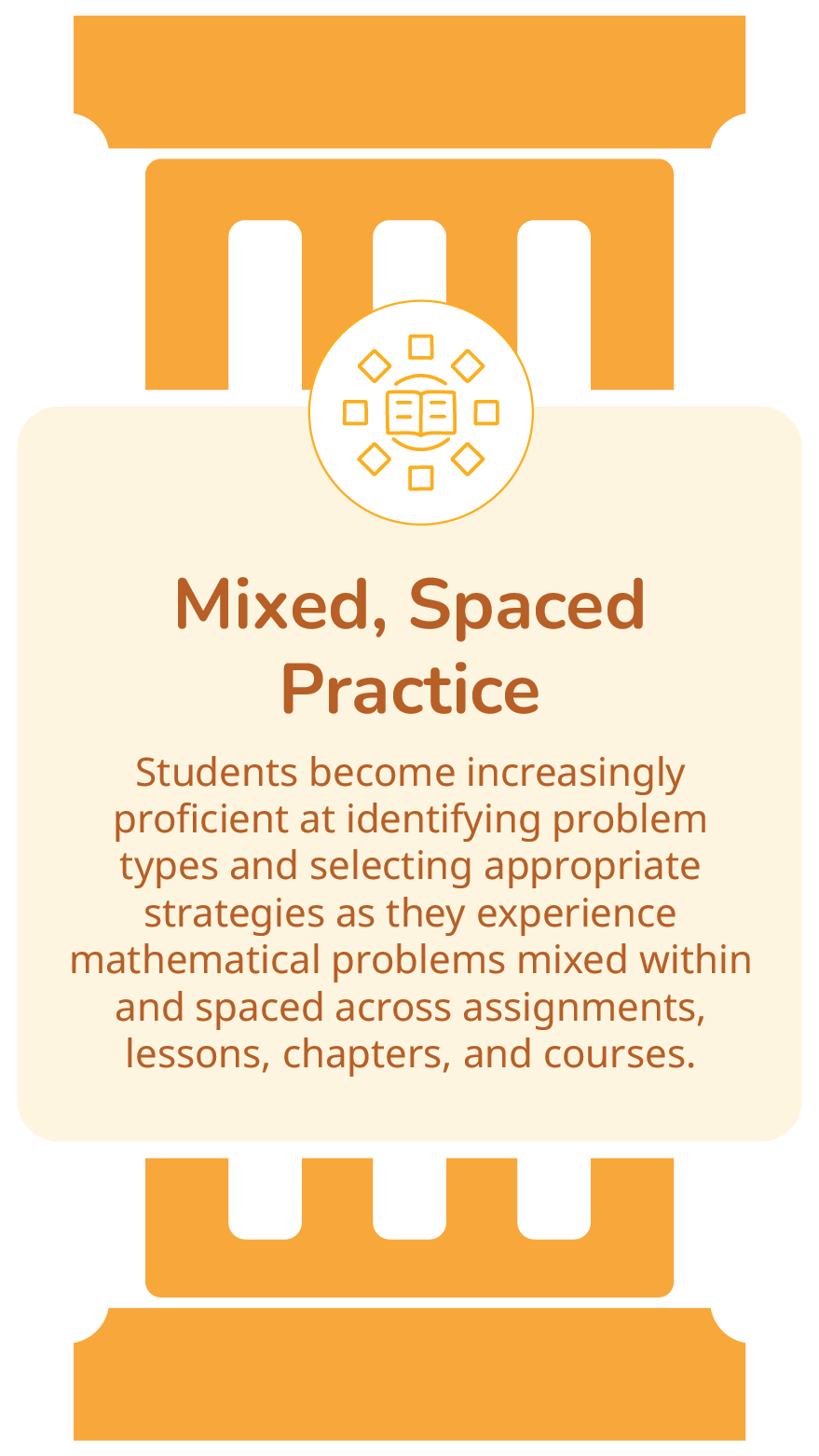
CPM’s curriculum is built on Three Pillars: Collaborative Learning, Problem-Based Learning, and Mixed, Spaced Practice. Collaborative Learning is not merely a preference, it is among the most well-supported findings in mathematics education research.

A Note on Collaboration

CPM’s 2024 Research Base makes an important distinction: collaboration is not the same as cooperation. Cooperation means sharing ideas or dividing up a task. Collaboration means jointly constructing mathematical understanding, students making their thinking public, responding to each other’s ideas, and, over time, generating shared understanding. This is the kind of teamwork CPM’s curriculum is designed to produce.

What are the advantages of having your child work in study teams?

The CPM curriculum is guided by the philosophy that students need to be active participants as they develop their own mathematical understanding. The study team structure, students working in teams of two or four, creates a setting in which students are continuously in the presence of others with whom they can discuss, share ideas, and articulate their thinking.

In study teams, your child refines their ideas, questions, and approaches in the security of a few classmates, where it may be easier to challenge their thinking, especially asking questions, than in a large class setting. Your child consistently communicates with teammates who may see things differently, allowing them to discover new connections between ideas and encouraging them to justify their ideas to their peers.

02

Why Collaborative Learning

Research shows that when you treat math ability as something that can grow, not as something a person is simply born with or without, every child gets more chances to contribute and succeed.

CPM’s team structures are built around this idea. In study teams, your child is empowered to see themself as a mathematical thinker. They recognize their own strengths and those of their peers as they investigate, build a personal understanding of mathematical concepts, and apply their learning to challenging problems.

Several methods of investigation and justification weave through this course. Classwork is intentionally written to be challenging, and thus assumes that students will have peer and teacher support. Lessons are not designed to have your child working alone. Lessons often require your child to solve problems in multiple ways so that they see the benefit of other strategies and ways of making sense of the problems.

Students are encouraged to formulate mathematical questions, structure investigations, and justify their findings. Your child’s discovery of different ways to approach a problem and justify a solution has a more lasting impact when it emerges as they examine each other’s work than it does when simply told about them.

Why Collaboration Works

Research cited in CPM’s 2024 Collaborative Learning report shows that children who work in genuinely collaborative settings demonstrate:

  • Higher mathematical achievement and stronger long-term retention
  • Greater intrinsic motivation and more positive attitudes toward mathematics
  • Increased ability to transfer learning to novel problems
  • Stronger mathematical identity, a sense of themselves as capable doers of mathematics
03

The Teacher’s Role in a Collaborative Classroom

In a traditional math classroom, the teacher demonstrates a procedure and students replicate it. In a CPM classroom, your child encounters problems first and constructs understanding through their own reasoning and team discussion. The teacher’s role shifts from delivering information to orchestrating the conditions in which that understanding develops.

This shift is deliberate and research-backed. It is not a reduction in teaching, it is a redirection.

A Note on Direct Instruction

Teacher-led discussion still matters. The teacher’s role shifts when using study teams. Rather than leading from the front, they bring students’ ideas into a class conversation at the end of each lesson, summarize what was discovered, and connect it to the big mathematical idea.

What Your Child’s Teacher Is Doing While Teams Work

  • Listening to team conversations to follow which ideas are taking shape correctly, where misunderstandings are forming, and which groups need a nudge or a bigger challenge.
  • Asking carefully chosen questions that help your child think through a problem more deeply without just giving away the answer.
  • Watching who is participating, noticing which students are actively contributing and which may be getting left out. The teacher steps in to make sure every student has a real chance to engage with math.
  • Choosing which student ideas to share with the whole class, and in what order, so the discussion builds toward the key mathematical idea of the day.
  • Wrapping up every lesson with a closing activity that pulls the day’s learning together, clears up lingering confusion, and ensures every student leaves with a solid understanding of the main concept.

Giving students feedback

Your child’s teacher may give them feedback about how well they are meeting expectations. This can be done in a class discussion at the end of the day in which they highlight behaviors that helped teams move forward. On other occasions, teachers take public notes about the conversations they hear in teams over the course of a class period.

These notes, organized by team and viewed using a document camera or projector, include quotes or behaviors that the teacher recognizes as meeting the study team expectations. The teacher focuses on the quality of team conversations, the content of the conversations, or particular role behaviors, depending on what they choose to emphasize during a particular activity.

Give It Time

The first weeks of team-based learning can feel bumpy for students and families alike. Students who are used to learning passively do not always immediately thrive in a team setting. Once teams find their footing, the payoff is real: your child starts asking better questions, working through confusion on their own, and genuinely helping each other learn.

As the year goes on you will find that your child is asking better questions, working through their confusion, and relying on their teammates as resources. Successful teamwork requires ongoing support and maintenance. Regular reminders about roles and expectations, and consistent feedback about the quality of conversations throughout the year, will improve team interaction and support effective learning.

04

Where Teamwork Happens

Your child’s team does not always work in the same place. Across a single class period, they may work in several different settings.

  • At their desks or at a team table for most of the collaborative problem solving and for recording work in their math notebooks.
  • At the whiteboard or wall-mounted paper for certain problem-solving activities. Research shows that working while standing up at a widely visible and erasable surface increases students’ willingness to take risks, share their thinking, and stay engaged.
  • On a shared digital device, one per pair, for accessing the online textbook, math tools, and technology-based lessons.

No matter where your child is working, they should always have their math notebook or Toolkit nearby to record their thinking, conclusions, and any new vocabulary from the day.

05

Student Roles in Study Teams

In CPM classrooms, each student in a team is given a specific role. These roles give every child a clear, meaningful way to participate, and they spread responsibility across the group so that no one person carries everything and no one gets left out.

The goal of team roles is not simply to keep your child on task. They are designed to make sure your child has a genuine way to contribute, including those who might otherwise hold back, check out, or get talked over. Roles are an equity tool as much as a management tool.

How teams are formed, and why it is done randomly

Teams may change every day. This is done through a practice called Visibly Random Teams, where students can see that the groupings are genuinely random, not chosen by the teacher based on ability, grades, or behavior.

How Team Roles Encourage Participation and Equity

  • Roles are assigned randomly. Your child does not get to pick their role. This prevents students from sorting themselves by unconscious biases and sends a clear message that every student is capable of every role.
  • Roles are made visible. Descriptions are posted so students can see exactly what their job is during that activity.
  • Roles rotate regularly. Over the course of the year, your child will experience each role multiple times. The social pecking order that forms in long-term groups does not get a chance to take hold.
  • The teacher models what roles sound like. Before an activity, they briefly walk through what each role should do and say sample phrases to help students know what is expected.
  • Roles are reinforced throughout the year. Especially after teams change or after a school break, the class revisits how roles work.
06

Expectations for Student Interaction

To maximize learning opportunities, your child is expected to actively participate within their study teams. They need shared expectations for how to treat each other’s ideas, how to ask for help, and how to work through disagreements. Your child’s teacher revisits these throughout the year, especially when teams change or collaboration starts to break down.

CPM suggests the following guidelines for teams, which your child can remember using the acronym TEAMS.

Together, work to answer questions.

Requiring students to work within their team helps them to see each other as resources and to find their own way of solving a problem. By making students look to the others in their team rather than friends in other parts of the classroom, it helps ensure that no student is excluded from the conversation. Teams should work and move as a team without leaving anyone behind or having anyone working ahead.

Explain and give reasons.

There are multiple valid ways to solve a problem. Students are expected to share their reasoning, not just their answers. This is directly connected to CPM’s emphasis on mathematical justification.

Ask questions and share ideas.

This helps to set a tone that the classroom is a community of support. It also challenges students to help a teammate understand and make sense of ideas for themselves instead of simply receiving an answer. Asking questions and sharing unfinished thinking is expected and valued, and is reinforced by routines like Rough Draft Talk.

Members of your team are your first resource.

Before calling the teacher, teams are expected to try to answer their own questions. This builds the self-directed, independent learning habits that are one of CPM’s core goals.

Smarter together than apart.

Understanding others’ approaches improves individual understanding. The goal is not for the fastest student to solve the problem, but for everyone to understand.

07

Using the Text and Resource Materials

CPM’s course materials are built to support teamwork, not just individual practice. Each lesson gives your child’s team a shared problem to work through together, along with the guidance and tools they need to make sense of it as a group.

  • The textbook is a team resource, not a worksheet. Problems are designed to be worked through out loud, with each team member contributing ideas, not completed silently and separately.
  • The Toolkit is where the why gets recorded. After a team works through a problem together, students record their own understanding, key vocabulary, and worked examples in their notebook or Toolkit. This is what your child can return to later when studying or reviewing.
  • Digital tools support, not replace, the teamwork. Whether your child is using a physical or digital version of the text, the expectation is the same: the tools are there to support team discussion, not to let students work through material in isolation.
08

Additional Help

Every team has an adjustment period. If your child mentions that their team is not working well, here are a few things worth knowing.

  • A slow start is normal. Teams new to each other, or new to working this way, often need several sessions before collaboration clicks. Teachers expect this and build in time for it.
  • Teachers are actively watching and adjusting. If a team is struggling, the teacher steps in with a specific strategy to move the conversation forward.
  • Teams change often. Your child has opportunities to grow, learn different team roles, and communicate more effectively with their peers.
  • You can ask for more detail. If you want to understand how your child’s class handles team challenges, their teacher is the best source.

If you would like to dig deeper into how CPM approaches teamwork, or if you have questions you would like answered, these resources are available for families.

Keep Going

Successful teamwork requires ongoing support and maintenance. Regular reminders about roles and expectations, and consistent feedback about the quality of conversations throughout the year, will improve team interaction and support effective learning.

Quick Reference

Words in This Guidebook

Study team

The 2 to 4 classmates your child works with in class. Each has an assigned role, and teams change often.

Three Pillars

The three things CPM builds every course on: Collaborative Learning, Problem-Based Learning, and Mixed, Spaced Practice.

Collaborative Learning

Students jointly building understanding, not just sitting together or splitting up a task. See the note on collaboration in Section 01.

Problem-Based Learning

Students meet a problem first and work out the mathematics from it, rather than being shown a procedure and repeating it.

Mixed, Spaced Practice

Practice that mixes in topics from earlier chapters instead of drilling only today’s lesson. It is why your child remembers it longer.

Team roles

Each student in a team is given a specific job so everyone has a clear way to contribute and no one is left out.

Visibly Random Teams

Teams formed by a random process students can see, so no one believes they were sorted by ability, grades, or behavior.

Rough Draft Talk

Saying an idea out loud before you are sure it is right. It is meant to be unfinished, and it is encouraged.

Toolkit

The notebook your child builds through the course, holding their own notes, key vocabulary, and worked examples in their own words.

Methods and Meanings

The boxes in the book with definitions and formulas. They appear after students have worked with an idea. Called Math Notes in 2nd Edition.

Reflection and Practice

The take-home practice in Inspiring Connections. Called Review and Preview in Core Connections.

Closure

The short activity at the end of a lesson where the teacher pulls the day’s learning together and clears up confusion.

Mathematical identity

Whether a student sees themself as someone who can do mathematics. CPM treats this as something the classroom shapes, not something fixed.

Justification

Explaining why an answer works, not just what the answer is. CPM expects students to share reasoning, not only results.

CPM Research Base

CPM’s published research on how its curriculum works, updated in 2024 and written to be readable by families.

Tell Us What You Think

Was this page helpful?

Your feedback shapes what goes on these pages. For questions about your child’s specific team or class, their teacher is still the best person to ask.

NoSomewhatYes


    YesSomewhatNo

    Statistics

    JAVA

    Calculus
    Third Edition

    Precalculus
    Third Edition

    Precalculus
    Supplement

    2.3.4

    Defining Concavity

    4.4.1

    Characteristics of Polynomial Functions

    5.2.6

    Semi-Log Plots

    5 Closure

    Closure How Can I Apply It? Activity 3

    9.3.1

    Transition States

    9.3.2

    Future and Past States

    10.3.1

    The Parametrization of Functions, Conics, and Their Inverses

    10.3.2

    Vector-Valued Functions

    11.1.5

    Rate of Change of Polar Functions

    Matemática
    Integrada I

    Matemática
    Integrada II

    Matemática
    Integrada III

    Integrated I

    Integrated II

    Integrated III

    Core Connections en español, Álgebra

    Core Connections en español, Geometría

    Core Connections en español, Álgebra 2

    Core Connections
    Algebra

    Core Connections Geometry

    Core Connections
    Algebra 2

    Core Connections 1

    Core Connections 2

    Core Connections 3

    Core Connections en español,
    Curso 1
    Core Connections en español,
    Curso 2
    Core Connections en español,
    Curso 3

    Inspiring Connections
    Course 1

    Inspiring Connections
    Course 2

    Inspiring Connections
    Course 3

    Sample Checkpoint

    Newsletter Archives

    You are now leaving cpm.org.

    Did you want to leave cpm.org?

    I want to leave cpmstg.wpengine.com.

    No, I want to stay on cpmstg.wpengine.com

    Algebra Tiles Blue Icon

    Algebra Tiles Session

    • Used throughout CPM middle and high school courses
    • Concrete, geometric representation of algebraic concepts.
    • Two-hour virtual session,
    •  Learn how students build their conceptual understanding of simplifying algebraic expressions
    • Solving equations using these tools.  
    • Determining perimeter,
    • Combining like terms,
    • Comparing expressions,
    • Solving equations
    • Use an area model to multiply polynomials,
    • Factor quadratics and other polynomials, and
    • Complete the square.
    • Support the transition from a concrete (manipulative) representation to an abstract model of mathematics.

    Foundations for Implementation

    This professional learning is designed for teachers as they begin their implementation of CPM. This series contains multiple components and is grounded in multiple active experiences delivered over the first year. This learning experience will encourage teachers to adjust their instructional practices, expand their content knowledge, and challenge their beliefs about teaching and learning. Teachers and leaders will gain first-hand experience with CPM with emphasis on what they will be teaching. Throughout this series educators will experience the mathematics, consider instructional practices, and learn about the classroom environment necessary for a successful implementation of CPM curriculum resources.

    Page 2 of the Professional Learning Progression (PDF) describes all of the components of this learning event and the additional support available. Teachers new to a course but who have previously attended Foundations for Implementation can choose to engage in the course Content Modules in the Professional Learning Portal rather than attending the entire series of learning events again.