Research-backed math curriculum for grades 6–12, built by teachers and designed to develop deep mathematical understanding through collaboration and problem solving.
Every design decision in CPM curriculum comes back to one question: how do students best learn and retain mathematics? Here's what 35 years of classroom practice and a growing body of research taught us.
Student-Centered Learning
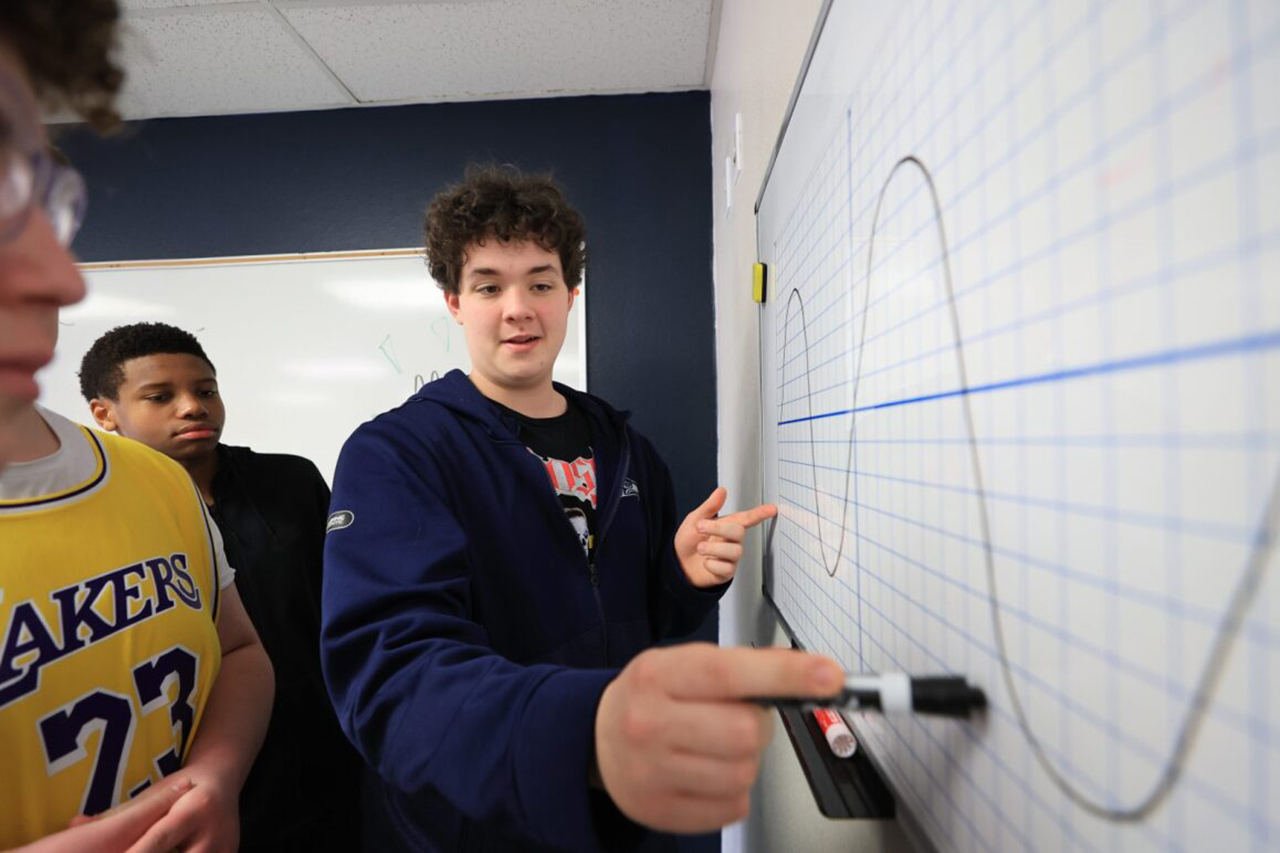
Students work in study teams of 2–4, providing structured opportunities for mathematical discourse, risk-taking, and idea refinement. Teaching strategies are designed to make collaborative study teams genuinely effective — not just a seating arrangement.
Problem-Based Instruction
Every lesson is built around engaging, non-routine problems. Students construct knowledge through embedded questioning and productive struggle — arriving at mathematical understanding rather than having it handed to them.
Research-Supported Design
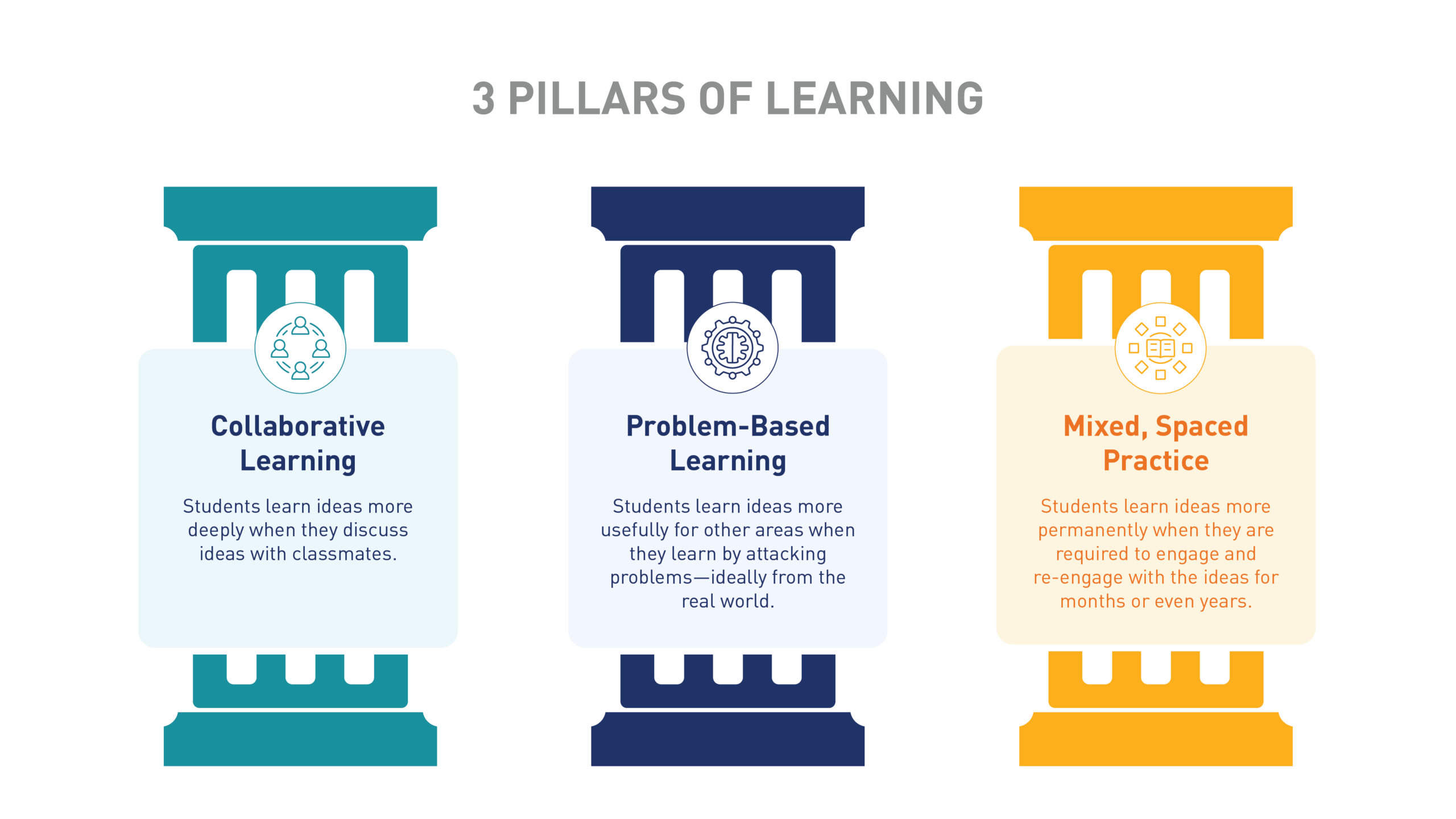
CPM's Three Pillars — Collaborative Learning, Problem-Based Learning, and Mixed Spaced Practice — are grounded in decades of mathematics education research and validated by the 2024 Research Base update. Built from the research up, not retrofitted to it.
Connected Knowledge
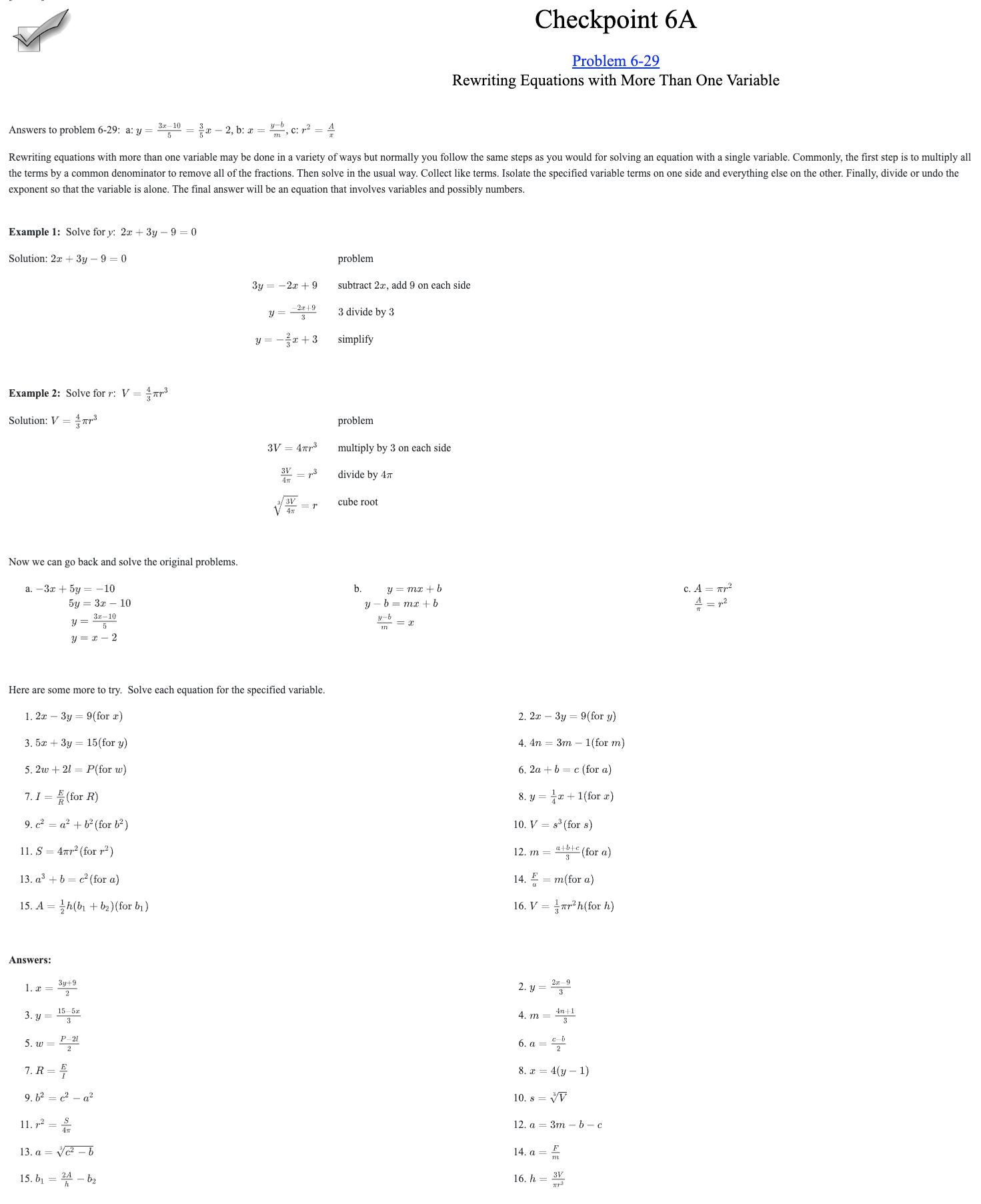
Topics don't exist in isolation in CPM. Concepts are interleaved across the course so students revisit and reinforce ideas over time. Mixed, spaced practice builds genuine long-term retention — not cramming before a test.
High-Quality Resources
CPM curriculum comes with a full ecosystem of support: eTools for digital exploration, virtual Homework Help for students, Parent Guides to keep families in the loop, Lesson Mathcasts for teachers, and access to CPM's professional learning programs.
Built on Evidence
CPM's Three Pillars of Research
Synthesized from NCTM standards and decades of constructivist research, CPM's Three Pillars — Collaborative Learning, Problem-Based Learning, and Mixed Spaced Practice — continue to be validated by current mathematics education scholarship. Read the full research base to understand the evidence behind every CPM lesson.
This professional learning is designed for teachers as they begin their implementation of CPM. This series contains multiple components and is grounded in multiple active experiences delivered over the first year. This learning experience will encourage teachers to adjust their instructional practices, expand their content knowledge, and challenge their beliefs about teaching and learning. Teachers and leaders will gain first-hand experience with CPM with emphasis on what they will be teaching. Throughout this series educators will experience the mathematics, consider instructional practices, and learn about the classroom environment necessary for a successful implementation of CPM curriculum resources.
Page 2 of the Professional Learning Progression (PDF) describes all of the components of this learning event and the additional support available. Teachers new to a course, but have previously attended Foundations for Implementation, can choose to engage in the course Content Modules in the Professional Learning Portal rather than attending the entire series of learning events again.
Building on Instructional Practice Series
The Building on Instructional Practice Series consists of three different events – Building on Discourse, Building on Assessment, Building on Equity – that are designed for teachers with a minimum of one year of experience teaching with CPM instructional materials and who have completed the Foundations for Implementation Series.
In Building on Equity, participants will learn how to include equitable practices in their classroom and support traditionally underserved students in becoming leaders of their own learning. Essential questions include: How do I shift dependent learners into independent learners? How does my own math identity and cultural background impact my classroom? The focus of day one is equitable classroom culture. Participants will reflect on how their math identity and mindsets impact student learning. They will begin working on a plan for Chapter 1 that creates an equitable classroom culture. The focus of day two and three is implementing equitable tasks. Participants will develop their use of the 5 Practices for Orchestrating Meaningful Mathematical Discussions and curate strategies for supporting all students in becoming leaders of their own learning. Participants will use an equity lens to reflect on and revise their Chapter 1 lesson plans.
In Building on Assessment, participants will apply assessment research and develop methods to provide feedback to students and inform equitable assessment decisions. On day one, participants will align assessment practices with learning progressions and the principle of mastery over time as well as write assessment items. During day two, participants will develop rubrics, explore alternate types of assessment, and plan for implementation that supports student ownership. On the third day, participants will develop strategies to monitor progress and provide evidence of proficiency with identified mathematics content and practices. Participants will develop assessment action plans that will encourage continued collaboration within their learning community.
In Building on Discourse, participants will improve their ability to facilitate meaningful mathematical discourse. This learning experience will encourage participants to adjust their instructional practices in the areas of sharing math authority, developing independent learners, and the creation of equitable classroom environments. Participants will plan for student learning by using teaching practices such as posing purposeful questioning, supporting productive struggle, and facilitating meaningful mathematical discourse. In doing so, participants learn to support students collaboratively engaged with rich tasks with all elements of the Effective Mathematics Teaching Practices incorporated through intentional and reflective planning.