Nov 2025
I recently attended an event at the University of Minnesota called Brain Day, hosted by graduate students and professors in the Neuroscience Department. I had expected a small gathering but was pleasantly surprised to find more than 30 booths, each highlighting fascinating research. Visitors received a stamped passport to guide them through the exhibits—a creative way to encourage exploration.
My gracious host and dear friend, Dr. Lorene Lanier, led us through the event. Two of my most memorable stops included one booth demonstrating research on seizures and another focused on Parkinson’s disease. As I listened to the presenters describe their research, I was struck by their genuine curiosity and passion for discovery.
So, how do we foster this same natural curiosity in our own classrooms? The Prelude of Inspiring Connections Course 1 says that “one goal of this course is to help students become independent learners.” This reminds me that our curriculum and instruction are meant to prepare future thinkers and researchers in any field they pursue.
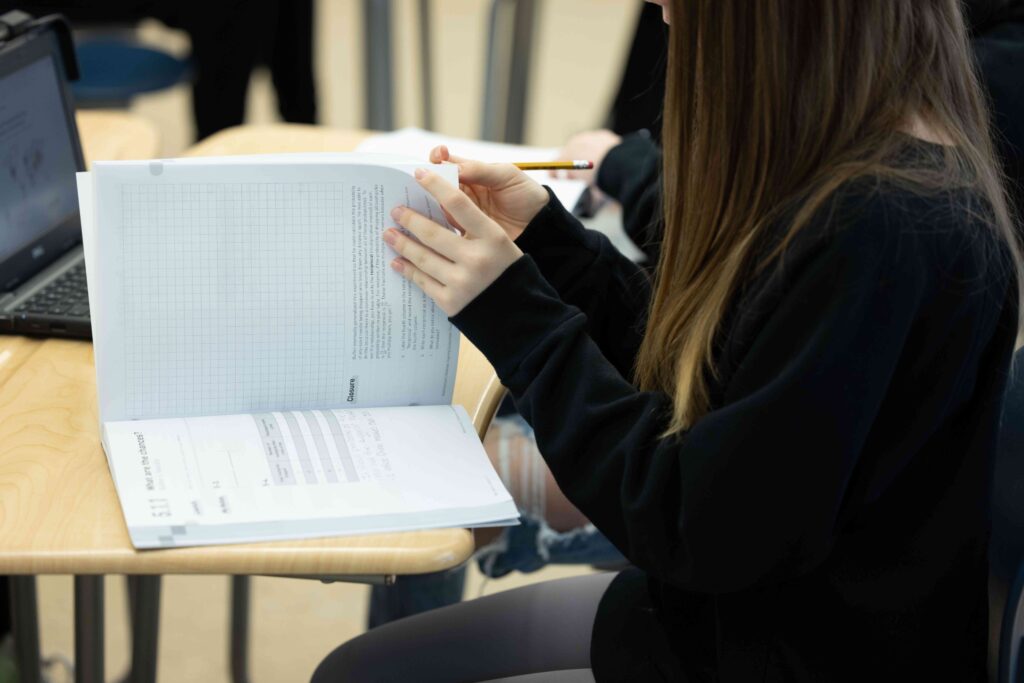
In a recent 7th grade Inspiring Connections lesson, students were asked to enlarge a robot in an embedded activity. At first, they dragged the corners to make what they thought “looked” proportional. After clicking the “Try It” button, students saw how accurate their enlargements were to the proportional one. After several attempts, I modeled another example on the interactive whiteboard and asked, “Is there a way to be more precise by also looking at how the table of values changes as we drag the points?”
That simple question was all it took. Suddenly, curiosity took hold—students eagerly tested their ideas and proudly announced when they achieved an exact ×3 enlargement. To their delight, the robot even displayed a message congratulating them on their success.
Sometimes, the right question at the right moment is all it takes to ignite curiosity. There is nothing that energizes me more as a teacher than seeing authentic excitement and engagement. By exploring, questioning, and experimenting—even with something as simple as resizing a robot—students are developing the same habits of mind that one day may guide them through their own research discoveries.