

From First Steps to Lasting Impact: 90 Days to Set or Reset Classroom Practice

September 2025

Students at the whiteboard

Managing change at a school site can often feel like an overwhelming task, especially given the number of stakeholders that are involved. For site-based leaders, the true challenge lies in knowing what steps to take to help their school move forward in a way that provides encouragement, not pushing anyone over the edge. But what if you don’t know the next step? What if you don’t even know… the first step?

A few years ago, site-based leaders from across the country found the need for a resource that could support teacher teams as they implemented CPM at their school sites and managed the changes that come along with it. Their vision was for this resource to be more than just a “startup guide” for schools; rather, they envisioned a tool that could be used to help schools focus, or refocus, their CPM implementation while emphasizing specific school-site priorities. The result was the creation of the 90 Days to Set or Reset Classroom Practice resource.

What is the Purpose and Design of the 90-Day Classroom Practice Guide?

For schools newer to CPM, 90 Days to Set or Reset Classroom Practice provides insight into what a CPM classroom looks like, sounds like, and feels like. Think of it as a sneak peek into what implementation of CPM’s Three Pillars could look like. The resource was intentionally designed not as a checklist or an evaluation tool, but rather, as a catalyst to spark productive discussions and dialogue during the first 30, 60, and 90 days of implementing CPM each school year. 

The creators of this guide also understand that the reality schools face at the beginning of the year may make initial expectations unrealistic. This 90-day resource could also serve as a way to reset a site’s expectations later in the year to get back on track and continue moving toward accomplishing the school’s vision. The 90 Days to Set or Reset Classroom Practice document is an easy-to-reference guide that helps leaders support reflection and conversations, not only with teachers but with administrators and instructional coaches as well.

As its name suggests, inherent in the 90 Days to Set or Reset Classroom Practice guide is the overall goal of supporting teachers and their classrooms over a roughly three-month period. The real genius of the tool is seen in how the document is chunked into thirty-day increments, providing expectations for 30, 60, and 90 days in utilizing the tool. Each section thoughtfully considers the realistic expectations that school-site stakeholders should have at each of these milestones and supporting resources to help them get there. These resources include:

How Should the 90-Day Classroom Practice Guide Be Utilized?

The greatest strength of this document is that it can be utilized in a variety of ways and tailored to meet the specific needs of your school site. The guide provides recommendations, based on the experiences of others, that can be adapted to a specific site to fit the site’s needs.

As you begin to think about how this tool could meet the needs of your school site, consider:

  • Compare 30 Days, 60 Days, and 90 Days milestones to chart a change management course of action.
  • Read through the Focus Questions to center discussions on classroom practices.
  • Review the “Looks Like, Sounds Like, Feels Like” sections to support continued growth for your teacher teams.
  • Examine the linked resources to find other appropriate tools that can best serve your teacher teams as they progress in their implementation.

These are just a few ideas to use the 90-day document to guide you and your school site. Whatever plan you decide to move forward with, it needs to make sense for your school. If 90 days is not feasible, focus on a shorter timespan. If problem-based learning is going well, narrow your focus to collaborative learning. Your job as a leader is not to fit your school site to this document, but rather to tailor this resource to fit the needs of your school.

What Are My Next Steps for a 90-Day Classroom Set or Reset?

This resource, along with many others, is housed in CPM’s Site-Based Leadership Professional Learning Portal. If your site is already using CPM, we invite you to join our Site-Based Leadership (SBL) Program. Don’t worry, we don’t spam you with irrelevant emails. Instead, we want to be involved with your CPM implementation and provide individualized support when you need it. Registering for the SBL program also means you will have access (but no obligation) to regular live events, such as book studies and networking events, as well as other resources to support your implementation.

To join SBL, visit cpm.org/sbl and follow the link in the ‘Register Now’ section in the upper right-hand corner. From there, you’ll log into your my.cpm.org account and register in the Professional Learning Portal. Once in the program, you will have access to a plethora of other resources in our Resource Library. You will find the 90 Days to Set or Reset Classroom Practice under the third category, Mentoring or Coaching Teachers One-on-One. We’ve made this resource available for Inspiring Connections and Core Connections

Hopefully, this resource provides you with some guidance and inspiration as you navigate your CPM implementation. The 90 Days to Set or Reset Classroom Practice guide is a structured yet adaptable framework that can foster meaningful dialogue and support teacher growth. Whether you are starting fresh or recalibrating mid-year, this document equips you with the guidance and resources needed to lead with confidence. 

Join the SBL Program at cpm.org/sbl to access this transformative guide and begin charting a course for sustainable, impactful change in your school community.

 

Picture of Adam Varnes, Jocelyn Dunnack, and Erin Schneider

Adam Varnes, Jocelyn Dunnack, and Erin Schneider

Adam Varnes, Professional Learning Specialist,
Jocelyn Dunnack, Regional Professional Learning Coordinator
Erin Schneider, Professional Learning Specialist

Statistics

JAVA

Calculus
Third Edition

Precalculus
Third Edition

Precalculus
Supplement

2.3.4

Defining Concavity

4.4.1

Characteristics of Polynomial Functions

5.2.6

Semi-Log Plots

5 Closure

Closure How Can I Apply It? Activity 3

9.3.1

Transition States

9.3.2

Future and Past States

10.3.1

The Parametrization of Functions, Conics, and Their Inverses

10.3.2

Vector-Valued Functions

11.1.5

Rate of Change of Polar Functions

Matemática
Integrada I

Matemática
Integrada II

Matemática
Integrada III

Integrated I

Integrated II

Integrated III

Core Connections en español, Álgebra

Core Connections en español, Geometría

Core Connections en español, Álgebra 2

Core Connections
Algebra

Core Connections Geometry

Core Connections
Algebra 2

Core Connections 1

Core Connections 2

Core Connections 3

Core Connections en español,
Curso 1
Core Connections en español,
Curso 2
Core Connections en español,
Curso 3

Inspiring Connections
Course 1

Inspiring Connections
Course 2

Inspiring Connections
Course 3

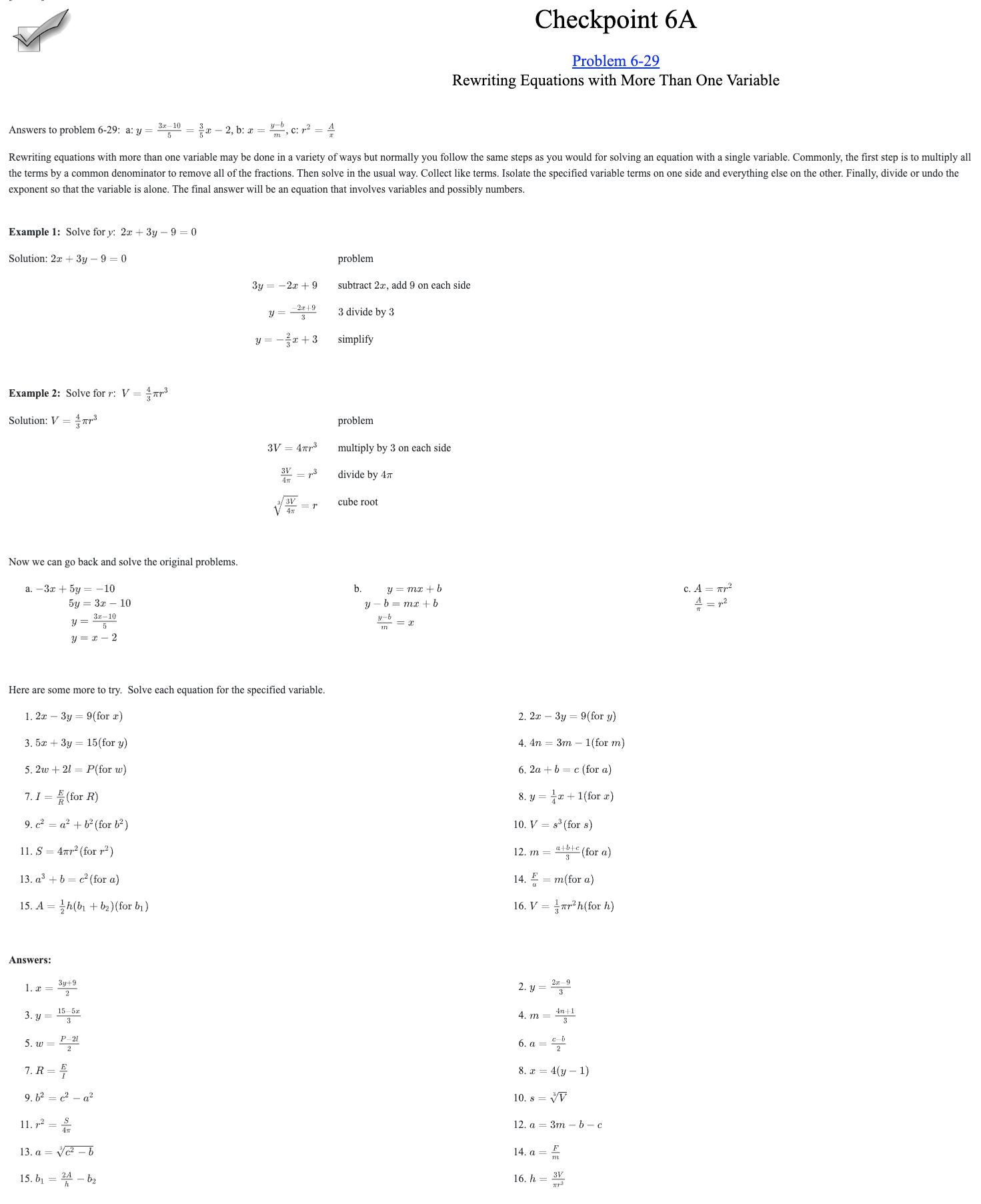
Sample Checkpoint

You are now leaving cpm.org.

Did you want to leave cpm.org?

I want to leave cpm.org.

No, I want to stay on cpm.org

Algebra Tiles Blue Icon
  • Used throughout CPM middle and high school courses
  • Concrete, geometric representation of algebraic concepts.
  • Two-hour virtual session,
  •  Learn how students build their conceptual understanding of simplifying algebraic expressions
  • Solving equations using these tools.  
  • Determining perimeter,
  • Combining like terms,
  • Comparing expressions,
  • Solving equations
  • Use an area model to multiply polynomials,
  • Factor quadratics and other polynomials, and
  • Complete the square.
  • Support the transition from a concrete (manipulative) representation to an abstract model of mathematics..

Foundations for Implementation

This professional learning is designed for teachers as they begin their implementation of CPM. This series contains multiple components and is grounded in multiple active experiences delivered over the first year. This learning experience will encourage teachers to adjust their instructional practices, expand their content knowledge, and challenge their beliefs about teaching and learning. Teachers and leaders will gain first-hand experience with CPM with emphasis on what they will be teaching. Throughout this series educators will experience the mathematics, consider instructional practices, and learn about the classroom environment necessary for a successful implementation of CPM curriculum resources.

Page 2 of the Professional Learning Progression (PDF) describes all of the components of this learning event and the additional support available. Teachers new to a course, but have previously attended Foundations for Implementation, can choose to engage in the course Content Modules in the Professional Learning Portal rather than attending the entire series of learning events again.

Building on Instructional Practice Series

The Building on Instructional Practice Series consists of three different events – Building on Discourse, Building on Assessment, Building on Equity – that are designed for teachers with a minimum of one year of experience teaching with CPM instructional materials and who have completed the Foundations for Implementation Series.

Building on Equity

In Building on Equity, participants will learn how to include equitable practices in their classroom and support traditionally underserved students in becoming leaders of their own learning. Essential questions include: How do I shift dependent learners into independent learners? How does my own math identity and cultural background impact my classroom? The focus of day one is equitable classroom culture. Participants will reflect on how their math identity and mindsets impact student learning. They will begin working on a plan for Chapter 1 that creates an equitable classroom culture. The focus of day two and three is implementing equitable tasks. Participants will develop their use of the 5 Practices for Orchestrating Meaningful Mathematical Discussions and curate strategies for supporting all students in becoming leaders of their own learning. Participants will use an equity lens to reflect on and revise their Chapter 1 lesson plans.

Building on Assessment

In Building on Assessment, participants will apply assessment research and develop methods to provide feedback to students and inform equitable assessment decisions. On day one, participants will align assessment practices with learning progressions and the principle of mastery over time as well as write assessment items. During day two, participants will develop rubrics, explore alternate types of assessment, and plan for implementation that supports student ownership. On the third day, participants will develop strategies to monitor progress and provide evidence of proficiency with identified mathematics content and practices. Participants will develop assessment action plans that will encourage continued collaboration within their learning community.

Building on Discourse

In Building on Discourse, participants will improve their ability to facilitate meaningful mathematical discourse. This learning experience will encourage participants to adjust their instructional practices in the areas of sharing math authority, developing independent learners, and the creation of equitable classroom environments. Participants will plan for student learning by using teaching practices such as posing purposeful questioning, supporting productive struggle, and facilitating meaningful mathematical discourse. In doing so, participants learn to support students collaboratively engaged with rich tasks with all elements of the Effective Mathematics Teaching Practices incorporated through intentional and reflective planning.