We want to hear from you: How Might Generative Artificial Intelligence Further Enhance Mathematics Teaching and Learning?

February 2025

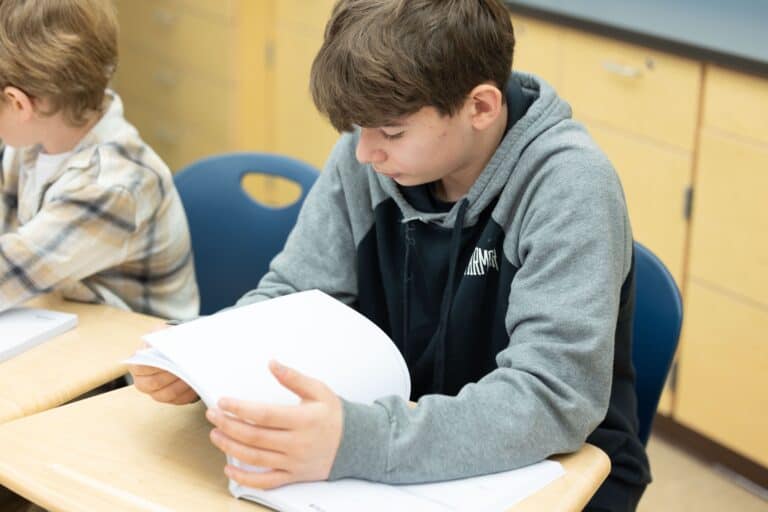
2 students at the whiteboard

Since the release of generative artificial intelligence (AI) in November of 2022, the teaching world has been abuzz with the promises and perils of AI in the classroom. So far, EducationWeek, an online magazine for K–12 education news, has published around 400 articles on the topic in the last two years! Titles range from optimistic to doomsday; for example: “Can Artificial Intelligence Bring Greater Equity to STEM?,” “Will Artificial Intelligence Help Teachers—or Replace Them?,” “Artificial Intelligence and Social-Emotional Learning Are on a Collision Course.” Despite this high interest, there is still a dearth of information about productive ways that teachers and students can use AI in the math classroom. 

Using AI to Support Teaching and Learning

Concerns about using AI in classrooms—including cheating, lowering of cognitive demand, and disconnecting teachers from their responsibility for student learning—are valid. However, AI also holds promise for mathematics education. We might go so far as to say that we could find ways to use AI that are highly aligned with CPM’s vision to support students in viewing mathematics as intriguing and useful and viewing themselves as capable of engaging in powerful mathematical thinking. For example, a recent study by Stroup (2025) highlights the potential role of generative AI in mathematics education, particularly how AI ‘hallucinations’ (incorrect or logically flawed outputs) can reveal areas where human learners excel. The study emphasizes AI’s limitations in handling complex concepts about complex concepts and how these limitations can inspire a focus on fostering uniquely human capacities, such as critical thinking, creativity, and modeling real-world problems. This perspective aligns closely with CPM’s mission to support students in viewing mathematics as intriguing and useful while promoting meaningful engagement in mathematical thinking. And while we’ve seen studies of ways to get AI to produce innovative and challenging problems (Shah et al., 2024), it still seems to be true that AI-generated tasks in general are not as high quality or any more interesting than lessons created by a group of really creative teachers—e.g., CPM’s writing team! 

How Are Teachers and Students Using AI in Classrooms?

Still, we think there are many ways that AI can improve students’ and teachers’ experiences with mathematics teaching and learning. We want to know: How do you and students use AI in mathematics classrooms? What technological tools (AI or not) do you wish you had integrated with the mathematics curriculum? While we have not considered all of the ways that you use AI and all the wish-list items you could dream up, here are some topics that we have considered and would be interested in learning from you: 

  • Ethics. How have you approached co-crafting a Class Code of Ethics about AI or technology use? What is in that code of ethics? 
  • Student thinking. How have you used AI or technology to support critical mathematical thinking and reflection? 
  • Collaboration and problem solving. How do you ensure that technology in the classroom enhances rather than impedes students’ opportunities to collaborate and authentically problem solve? 
  • Checking for understanding. How have you used AI to generate pocket or assessment questions, or to change the types and forms of questions?
  • Formative and summative assessment. What parts of the assessment process can be off-loaded to technology without obstructing teachers’ opportunities to make sense of student thinking? How can technology actually enhance teachers’ ability to make sense of student thinking? 
  • Independent practice. How do you use AI to support students’ independent practice in ways that align with mixed, spaced practice rather than blocked practice (a series of the same kind of questions—the opposite of mixed) or massed practice (several of the same questions at one time—the opposite of spaced)? 
  • Administrative responsibilities. How have you used AI to offload some of the administrative and logistical dimensions of mathematics teaching so that you have more time to focus on supporting student learning? 
  • Challenges for teachers. What challenges have you encountered in your efforts to use AI in your teaching practice? 
  • Challenges for students. What challenges have you encountered as students attempt to use AI in relation to their mathematics learning? 
  • Professional development. Would you like professional development on using AI in your teaching? Why or why not? If yes, what topics or strategies are you most interested in learning about? 
  • Future directions. What are your hopes and fears for AI in mathematics education? Are there current challenges you think AI could solve? 

This is not an exhaustive list! CPM’s mission is to empower mathematics students and teachers through exemplary curriculum, professional development, and leadership—CPM was and is by teachers, for teachers. We value your expertise and experiences and look forward to your input as we further develop our ever-evolving roadmap for supporting students in learning mathematics through problem solving, reasoning, and collaboration.

We invite you to join the conversation by sending in a newsletter article about your experiences using AI in secondary mathematics classrooms to cpmnewsletter@cpm.org. Alternatively, consider entering your thoughts into this Google Form (anonymity optional; follow this link to submit) for us to synthesize for internal development discussions at CPM and, given we receive enough responses, a future newsletter to share the results of your submissions with the CPM community! In the meantime, consider supporting students’ understanding of AI through mathematical investigations, such as Inspiring Connections Course 3 Chapter 3 Considering Perspectives (login required).


References

Shah, V., Yu, D., Lyu, K., Park, S., Yu, J., He, Y., Lyu, K., Ke, N. R., Arora, S., Park, S., Mozer, M., & Goyal, A. (2024). AI-assisted generation of difficult math questions. arXiv. https://arxiv.org/pdf/2407.21009  

Stroup, W. M. (2024). Using hallucination to envision the future of mathematics education. In Proceedings of the 46th Annual Meeting of the PME North American Chapter (pp. 106–109). Retrieved from http://www.pmena.org/pmenaproceedings/PMENA%2046%202024%20Proceedings.pdf 
Picture of Lara Jasien, Merve N. Kursav, Michael Lolkus

Lara Jasien, Merve N. Kursav, Michael Lolkus

Lara Jasien, larajasien@cpm.org, Nashville, TN & Austin, TX;
Merve N. Kursav, mervekursav@cpm.org, Boston, MA;
Michael Lolkus, mikelolkus@cpm.org, Hudson, NY

Statistics

JAVA

Calculus
Third Edition

Precalculus
Third Edition

Precalculus
Supplement

2.3.4

Defining Concavity

4.4.1

Characteristics of Polynomial Functions

5.2.6

Semi-Log Plots

5 Closure

Closure How Can I Apply It? Activity 3

9.3.1

Transition States

9.3.2

Future and Past States

10.3.1

The Parametrization of Functions, Conics, and Their Inverses

10.3.2

Vector-Valued Functions

11.1.5

Rate of Change of Polar Functions

Matemática
Integrada I

Matemática
Integrada II

Matemática
Integrada III

Integrated I

Integrated II

Integrated III

Core Connections en español, Álgebra

Core Connections en español, Geometría

Core Connections en español, Álgebra 2

Core Connections
Algebra

Core Connections Geometry

Core Connections
Algebra 2

Core Connections 1

Core Connections 2

Core Connections 3

Core Connections en español,
Curso 1
Core Connections en español,
Curso 2
Core Connections en español,
Curso 3

Inspiring Connections
Course 1

Inspiring Connections
Course 2

Inspiring Connections
Course 3

Sample Checkpoint

You are now leaving cpm.org.

Did you want to leave cpm.org?

I want to leave cpm.org.

No, I want to stay on cpm.org

Algebra Tiles Blue Icon
  • Used throughout CPM middle and high school courses
  • Concrete, geometric representation of algebraic concepts.
  • Two-hour virtual session,
  •  Learn how students build their conceptual understanding of simplifying algebraic expressions
  • Solving equations using these tools.  
  • Determining perimeter,
  • Combining like terms,
  • Comparing expressions,
  • Solving equations
  • Use an area model to multiply polynomials,
  • Factor quadratics and other polynomials, and
  • Complete the square.
  • Support the transition from a concrete (manipulative) representation to an abstract model of mathematics..

Foundations for Implementation

This professional learning is designed for teachers as they begin their implementation of CPM. This series contains multiple components and is grounded in multiple active experiences delivered over the first year. This learning experience will encourage teachers to adjust their instructional practices, expand their content knowledge, and challenge their beliefs about teaching and learning. Teachers and leaders will gain first-hand experience with CPM with emphasis on what they will be teaching. Throughout this series educators will experience the mathematics, consider instructional practices, and learn about the classroom environment necessary for a successful implementation of CPM curriculum resources.

Page 2 of the Professional Learning Progression (PDF) describes all of the components of this learning event and the additional support available. Teachers new to a course, but have previously attended Foundations for Implementation, can choose to engage in the course Content Modules in the Professional Learning Portal rather than attending the entire series of learning events again.

Edit Content

Building on Instructional Practice Series

The Building on Instructional Practice Series consists of three different events – Building on Discourse, Building on Assessment, Building on Equity – that are designed for teachers with a minimum of one year of experience teaching with CPM instructional materials and who have completed the Foundations for Implementation Series.

Building on Equity

In Building on Equity, participants will learn how to include equitable practices in their classroom and support traditionally underserved students in becoming leaders of their own learning. Essential questions include: How do I shift dependent learners into independent learners? How does my own math identity and cultural background impact my classroom? The focus of day one is equitable classroom culture. Participants will reflect on how their math identity and mindsets impact student learning. They will begin working on a plan for Chapter 1 that creates an equitable classroom culture. The focus of day two and three is implementing equitable tasks. Participants will develop their use of the 5 Practices for Orchestrating Meaningful Mathematical Discussions and curate strategies for supporting all students in becoming leaders of their own learning. Participants will use an equity lens to reflect on and revise their Chapter 1 lesson plans.

Building on Assessment

In Building on Assessment, participants will apply assessment research and develop methods to provide feedback to students and inform equitable assessment decisions. On day one, participants will align assessment practices with learning progressions and the principle of mastery over time as well as write assessment items. During day two, participants will develop rubrics, explore alternate types of assessment, and plan for implementation that supports student ownership. On the third day, participants will develop strategies to monitor progress and provide evidence of proficiency with identified mathematics content and practices. Participants will develop assessment action plans that will encourage continued collaboration within their learning community.

Building on Discourse

In Building on Discourse, participants will improve their ability to facilitate meaningful mathematical discourse. This learning experience will encourage participants to adjust their instructional practices in the areas of sharing math authority, developing independent learners, and the creation of equitable classroom environments. Participants will plan for student learning by using teaching practices such as posing purposeful questioning, supporting productive struggle, and facilitating meaningful mathematical discourse. In doing so, participants learn to support students collaboratively engaged with rich tasks with all elements of the Effective Mathematics Teaching Practices incorporated through intentional and reflective planning.