Since 1989, CPM has been guided by a simple belief: with the right problems, the right support, and a strong community, far more students can succeed in mathematics. Here is what we stand for.
What guides us
Three commitments at the heart of CPM
Vision
Where we're headed
A World Empowered by Mathematics
CPM envisions a world where mathematics is viewed as intriguing and useful, and is appreciated by all; where powerful mathematical thinking is an essential, universal, and desirable trait; and where people are empowered by mathematical problem solving and reasoning to solve the world's problems.
CPM's mission is to empower mathematics students and teachers through exemplary curriculum, professional development, and leadership. We recognize and foster teacher expertise and leadership in mathematics education. We engage all students in learning mathematics through problem solving, reasoning, and communication.
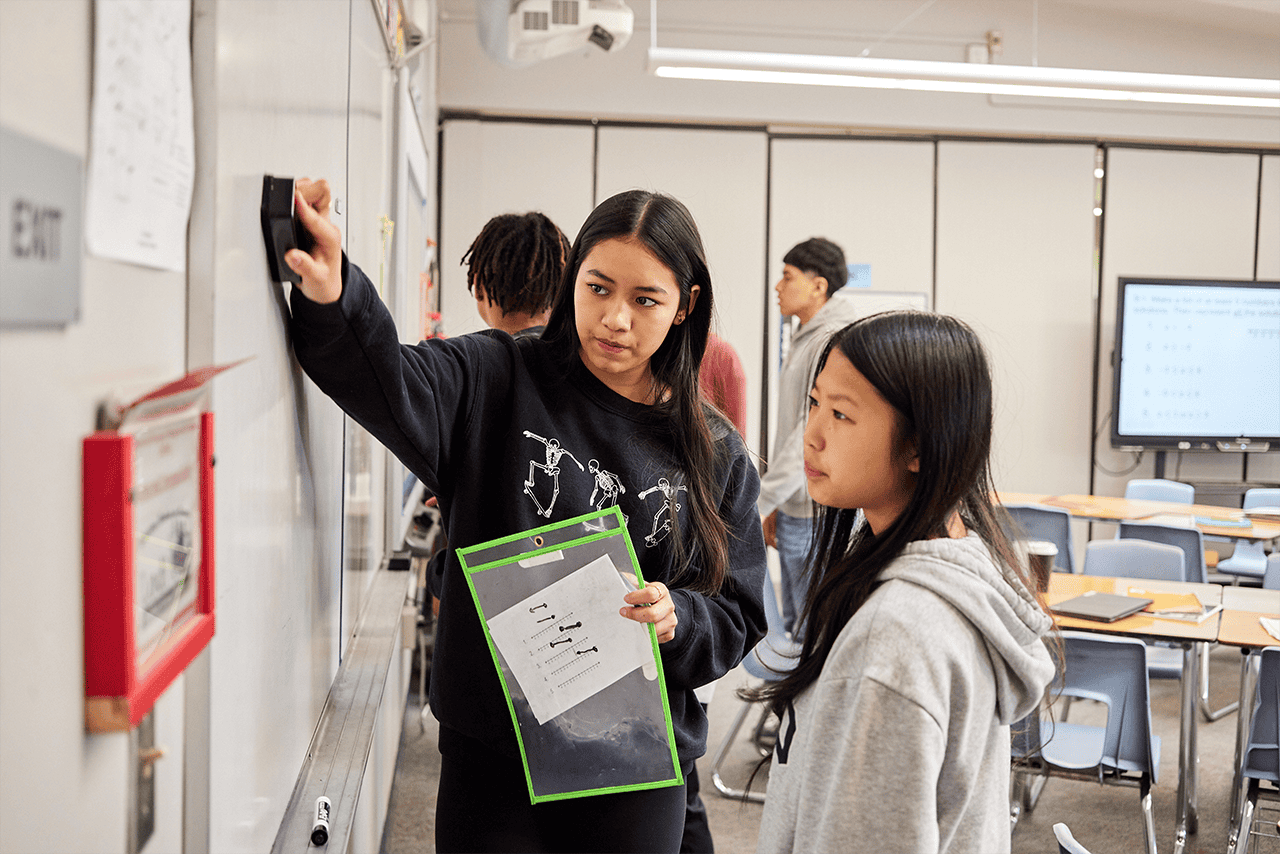
In a perfect world, every student would have the opportunity to learn math by being engaged and challenged. We are working to make this possible. CPM does not aspire to be the biggest publisher, we do believe we are among the few who truly put student learning first.
This professional learning is designed for teachers as they begin their implementation of CPM. This series contains multiple components and is grounded in multiple active experiences delivered over the first year. This learning experience will encourage teachers to adjust their instructional practices, expand their content knowledge, and challenge their beliefs about teaching and learning. Teachers and leaders will gain first-hand experience with CPM with emphasis on what they will be teaching. Throughout this series educators will experience the mathematics, consider instructional practices, and learn about the classroom environment necessary for a successful implementation of CPM curriculum resources.
Page 2 of the Professional Learning Progression (PDF) describes all of the components of this learning event and the additional support available. Teachers new to a course but who have previously attended Foundations for Implementation can choose to engage in the course Content Modules in the Professional Learning Portal rather than attending the entire series of learning events again.