Student-Centered Curriculum Research

Built on Evidence.
Proven in Classrooms.

CPM's curriculum is grounded in over 30 years of education research — synthesized by co-founder Dr. Tom Sallee and continuously updated. Three evidence-based pillars shape every lesson, every course, and every professional learning experience CPM offers.

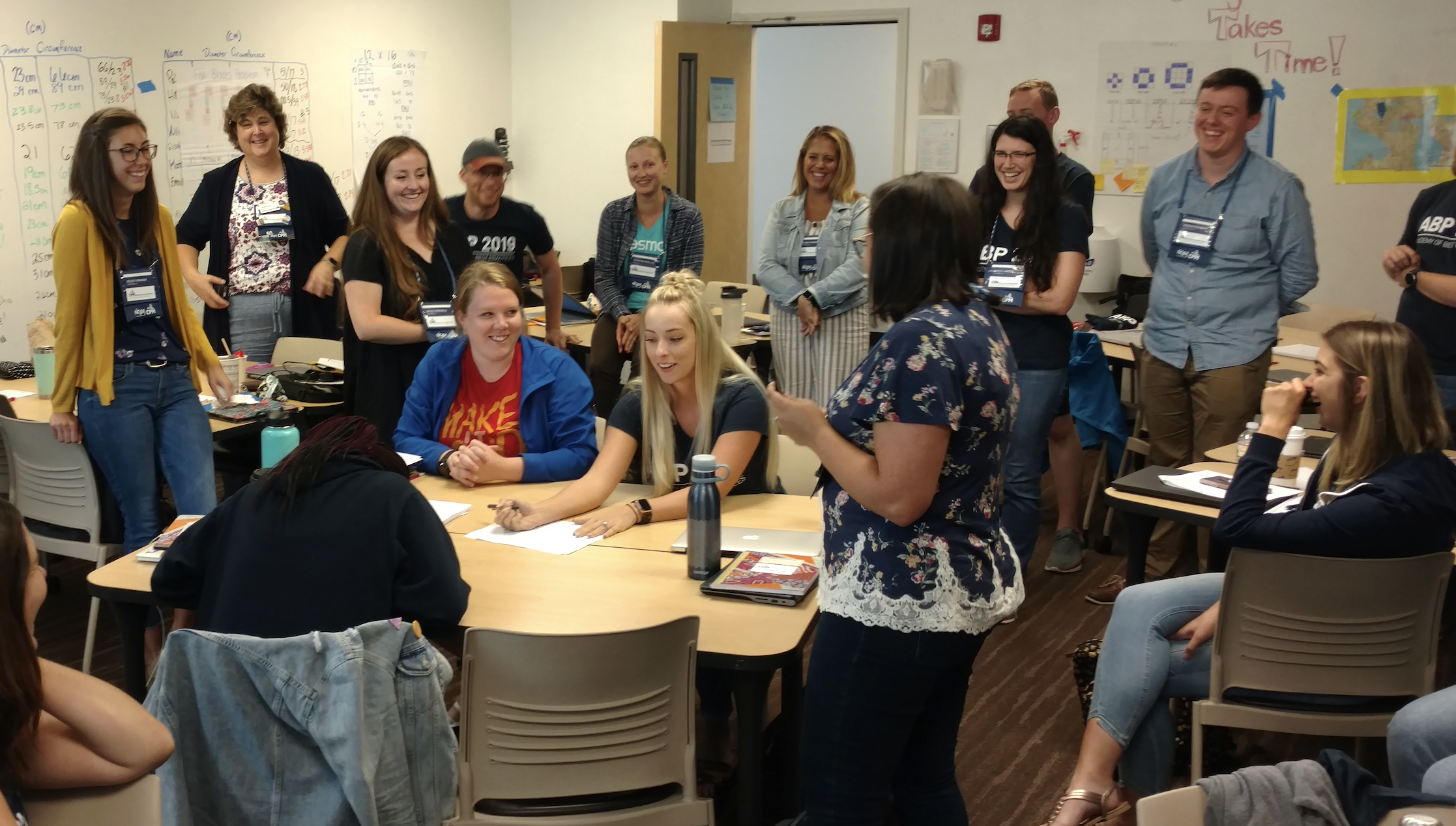
Students collaborating in a CPM classroom
CPM's Three Pillars

The Research Behind Every Lesson

CPM's Three Pillars were synthesized from NCTM standards and constructivism research in the early 1990s by mathematician and co-founder Dr. Tom Sallee. They remain fully validated by current mathematics education research — their benefits continue to deepen and expand, not shift.

CPM Three Pillars of Learning graphic

Pillar 01

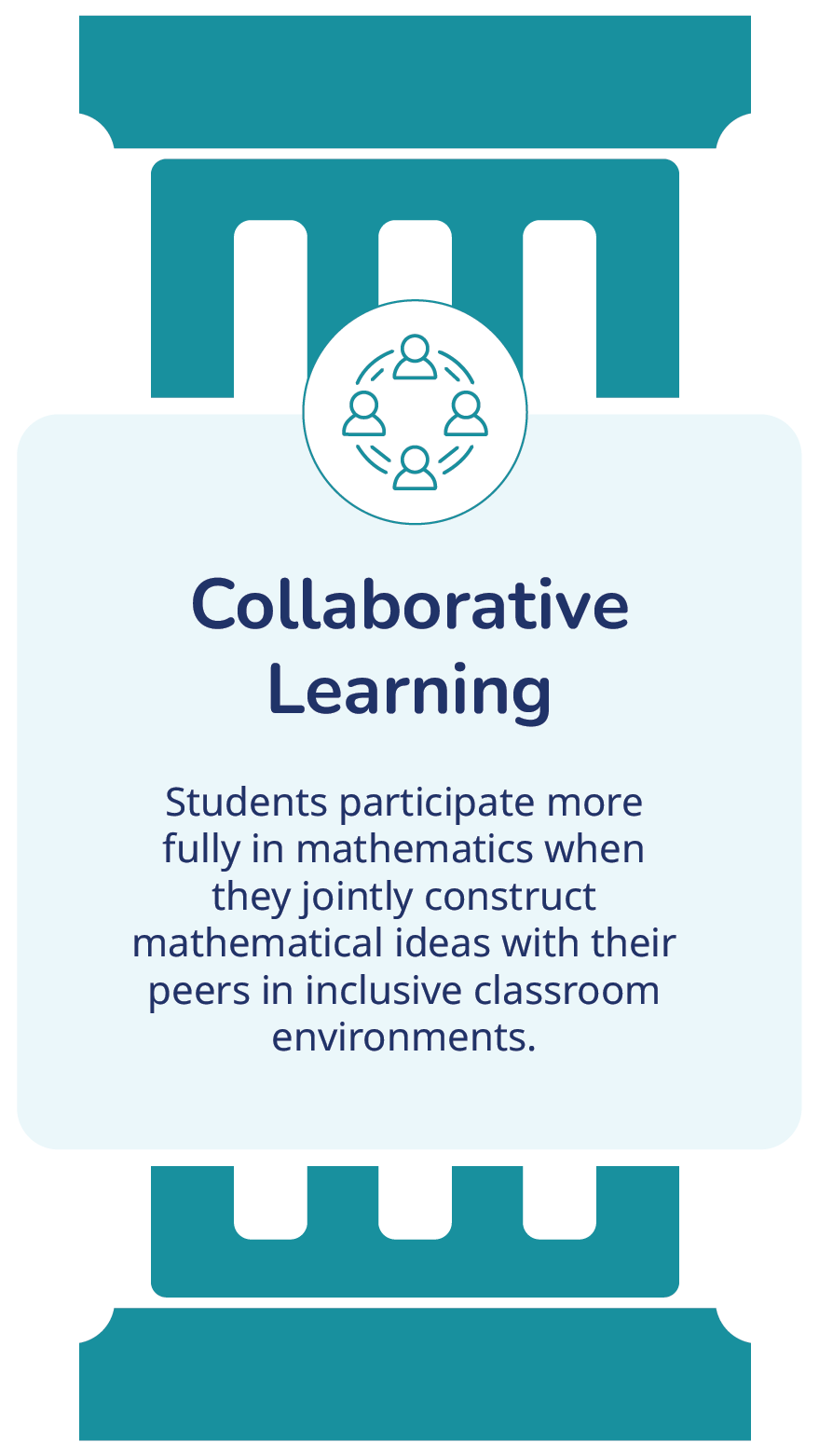
Collaborative Learning

Students learn ideas more deeply when they discuss them with classmates. Collaborative Learning is a humanizing way to support students to engage in mathematical practices — the skills and dispositions necessary to participate in disciplinary discourse — for the production of mathematical knowledge and skills.

"Students learn ideas more deeply when they discuss ideas with classmates."

Pillar 02

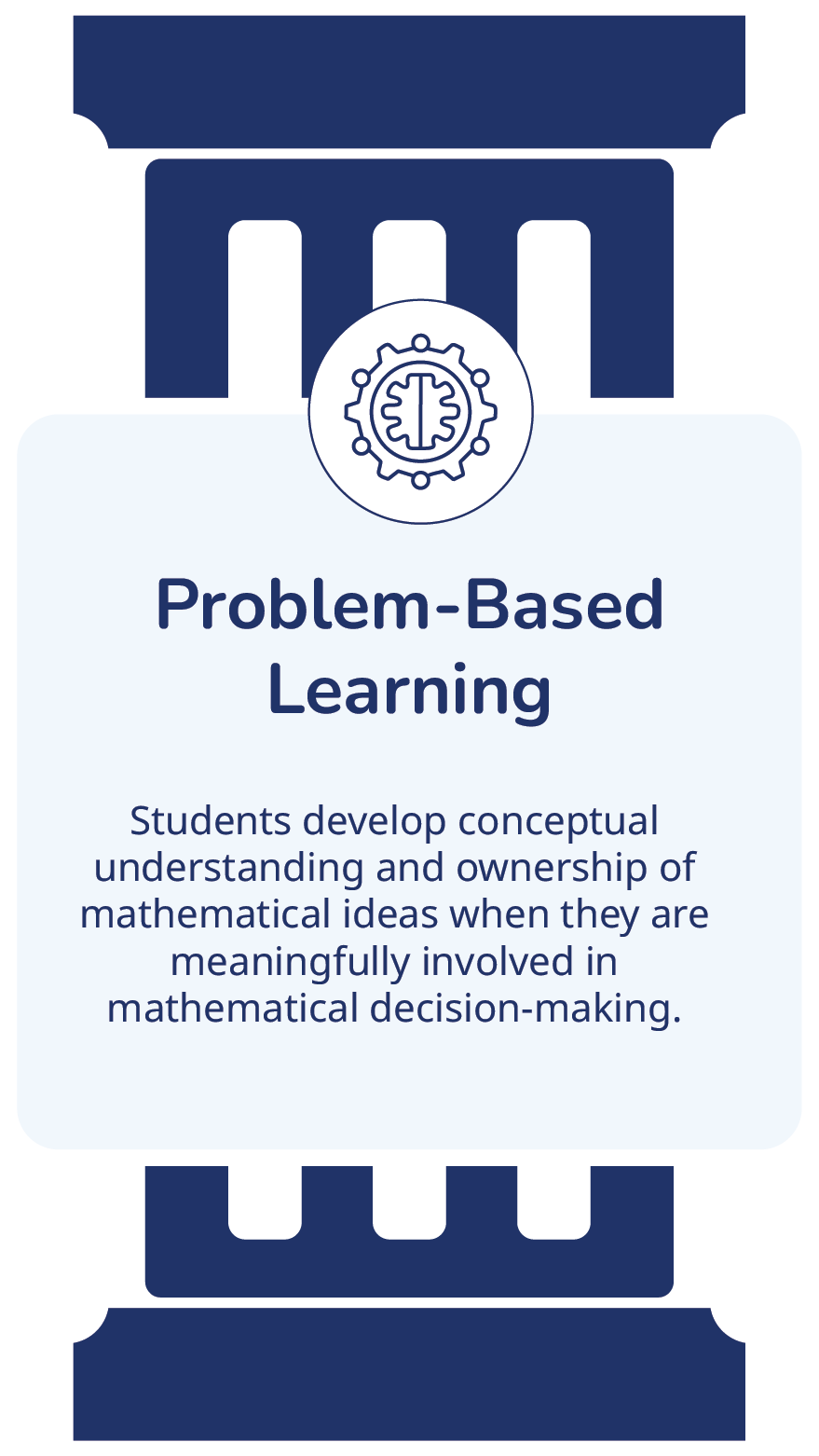
Problem-Based Learning

Students learn ideas more usefully when they learn by attacking problems — ideally from the real world. When students understand how to solve problems rather than how to follow procedures, they develop mathematical authority and are more likely to enjoy and see the value in mathematics.

"Students learn ideas more usefully for other arenas when they learn by attacking problems."

Pillar 03

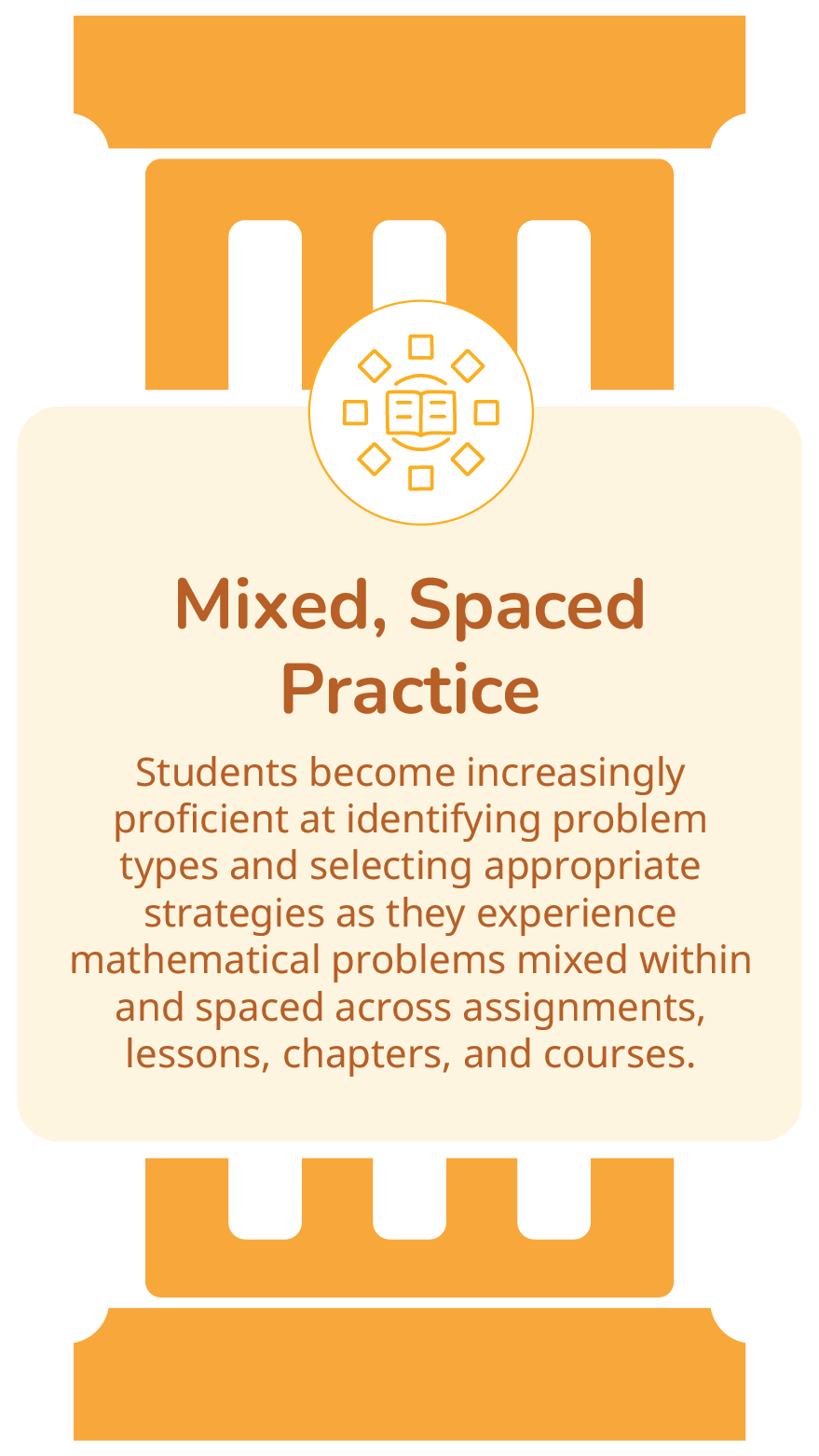
Mixed, Spaced Practice

Students learn ideas more permanently when they are required to engage and re-engage with them for months or even years. Mixed, Spaced Practice supports students in developing mathematical dispositions in which they strive to make sense of problems rather than mindlessly follow procedures.

"Students learn ideas more permanently when they re-engage with ideas for months or even years."

CPM Results

A Multidimensional View of Impact

CPM Educational Program results in meaningful mathematics learning for students and supports teachers to implement high quality instruction aligned with Common Core math content and practice standards. These reports and stories document CPM's impact across diverse school contexts.

Beyond CPM

Additional Research Resources

CPM connects educators with research beyond our own publications. These two external collections address broader questions in mathematics education that are directly relevant to CPM's approach.

Annenberg Institute at Brown University

COVID EdResearch for Recovery

Research briefs focusing on recovery from COVID-19, with overarching topics covering student learning, school climate, supporting all students, teachers and leaders, and finances and operations.

Visit Annenberg Website

University of Southern California Rossier School

Persistent Questions of Education

The Answer Lab at USC's Rossier School of Education has research briefs focusing on persistent questions of education — foundational questions that shape how schools operate and how students learn.

Visit the USC Answer Lab website for the full collection of briefs.

Fund New Research

Interested in Researching CPM?

CPM funds independent research through the Exploratory Research Award. Applications open annually with a June 1 deadline.

Learn About the Exploratory Award

Statistics

JAVA

Calculus
Third Edition

Precalculus
Third Edition

Precalculus
Supplement

2.3.4

Defining Concavity

4.4.1

Characteristics of Polynomial Functions

5.2.6

Semi-Log Plots

5 Closure

Closure How Can I Apply It? Activity 3

9.3.1

Transition States

9.3.2

Future and Past States

10.3.1

The Parametrization of Functions, Conics, and Their Inverses

10.3.2

Vector-Valued Functions

11.1.5

Rate of Change of Polar Functions

Matemática
Integrada I

Matemática
Integrada II

Matemática
Integrada III

Integrated I

Integrated II

Integrated III

Core Connections en español, Álgebra

Core Connections en español, Geometría

Core Connections en español, Álgebra 2

Core Connections
Algebra

Core Connections Geometry

Core Connections
Algebra 2

Core Connections 1

Core Connections 2

Core Connections 3

Core Connections en español,
Curso 1
Core Connections en español,
Curso 2
Core Connections en español,
Curso 3

Inspiring Connections
Course 1

Inspiring Connections
Course 2

Inspiring Connections
Course 3

Sample Checkpoint

You are now leaving cpm.org.

Did you want to leave cpm.org?

I want to leave cpmstg.wpengine.com.

No, I want to stay on cpmstg.wpengine.com

Algebra Tiles Blue Icon

Algebra Tiles Session

  • Used throughout CPM middle and high school courses
  • Concrete, geometric representation of algebraic concepts.
  • Two-hour virtual session,
  •  Learn how students build their conceptual understanding of simplifying algebraic expressions
  • Solving equations using these tools.  
  • Determining perimeter,
  • Combining like terms,
  • Comparing expressions,
  • Solving equations
  • Use an area model to multiply polynomials,
  • Factor quadratics and other polynomials, and
  • Complete the square.
  • Support the transition from a concrete (manipulative) representation to an abstract model of mathematics..

Foundations for Implementation

This professional learning is designed for teachers as they begin their implementation of CPM. This series contains multiple components and is grounded in multiple active experiences delivered over the first year. This learning experience will encourage teachers to adjust their instructional practices, expand their content knowledge, and challenge their beliefs about teaching and learning. Teachers and leaders will gain first-hand experience with CPM with emphasis on what they will be teaching. Throughout this series educators will experience the mathematics, consider instructional practices, and learn about the classroom environment necessary for a successful implementation of CPM curriculum resources.

Page 2 of the Professional Learning Progression (PDF) describes all of the components of this learning event and the additional support available. Teachers new to a course, but have previously attended Foundations for Implementation, can choose to engage in the course Content Modules in the Professional Learning Portal rather than attending the entire series of learning events again.

Building on Instructional Practice Series

The Building on Instructional Practice Series consists of three different events – Building on Discourse, Building on Assessment, Building on Equity – that are designed for teachers with a minimum of one year of experience teaching with CPM instructional materials and who have completed the Foundations for Implementation Series.

Building on Equity

In Building on Equity, participants will learn how to include equitable practices in their classroom and support traditionally underserved students in becoming leaders of their own learning. Essential questions include: How do I shift dependent learners into independent learners? How does my own math identity and cultural background impact my classroom? The focus of day one is equitable classroom culture. Participants will reflect on how their math identity and mindsets impact student learning. They will begin working on a plan for Chapter 1 that creates an equitable classroom culture. The focus of day two and three is implementing equitable tasks. Participants will develop their use of the 5 Practices for Orchestrating Meaningful Mathematical Discussions and curate strategies for supporting all students in becoming leaders of their own learning. Participants will use an equity lens to reflect on and revise their Chapter 1 lesson plans.

Building on Assessment

In Building on Assessment, participants will apply assessment research and develop methods to provide feedback to students and inform equitable assessment decisions. On day one, participants will align assessment practices with learning progressions and the principle of mastery over time as well as write assessment items. During day two, participants will develop rubrics, explore alternate types of assessment, and plan for implementation that supports student ownership. On the third day, participants will develop strategies to monitor progress and provide evidence of proficiency with identified mathematics content and practices. Participants will develop assessment action plans that will encourage continued collaboration within their learning community.

Building on Discourse

In Building on Discourse, participants will improve their ability to facilitate meaningful mathematical discourse. This learning experience will encourage participants to adjust their instructional practices in the areas of sharing math authority, developing independent learners, and the creation of equitable classroom environments. Participants will plan for student learning by using teaching practices such as posing purposeful questioning, supporting productive struggle, and facilitating meaningful mathematical discourse. In doing so, participants learn to support students collaboratively engaged with rich tasks with all elements of the Effective Mathematics Teaching Practices incorporated through intentional and reflective planning.