Teachers, Here is How to Open a Door to Your Classroom by Crafting a Great Conference Session

April 2025

teachers writing on VNPS

It is not easy to get in front of a group of your peers and colleagues and present something you are passionate about at a conference, but it is so incredibly important. We all close our doors and “make it work;” that is what teachers do. But I have never learned so much as when I get to be in my colleagues’ classrooms. So a conference session is an opportunity to open your door to colleagues and spread ideas on what is working for you and your students! 

So, what makes a great conference session, anyway? It has got to have a takeaway! I always like to start by answering, “What will the teacher’s takeaway be? What can a person who attends this conference session start doing differently tomorrow?” However, this takeaway is not always a functional takeaway; sometimes it is the opportunity for reflection that we rarely give ourselves.

Now, if we were looking at the recipe for a great conference session… In my opinion, a great conference session should include answers to the following: What? Why? How?

Session Recipe Step 1: Decide Your What 

When deciding on what to present, some questions that have helped me include the following:

  1. What do I wish I knew before that would have helped me? Will it help others? How can I share it? 
  2. What is something that is hard to do, that I have found a way to make work for me? 
  3. What is something that has made a huge change in my teaching or my students’ learning that might help others?
  4. What do I get asked questions about all of the time, that I have some ideas for? 
  5. What is something I am very passionate about and wish more people knew about, or were talking about? 
  6. What is something that is really popular right now that people are trying out? 
  7. What best/good practices are people struggling to implement? What are some ideas?  

Session Recipe Step 2: Share Your Why

I like to also be able to share why this topic is important. As a result, I always try to include information not only from my own experiences but also from current and relevant research on math teaching and education. It is one thing to say, “This is important.” It is another thing to say, “This is important, as evidenced by _____.” So including quotes from readings, or opportunities and time for participants to read a brief passage, assures them that what I am saying is based on something beyond my personal experience. 

Session Recipe Step 3: Answer the question, How Will You Engage Teachers? 

Then you need to figure out how to make this information engaging for adult learners. 

  1. I know what made math content engaging in my classroom: Study Team and Teaching Strategies, Math Language Routines, and EXPERIENCES! It is important for participants of a conference session to experience what it is you are trying to describe, not just for you to talk about it. If they can experience it, they can make it happen in their own classroom. Maybe you have a plethora of ideas you want to share—try using the Jigsaw or Carousel Study Team and Teaching Strategy to provide opportunities to explore these ideas. Maybe you have this great team-building activity—have participants do the activity in teams. 
  2. It is also helpful to give participants time to reflect and process. As a result, it might be useful to build in some individual reflection time, or a Turn and Talk. 
  3. Think about venues! Do you want participants sitting the whole time? I know my students and participants do not like that. Even if they groan a little bit when I ask them to move, we know it gets our brains activated. So try to incorporate strategies to get them to move, or working at a VNPS or whiteboard space. Balance the use of table teams, partners, VNPSs, computers/technology, strategies, and independent time. 

Final Tip: Bring Teachers to the Table

Once you have your session all cooked up, you have to draw participants in at the conference. A catchy, cute, or super clear name and description always helps. I highly recommend using AI to generate some different ideas that fit the vibe you are going for. “Come up with a [cute/smart/catchy/clear] conference session name in 5 to 8 words that describes this content: _____,” or, “Describe this conference session in 4 sentences or less.” 

I hope to see you submit a conference session to help your colleagues continue to grow and thrive! 

Picture of Danielle Boggs

Danielle Boggs

Professional Learning Specialist

Statistics

JAVA

Calculus
Third Edition

Precalculus
Third Edition

Precalculus
Supplement

2.3.4

Defining Concavity

4.4.1

Characteristics of Polynomial Functions

5.2.6

Semi-Log Plots

5 Closure

Closure How Can I Apply It? Activity 3

9.3.1

Transition States

9.3.2

Future and Past States

10.3.1

The Parametrization of Functions, Conics, and Their Inverses

10.3.2

Vector-Valued Functions

11.1.5

Rate of Change of Polar Functions

Matemática
Integrada I

Matemática
Integrada II

Matemática
Integrada III

Integrated I

Integrated II

Integrated III

Core Connections en español, Álgebra

Core Connections en español, Geometría

Core Connections en español, Álgebra 2

Core Connections
Algebra

Core Connections Geometry

Core Connections
Algebra 2

Core Connections 1

Core Connections 2

Core Connections 3

Core Connections en español,
Curso 1
Core Connections en español,
Curso 2
Core Connections en español,
Curso 3

Inspiring Connections
Course 1

Inspiring Connections
Course 2

Inspiring Connections
Course 3

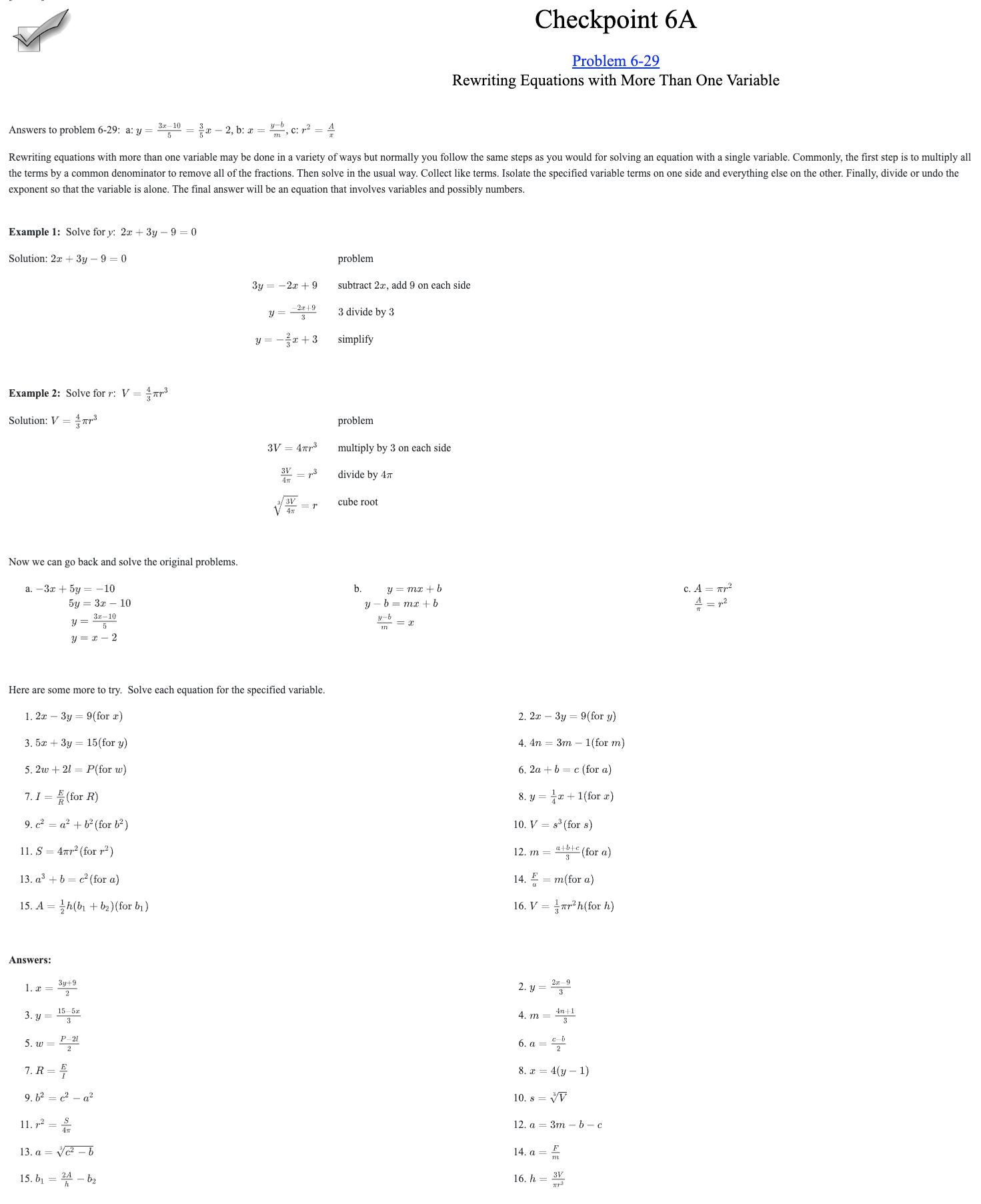
Sample Checkpoint

You are now leaving cpm.org.

Did you want to leave cpm.org?

I want to leave cpm.org.

No, I want to stay on cpm.org

Algebra Tiles Blue Icon
  • Used throughout CPM middle and high school courses
  • Concrete, geometric representation of algebraic concepts.
  • Two-hour virtual session,
  •  Learn how students build their conceptual understanding of simplifying algebraic expressions
  • Solving equations using these tools.  
  • Determining perimeter,
  • Combining like terms,
  • Comparing expressions,
  • Solving equations
  • Use an area model to multiply polynomials,
  • Factor quadratics and other polynomials, and
  • Complete the square.
  • Support the transition from a concrete (manipulative) representation to an abstract model of mathematics..

Foundations for Implementation

This professional learning is designed for teachers as they begin their implementation of CPM. This series contains multiple components and is grounded in multiple active experiences delivered over the first year. This learning experience will encourage teachers to adjust their instructional practices, expand their content knowledge, and challenge their beliefs about teaching and learning. Teachers and leaders will gain first-hand experience with CPM with emphasis on what they will be teaching. Throughout this series educators will experience the mathematics, consider instructional practices, and learn about the classroom environment necessary for a successful implementation of CPM curriculum resources.

Page 2 of the Professional Learning Progression (PDF) describes all of the components of this learning event and the additional support available. Teachers new to a course, but have previously attended Foundations for Implementation, can choose to engage in the course Content Modules in the Professional Learning Portal rather than attending the entire series of learning events again.

Edit Content

Building on Instructional Practice Series

The Building on Instructional Practice Series consists of three different events – Building on Discourse, Building on Assessment, Building on Equity – that are designed for teachers with a minimum of one year of experience teaching with CPM instructional materials and who have completed the Foundations for Implementation Series.

Building on Equity

In Building on Equity, participants will learn how to include equitable practices in their classroom and support traditionally underserved students in becoming leaders of their own learning. Essential questions include: How do I shift dependent learners into independent learners? How does my own math identity and cultural background impact my classroom? The focus of day one is equitable classroom culture. Participants will reflect on how their math identity and mindsets impact student learning. They will begin working on a plan for Chapter 1 that creates an equitable classroom culture. The focus of day two and three is implementing equitable tasks. Participants will develop their use of the 5 Practices for Orchestrating Meaningful Mathematical Discussions and curate strategies for supporting all students in becoming leaders of their own learning. Participants will use an equity lens to reflect on and revise their Chapter 1 lesson plans.

Building on Assessment

In Building on Assessment, participants will apply assessment research and develop methods to provide feedback to students and inform equitable assessment decisions. On day one, participants will align assessment practices with learning progressions and the principle of mastery over time as well as write assessment items. During day two, participants will develop rubrics, explore alternate types of assessment, and plan for implementation that supports student ownership. On the third day, participants will develop strategies to monitor progress and provide evidence of proficiency with identified mathematics content and practices. Participants will develop assessment action plans that will encourage continued collaboration within their learning community.

Building on Discourse

In Building on Discourse, participants will improve their ability to facilitate meaningful mathematical discourse. This learning experience will encourage participants to adjust their instructional practices in the areas of sharing math authority, developing independent learners, and the creation of equitable classroom environments. Participants will plan for student learning by using teaching practices such as posing purposeful questioning, supporting productive struggle, and facilitating meaningful mathematical discourse. In doing so, participants learn to support students collaboratively engaged with rich tasks with all elements of the Effective Mathematics Teaching Practices incorporated through intentional and reflective planning.