Mathematics as Communication: Supporting Students’ Linguistic Repertoires
Teach math. Encourage collaboration. Sounds simple, right?
Over time, we, as math teachers, began to recognize that exploring mathematics was about more than numbers, procedures, and generalizations. It is also about fostering communication and curiosity in the classroom among everyone—including multilingual learners. That’s what led us to translanguaging, and it has changed the way we think about learning in the math classroom.

How do I support my multilingual learners?
If you’re here, you might be reading to pursue the question, “What is this whole translanguaging thing?” We’re sharing our experiences as two math teachers who were doing our best, but making mistakes. We acknowledge that we didn’t know what we didn’t know about supporting languaging in the math classroom.
In our current roles as professional learning specialists at CPM Educational Program, we work with teachers to support their implementation of a student-centered, problem-based learning environment. In this role, we’ve had the opportunity to explore and learn how to answer a question we get asked frequently by the teachers we work with: “How do I support my multilingual learners?”
We recognized we didn’t know enough, so we sought to learn more. Through our learning, reading, discussion, and collaboration with colleagues at CPM, and our continued work with teachers in the classroom, our questions evolved to include:
- What is translanguaging?
- What does translanguaging look like in the classroom?
- How do we create an environment that supports translanguaging in the classroom?
- How can I use what I learn about translanguaging to better support more effective collaboration within teams?
We struggled to summarize our thinking and learning concisely, because we realized every classroom is unique, filled with students with their own curiosities, wonders, and notices. There is no step-by-step procedure or checklist for translanguaging in the classroom, but what is common is that we as teachers need to get out of students’ ways and let languaging happen.
But what IS translanguaging?
One way to make sense of how translanguaging might look, sound, and feel in your classroom is to consider this vignette:
A teacher, committed to student-centered learning, uses a variety of strategies to promote collaboration within teams. These effective strategies foster discussions where students explain their ideas using their full linguistic repertoires. You might hear two students sharing in Spanish, with a third adding on in English, and a 4th student using words from both Spanish and English. There could be times when academic language aligns closely to the learning target, while other times, students focus on gesturing to parts of expressions, drawing arrows to suggest operations, or utilizing discussion supports like sentence frames.
You might describe this as an environment embracing many components of translanguaging. However, there is much more to be excited about when students are empowered to utilize their full linguistic repertoires.
How does CPM support multilingual learners?
CPM has developed the following considerations to support translanguaging in Inspiring Connections and Core Connections 3rd Edition. We’re excited to share this excerpt from CPM’s Teacher Materials:
Translanguaging practices thrive in a classroom community that recognizes all people as language learners and values the unique languaging tools and skills each person brings to the community. To cultivate this community, be vulnerable and transparent with learners about your experiences when making connections between your linguistic repertoire and learners’ linguistic repertoires. To sustain and extend each person’s linguistic repertoire, which might include extralinguistic tools such as gestures and symbols as well as language that is verbal, written, signed, etc., encourage the use of translation tools, realia, cultural phrases, and various communication styles. Determine various ways to utilize learners’ shared or unique languages as they practice speaking, writing, reading, listening, gesturing, etc., with a partner, within teams, and with the class.
- As established at the beginning of the course, remind learners of their co-developed understanding of how translanguaging might look, sound, and feel in the classroom.
- Keep communication flowing in all directions between the classroom and guardians by offering multiple ways to connect in a variety of languages, such as video calls, emails, educational apps, surveys, and family events.
- Each person’s linguistic repertoire is influenced by the many communities in which they associate. To understand, utilize, and sustain each person’s linguistic repertoire, reach out to small business owners and local leaders to better understand the community’s linguistic diversity and assets.
Things you might do
Make tools available and easily accessible to all learners. For example:
- Provide sentence frames in languages familiar to your learners. These can be printed or displayed on a poster.
- Provide realia: real objects that provide context, such as canned goods to demonstrate cylinders.
- Utilize VNPSs to provide space to write, highlight annotations, and potentially increase the use of gestures to deepen understanding and make connections.
- Access school-suggested translation supports and e-language tools to enhance student-to-student and student-to-teacher communications.
Foster the use of gestures, contexts, visuals, objects, artifacts, touch, tone, multiple languages, etc. to support the use or development of students’ full linguistic repertoires. Call attention to, and/or co-create examples of, what a “full linguistic repertoire” looks, sounds, and feels like. For example:
- Utilize sign languages such as American Sign Language to represent thinking, disagreement, or agreement.
- Acknowledge example gestures to represent mathematical and academic vocabulary, such as using two arms to demonstrate “parallel” or “perpendicular.”
- Access or enhance students’ contextual understanding and background knowledge. Spend time identifying and making sense of words or phrases that have multiple meanings, such as the word “slides” (mathematical transformation, playground equipment, footwear, to move something slowly on a surface).
- Highlight multiple mathematical representations, provide visuals that support context and language, include annotations and arrows as needed, and use color-coding to support routines and connections.
- Include objects, artifacts, or manipulatives that are meaningful to your students to provide either context and/or opportunities to move and manipulate physical items, such as different types of currency when talking about money (dollars, pounds, pesos, euros, yen, etc.).
- When and how a word is emphasized or pronounced, and with what tone, might change the word’s meaning or message. Encourage learners to ask for clarification when something sounds puzzling. Students might use statements such as, Tell me more about what you meant when you said _____. Alternatively, I’m not quite sure I understand. Can you tell or show me [more / in a different way]?
- Encourage multilingual learners to fluidly move between any and all languages while collaborating, drafting, writing, speaking, etc.
Amplify language unfamiliar and familiar to you—spoken, written, symbolic, formal, informal, signed, technology-assisted, named, unnamed, etc. For example:
- Call out ideas, thoughts, writing, and statements as rough draft thinking.
- Use language routines to amplify language and avoid centering any one way of communicating. For example, Stronger and Clearer can provide opportunities for students to iteratively refine language and strengthen connections, while Collect and Display gathers rough draft and temporary ideas to center and highlight the variety of ways learners communicate.
- Invite students to connect ways to express similar ideas. Create a shared linguistic repertoire by highlighting overlapping and non-overlapping representations.
- Promote learners building bridges between interactional and academic language. You might ask, Are there [ gestures / drawings / context or language that is familiar to you ] that might help you contribute your ideas to this discussion? Alternatively, What connections do you see between _____ and _____ ? Alternatively, How might someone else say this?
- Encourage learners to express their needs and provide suggestions for peers or teachers. They might say, I’m not sure I understand what you mean by _____. Can we try _____ to make sense of this together? Example: I’m not sure I understand what you mean by [ body language ]. Can we try writing and representing this visually to make sense of this together?
Implement embedded supports to foster collaborative experiences that value all linguistic repertoires.
- Generally, assign partners or teams and team roles in visibly random ways unless otherwise noted to encourage positive interdependence. For example, use a deck of cards to randomize teams and roles.
- Use Discussion Supports as needed to support translating, summarizing, rephrasing, and more. For example, provide the General Sentence Frames and the Team Roles Placemat in languages familiar to your learners.
Moving support for multilingual learners beyond a checklist
Because learning mathematics is a social endeavor, strategies and routines are often utilized with learners to cultivate their mathematical agency when exploring ideas and pursuing problems. However, translanguaging is not a checklist. It’s a stance we take as teachers to see, value, and build on all that our students bring.
As you reflect on your own classroom, consider: How might you make space for students’ full linguistic repertoires as they explore math together? What small step could you try this week to affirm both their mathematical and linguistic identities? Our journey is ongoing, and we’d love to continue this conversation. Reach out and share what you’re noticing in your classroom as you experiment with translanguaging!
Check out these resources if you’re looking to learn more:
- Video: Making Space for Native Languages in Newcomer Classrooms (Edutopia)
- Podcast: Rounding Up: Season 2 Episode 11 – Translanguaging (Math Learning Center)
- Article: Teaching for Excellence and Equity in Mathematics – Special Issue on Multilingual Learners: Translanguaging (NCTM/Todos)
- People: Find, follow and learn from: Dr. Jose Medina (videos) and Ofelia García (videos)
Keep reading
More from CPM educators
Assessment
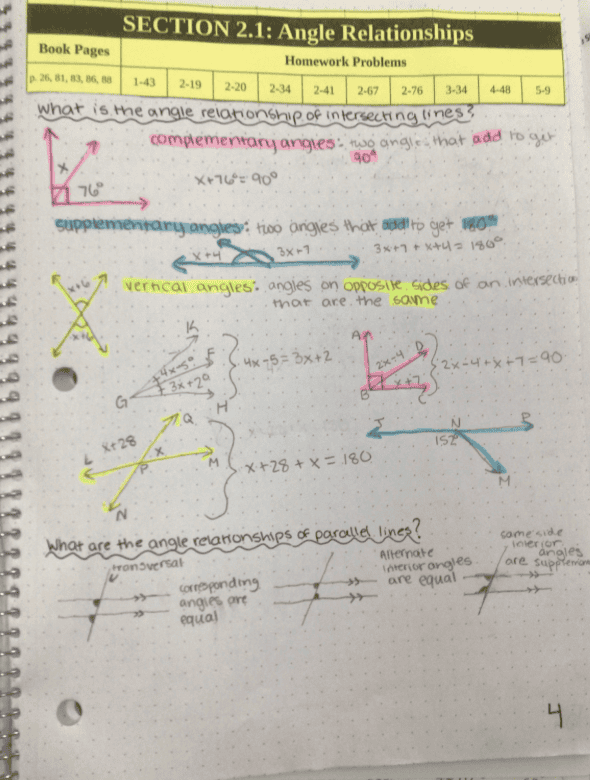
Giving Math Notebooking a Try
In general, “notebook” is a noun: a person, place, or thing. This year, we have tried to make it a verb: an…
Instructional Practices
How Can Teachers Empower Students to Overcome Apathy?
In my last two years of teaching, I found myself starting the school year more excited and hopeful than ever. I believed…
Multi-Lingual
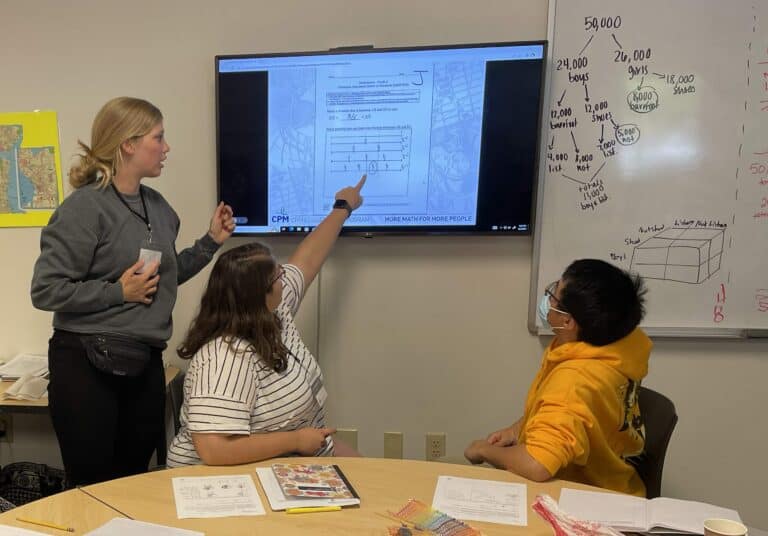
Achievable Steps Towards a Culture of Translanguaging
Teachers must see, value, and build on all the strengths students bring into the classroom community. Educators cannot simply ask (or insist)…