
Study Team and Teaching Strategies: Choosing the Right Strategy at the Right Time
How to find the Study Team and Teaching Strategy named in your Teacher Notes, choose one by the challenge you see, and make it part of your daily routine.
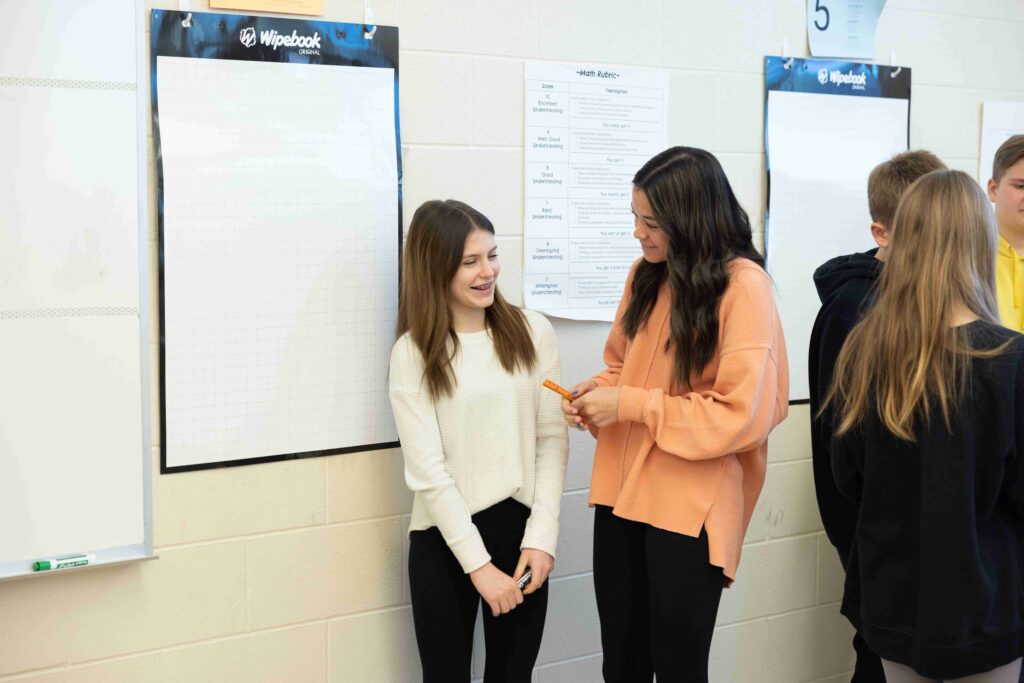
Study Team and Teaching Strategies (STTS) give teams a clear structure for working together. Your Teacher Materials already point to the right strategy at the right moment, and choosing one to practice each day helps you and your students build the habit.
Start with the Teacher Notes
The Teacher Notes for many lessons name a specific Study Team and Teaching Strategy (STTS) at the point where it fits, such as a Think-Ink-Pair-Share before creating a journal entry or a Teammates Consult before teams begin a challenging problem. Each strategy is fully described in the Study Team and Teaching Strategies section of the Teacher Materials, so you can review the steps before class.
Choose a strategy by the challenge you see
Study Team and Teaching Strategies, located in the Teacher Materials and the Toolbox, are organized into five categories:
- Collaborative Talk
- Cross-Pollination
- Feedback
- Grouping
- Modeling and Pacing
Start with the challenge you see in your classroom, then choose a strategy from the category designed for it. For Core Connections 2nd Edition, see the Slide Deck located in Team Resources under Team Support on the Teacher tab of the eBook.
Call a Huddle when teams get stuck
One strategy teachers find easy to implement is the Huddle. When several teams are stuck at the same point, invite one member from each team to join you while their teammates keep working. Assign competence by highlighting a productive step each team has taken, share the missing information or check for understanding, and send students back to share what they learned with their teams.
Try a Teammates Consult when one voice dominates
When one voice dominates a team’s conversation, try a Teammates Consult. With writing utensils set aside, each student thinks about the problem individually, then teammates take turns sharing ideas before the team agrees on a plan. Every student contributes before anyone starts writing.
Commit to one strategy this week
It takes time to make STTS a part of your day-to-day teaching. If you find you have not been using the STTS suggested in the lessons as well as you might, commit to choosing one this week and using it every day so that you and your students become comfortable with it.
More great tips to consider
- Make it a goal to notice and acknowledge positive team behaviors. Naming specific behaviors, such as asking a teammate a clarifying question or building on someone’s idea, helps every student recognize and practice what strong collaboration looks like.
- Connect STTS to team roles. For example, during a Swapmeet, have the Investigator and Coordinator from each team visit a neighboring team, then return to share new ideas with their teammates.
Keep reading
More from CPM educators

Collaborative Learning
Team Interactions: Bringing Every Student Back into the Conversation
What to do when a student drifts from the team, from letting teams solve problems first to using team roles and strategies…

Collaborative Learning
Start Strong: Building a Collaborative Classroom from Day One
Teams on day one, students helping write the class expectations, and the CPM resources that make your first weeks easier.

Collaborative Learning
Teams, Not Groups: How to Form and Refresh Study Teams
Why “teams” beats “groups,” three ways to form new teams, and how to help new teams gel quickly.