
Staying on Pace: Trusting Mastery Over Time
Check where you are, know what to do if you’re ahead or behind, and protect the closure that makes lessons stick.
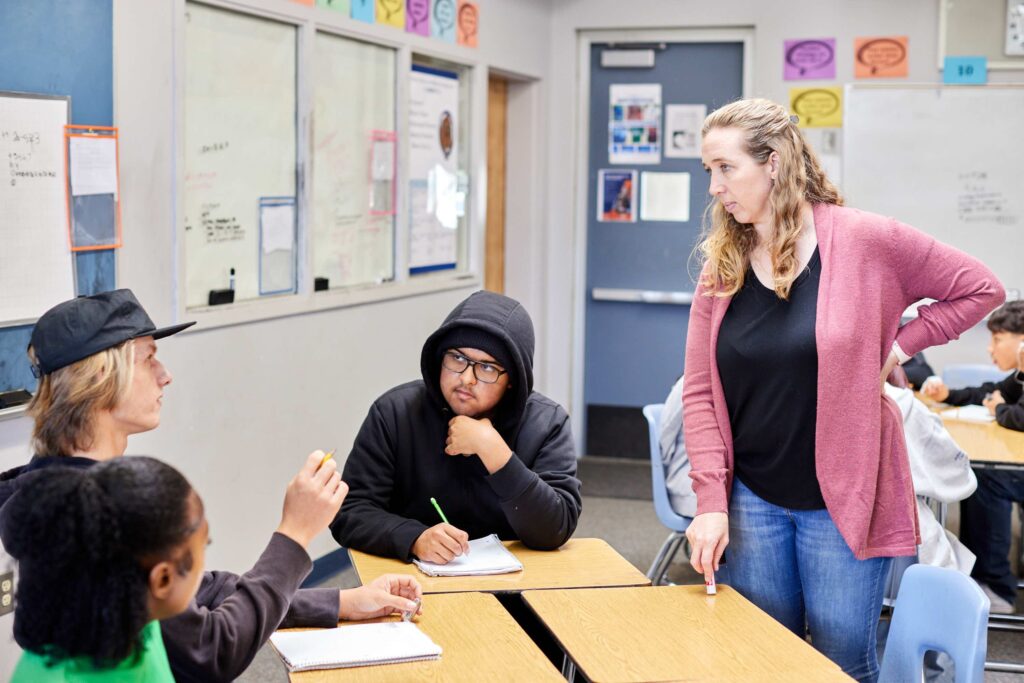
It’s worth pausing to check your pacing. If it’s week six of a traditional schedule, you’ve likely finished, or nearly finished, the first two chapters.
Take stock
Note where the pacing guide in the teacher’s edition says you should be, and whether you’re keeping up. Jot down any reasons you might be ahead or behind.
- If you’re ahead, make sure students still have the chance to explore ideas deeply and completely, and to build proficiency.
- If you’re behind, revisit the philosophy of mastery over time and spaced practice, and implement the curriculum as designed.
In your first year, keep the intended pacing
The first year with any new text is the time to keep the pacing as intended while you get to know the scope and sequence. If students need more time, focus on the core problems listed in the Teacher Notes for each lesson, and save the extensions and non-core problems for differentiation or intervention. Supplementing lessons to push students to master a single concept before moving on isn’t recommended.
Trust the homework and mastery over time
Homework assignments are designed to give students practice as their skills develop. Mastery of a topic often isn’t expected until two or three chapters after it’s introduced.
Use a timer to protect class time
If class time keeps slipping away and lessons don’t fit the time allotted, try a timer. Break the classwork into chunks with a time for each, and have one student per team keep time (a great job for the Task Manager), or project an online timer for everyone to see. Classroomscreen.com is one example.
Never skip the closure
Above all, resist the urge to skip the Closure to save time. Make effective closure part of every lesson, even if students haven’t finished all the problems. The Closure Guidebook in your eBook has ideas.
Keep reading
More from CPM educators

Collaborative Learning
Start Strong: Building a Collaborative Classroom from Day One
Teams on day one, students helping write the class expectations, and the CPM resources that make your first weeks easier.
Collaborative Learning
Teams, Not Groups: How to Form and Refresh Study Teams
Why “teams” beats “groups,” three ways to form new teams, and how to help new teams gel quickly.
Collaborative Learning
Building Productive Teams: Expectations and Feedback That Work
Help students picture a productive team, give feedback that builds confidence, and set up the room so teams can really talk.